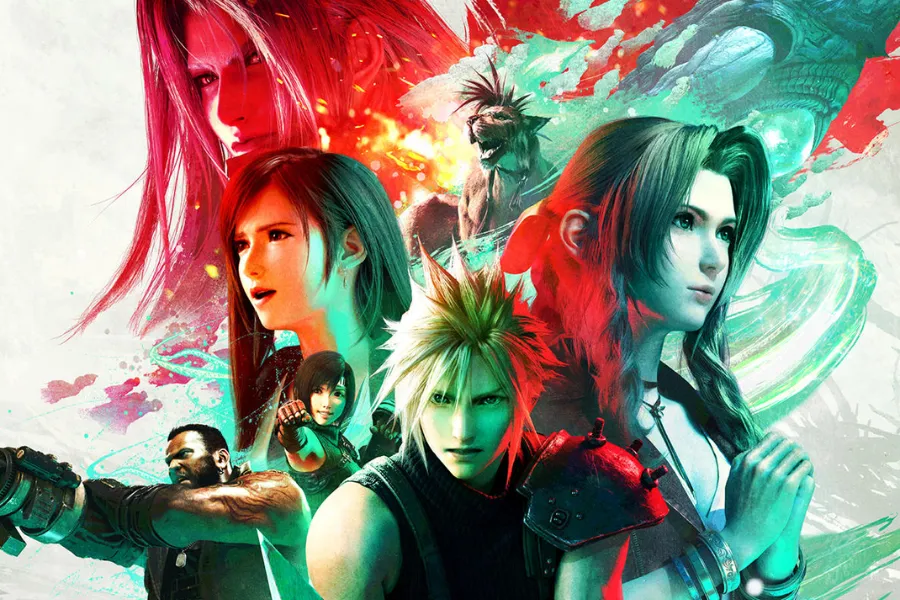
A great game score does as much for the story as anything on screen. The music of Square Enix has masterfully applied this to their iconic games throughout time, from the battle themes of Final Fantasy to the quiet piano of Kingdom Hearts. Behind those unforgettable melodies stand four Square Enix composers: Nobuo Uematsu, Yoko Shimomura, Yasunori Mitsuda, and Keiichi Okabe.
Few studios could fill a concert hall on their soundtracks alone, and that Square Enix does it decades after those first thin Famicom melodies says everything about what these composers built.
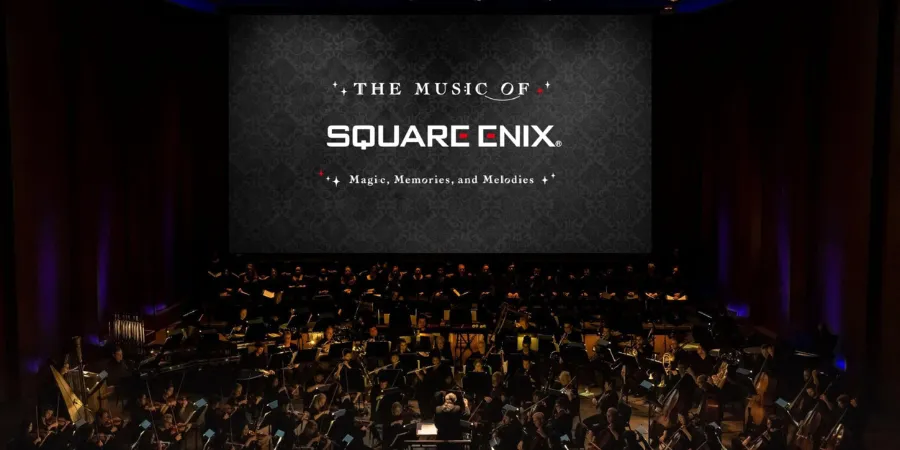
This June, London will hear their legacy live. The Music of Square Enix: Magic, Memories, and Melodies comes to OVO Arena Wembley on June 21, 2026, with music from Final Fantasy, Kingdom Hearts, Chrono Trigger, NieR, and more, and Yoko Shimomura will be in attendance.
If you wish to hear any of these iconic game scores live with orchestral arrangement, you can unlock an exclusive 50% discount on tickets through Japan Nakama.
The Composers of Square Enix
The Music of Square Enix: Magic, Memories, and Melodies
THE EVENT
Address: OVO Arena Wembley, Arena Square, Engineers Way, Wembley Park, HA9 0AA
Date: June 21, 2026 (7:30 PM)
Admission: £35 +fees (venue levy etc) with Nakama offer
Brought by AWR Music Productions, the team behind Distant Worlds and NieR:Orchestra Concert, The Music of Square Enix is a celebration of the soundtracks that helped define the company’s identity and the wider language of game music. The tour’s London stop features the Novello Orchestra, Coro Spezzato, and conductor Arnie Roth, bringing together orchestral arrangements from some of the most beloved franchises in gaming.
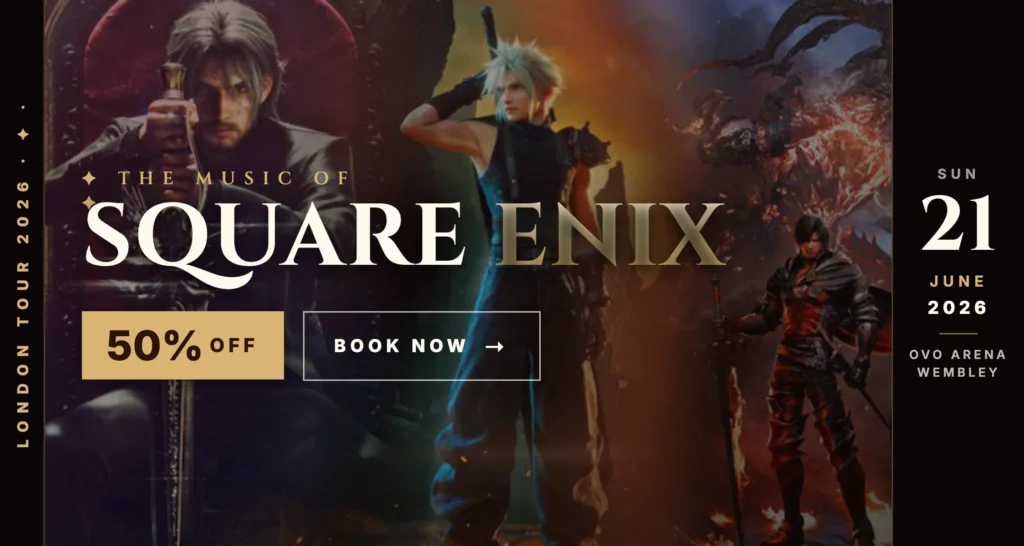
This is a rare chance to experience Square Enix music in a concert hall, with the company’s most iconic themes presented with symphonic scale and live atmosphere. Imagine visuals of your favorite games flashed on-screen as their iconic themes are played by an orchestra and accompanied by a choir. The performance also carries a special appeal because Yoko Shimomura, one of the evening’s featured composers, will attend in person.
The following are some of the iconic tracks that will be played:
- Dearly Beloved from KINGDOM HEARTS III
- Hikari from KINGDOM HEARTS
- Corridors of Time / Schala’s Theme from CHRONO TRIGGER
- Apocalypsis Noctis from FINAL FANTASY XV
- OCTOPATH TRAVELER – Main Theme
- Weight of the World from NieR:Automata
- One-Winged Angel from FINAL FANTASY VII
- Opening / Precipitous Combat from FINAL FANTASY TACTICS
- Zanarkand from FINAL FANTASY X
- Vector to the Heavens from KINGDOM HEARTS 358/2 Days
- Kainé from NieR Replicant
While VIP tickets have sold out, a limited number of VIP Meet & Greet tickets are available for the London show, which provide access to a meet & greet with composer Yoko Shimomura and conductor Arnie Roth. These include autographs and a photo opportunity. Don’t miss this special event and claim 50% off tickets.

From Squaresoft to the concert hall
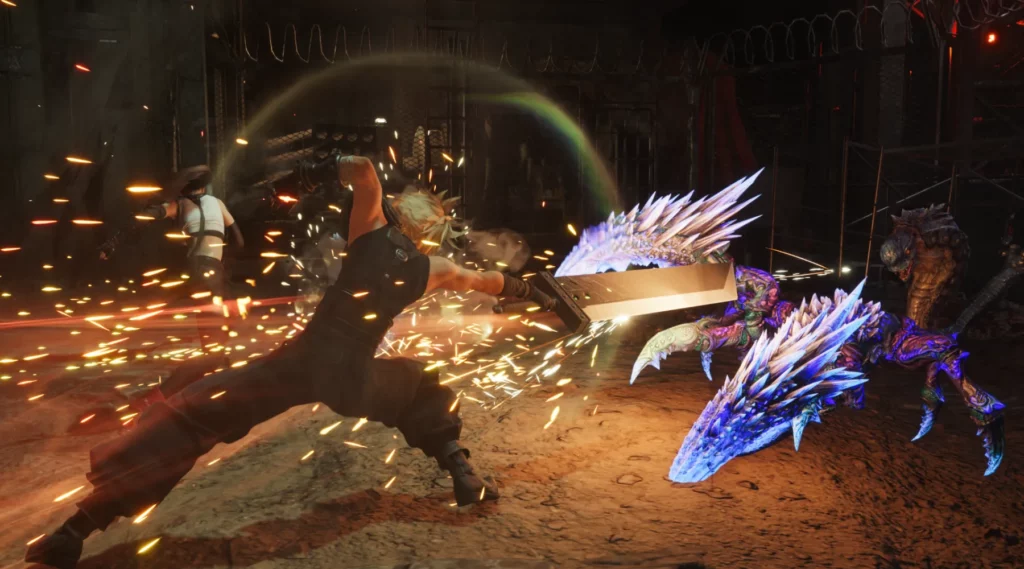
For most studios, music is the last thing players remember. For Square, it became the thing they remember first. The company now known as Square Enix was rebuilt as an independent developer in 1986 by Masafumi Miyamoto, who spun it out of his father’s electrical firm with an unusual idea for the time: that games should be made by teams of specialists, designers, programmers and writers working together, rather than a lone coder. That belief in craft extended to sound, and it shaped everything that followed.
The early years were lean. A run of releases for Nintendo’s Famicom Disk System underperformed, and a young composer named Nobuo Uematsu, who joined in 1986 and was still keeping his part time job at a music rental shop, wrote for a string of titles that went nowhere, among them King’s Knight and Rad Racer. With the company under pressure, designer Hironobu Sakaguchi pitched a role playing game, encouraged by the success of Enix’s Dragon Quest. He half expected it to be his last project.
Final Fantasy
The name has a myth attached to it, that the game was Square’s “final” fantasy before bankruptcy. Sakaguchi has since debunked that story. The team simply wanted a title that shortened to “FF”, which sounds good in Japanese, and their first choice, Fighting Fantasy, was already taken by a gamebook series. Final Fantasy was, by his account, close to a last resort. The personal stakes were real, though. Had it flopped, Sakaguchi planned to leave the industry and return to university. Released in 1987, Final Fantasy sold strongly enough to rescue the company, turned Uematsu’s side job into a career, and tied Square’s identity to its music from the very start.
The rise that changed the industry
What followed was a decade of momentum. The series moved onto the Super Famicom with Final Fantasy IV, V and VI, the last of which sold more than 2.5 million copies in Japan and became the best selling game there in 1994. Then came the decision that reshaped the industry. In the mid 1990s Square left its Nintendo partnership and moved to Sony’s PlayStation, drawn by the storage of the CD format. Final Fantasy VII arrived in 1997 in full 3D, sold in numbers no role playing game had managed before, and helped tip the console war decisively toward Sony. Square was no longer a studio that had survived a scare. It was one of the most important names in gaming.
How the music evolved with the hardware
The sound evolved in step with the machines. On the Famicom, composers worked within a handful of thin channels, and the limits produced the bright, economical melodies of the chiptune era. The Super Famicom’s richer sound chip let Uematsu and others layer fuller, more orchestral arrangements, heard in the sweep of Final Fantasy VI and in Yasunori Mitsuda’s Chrono Trigger in 1995. The PlayStation then removed the last ceiling, opening space for recorded instruments and CD-quality audio. Final Fantasy VII gave Uematsu room to write One Winged Angel, the choral battle theme that still stops concert halls, while Mitsuda’s Chrono Cross reached toward the texture of film.
From two rivals to Square Enix
The company itself was not always secure. The ambitious 2001 film Final Fantasy: The Spirits Within lost a fortune, and it was the success of Final Fantasy X and Kingdom Hearts that steadied the books. In April 2003 Square merged with its old rival Enix, the studio behind Dragon Quest, to form Square Enix, bringing the two giants of Japanese role playing, and two of the richest catalogues of game music ever written, under one roof.
Why the soundtracks fill concert halls
Through all of it, the composers were the constant. Uematsu became the name most associated with the form. Mitsuda brought folk and jazz textures few others attempted. Yoko Shimomura, who joined in 1993, wrote some of the company’s most hummable themes, later including Kingdom Hearts. And from outside the building, Keiichi Okabe and his studio MONACA gave the NieR series its haunting, invented language vocals. That depth is why the music now travels in its own right.
How Square Enix scores tell the story
What unites Nobuo Uematsu, Yasunori Mitsuda, Keiichi Okabe, and Yoko Shimomura beyond their association with Square Enix and its earlier Square era is their ability to treat music as part of storytelling. Their work gives characters emotional weight, turns settings into places players remember, and makes even silence a tool for more meaningful gameplay.
For this reason, Square Enix music continues to travel so well beyond the games themselves. Concert halls, tour programs, and soundtrack albums have all become part of how fans experience these worlds, and the Music of Square Enix concert is built on that long tradition.
Nobuo Uematsu
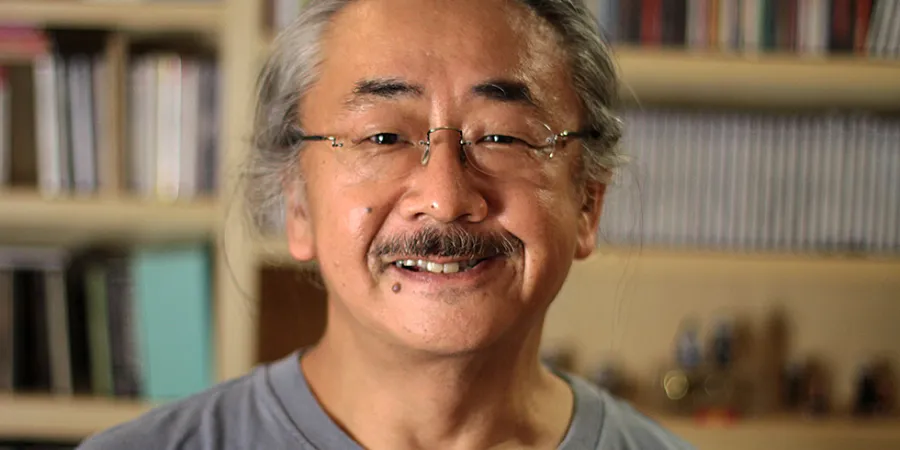
A self-taught musician, Nobuo Uematsu is the composer most people name first when they think of Final Fantasy music. He worked at a music rental shop before he was recruited by Square. His early game work in the mid-1980s helped establish the emotional identity of the company’s flagship series.
Uematsu’s name is especially tied to the era when Final Fantasy became a defining force in role-playing games. His music helped give the series a recognisable voice through sweeping melodies, memorable battle themes, and unforgettable character motifs, including the choral force of “One-Winged Angel,” one of the most famous pieces in game music.
He has often been described as the “Beethoven of game music.” Over the years, his compositions have been performed in numerous Final Fantasy concert tours, where audiences hear the emotional scope of his writing in a live setting.
Uematsu’s influence is still felt every time a new orchestral arrangement of Final Fantasy music is performed. He helped turn the soundtrack into a core part of the franchise’s identity, setting a standard that later Square composers would expand in new directions.
Yasunori Mitsuda
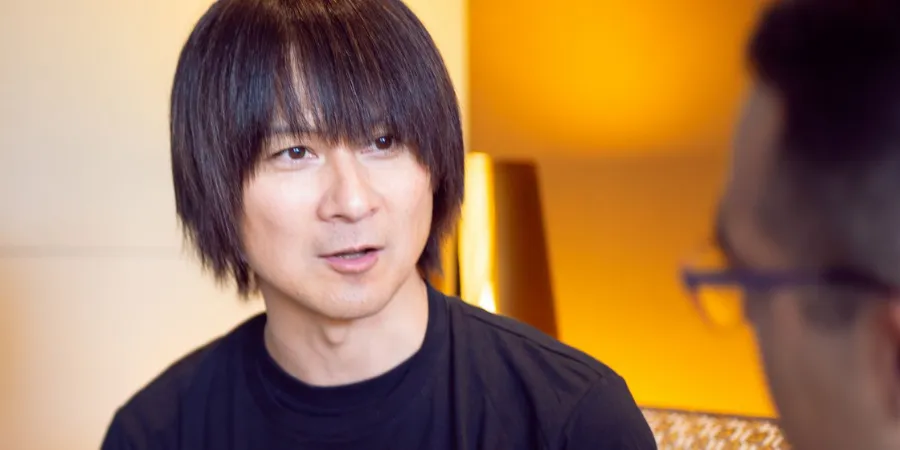
Yasunori Mitsuda’s path to composing began with a different relationship to music. He studied piano as a child, drifted away from it for a time, and later rediscovered his interest through film scores and cinematic sound worlds. This eventually shaped the way he would approach atmosphere and emotion in games.
At Square, Mitsuda first worked in a sound-related role before pushing for a chance to compose. The result was Chrono Trigger, a soundtrack now widely regarded as one of the greatest in video game music history and one that he has described as a landmark project in his development as a composer.
Pieces like “Corridors of Time” show what made his writing so distinctive: folk-inspired melodies, jazz influences, and orchestral layering. This combination later carried into his work on Chrono Cross and Xenogears, where his music deepened the emotional texture of the games.
Mitsuda’s style often blends folk instrumentation, jazz, and orchestral layering, giving his scores a voice that feels both personal and expansive. He later brought that sensibility to titles beyond Square Enix, including Xenoblade Chronicles 2 and Another Eden.
Keiichi Okabe

Keiichi Okabe stands out for the way he shapes mood through sound design, texture, and vocal writing. He began his career in the mid-1990s as a sound designer and arranger, worked on Tekken, and later founded MONACA, the studio through which much of his best-known work has been created.
Unlike some of the composers in this piece, Okabe was not a Square Enix employee, but his collaboration with the company became essential to the identity of NieR. His music for NieR Gestalt/Replicant helped define the series with a dreamlike melancholy, blending fantastical melodies, layered vocals, and an emotional unease that lingers in players’ minds.
One of the hallmarks of his work is his use of invented or constructed-sounding language in vocals, which gives the music a sense of distance and myth. That technique contributes to the feeling that NieR exists in a world that is familiar, but only just out of reach.
Okabe’s work on NieR: Automata brought that approach to an even wider audience, and the soundtrack received major recognition at The Game Awards 2017. In the context of Square Enix music, his contribution shows how the company’s sound has continued to evolve while still leaning on atmosphere and emotional storytelling.
Yoko Shimamura

Yoko Shimomura graduated from Osaka College of Music in 1988 with piano training, began her career at Capcom, and wrote for Final Fight and much of Street Fighter II before joining Square in 1993.
At Square, Shimomura became one of the company’s most recognisable musical voices. Her work spans Front Mission, Super Mario RPG, Parasite Eve, Legend of Mana, Kingdom Hearts, and later Final Fantasy XV. Across all of them, she has shown a rare ability to balance both classical and pop influences.
Her Kingdom Hearts music is especially loved, and “Dearly Beloved” remains one of the most iconic title themes in modern game history. Shimomura has described the theme as emerging while she was thinking about the ocean imagery of Destiny Islands, which fits the piece’s reflective, drifting quality.
As mentioned, her style is grounded in classical training, but it also carries a modern melodic sensibility that makes her music feel immediately accessible. In 2025, she received the BAFTA Fellowship in London for her outstanding contribution to games, further confirming her place among the most important composers working in the medium.
A Must-See for Square Enix Music Fans
The Music of Square Enix brings these creative histories into the same room. Hearing Final Fantasy music, Kingdom Hearts music, Chrono Trigger themes, and NieR scores performed live makes it easier to understand how much these composers shaped the emotional vocabulary of the medium.
If you have been waiting for a Square Enix concert London date that captures the heart of the company’s musical legacy, this is the one to watch. Join the Music of Square Enix in London and celebrate the composers who turned game soundtracks into unforgettable art.