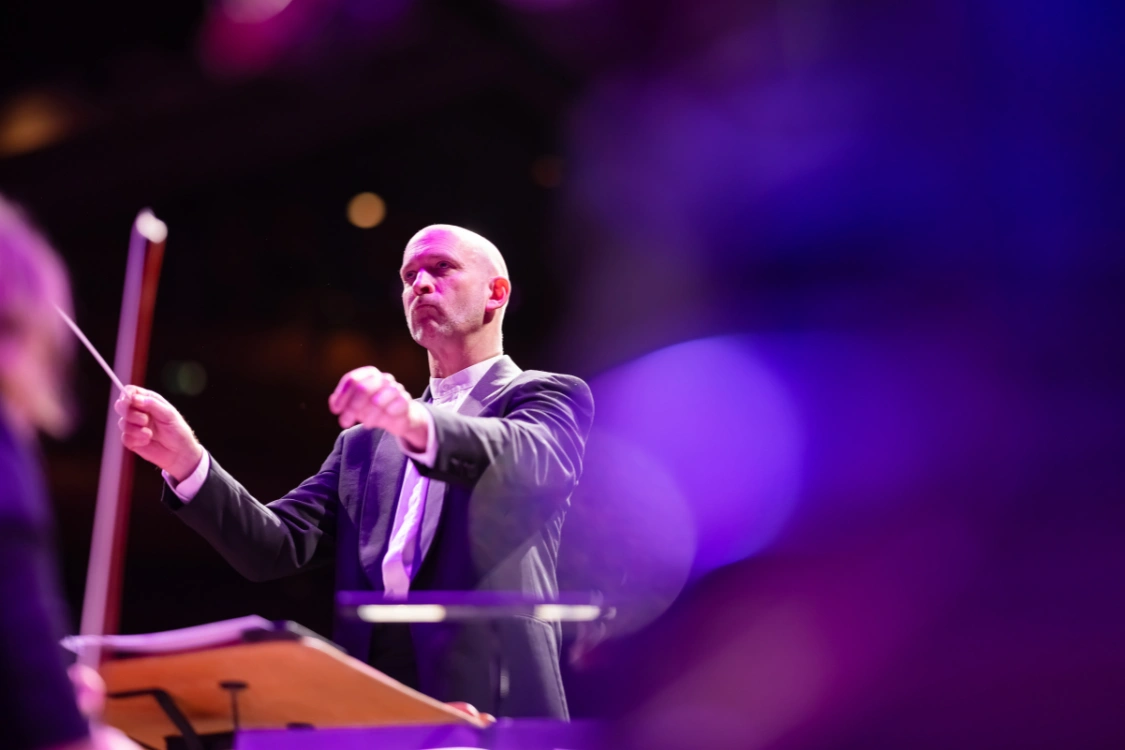
Michael England conducts The Sound of Epic Anime at the Royal Festival Hall on Friday 25 September 2026 and at Birmingham’s Symphony Hall on Sunday 15 November 2026, leading the London Concert Orchestra through music from Naruto, One Piece, Demon Slayer, Evangelion, JoJo’s Bizarre Adventure, Attack on Titan and Studio Ghibli. He conducted the Epic Anime album the show draws on, and he has led Demon Slayer in Concert across Europe, which makes him one of a very small number of conductors working anywhere on the anime concert circuit.
He is also a rare voice to hear. Search his name and you find credit lists, so we were delighted when the chance came to put our questions to him ahead of the London date, and more so when the answers arrived. What he shared with us in writing this August goes well beyond the programme notes, including one or two things we suspect even the front row won’t spot.
The Conductor, the Orchestra and the Night Ahead
Who is Michael England?
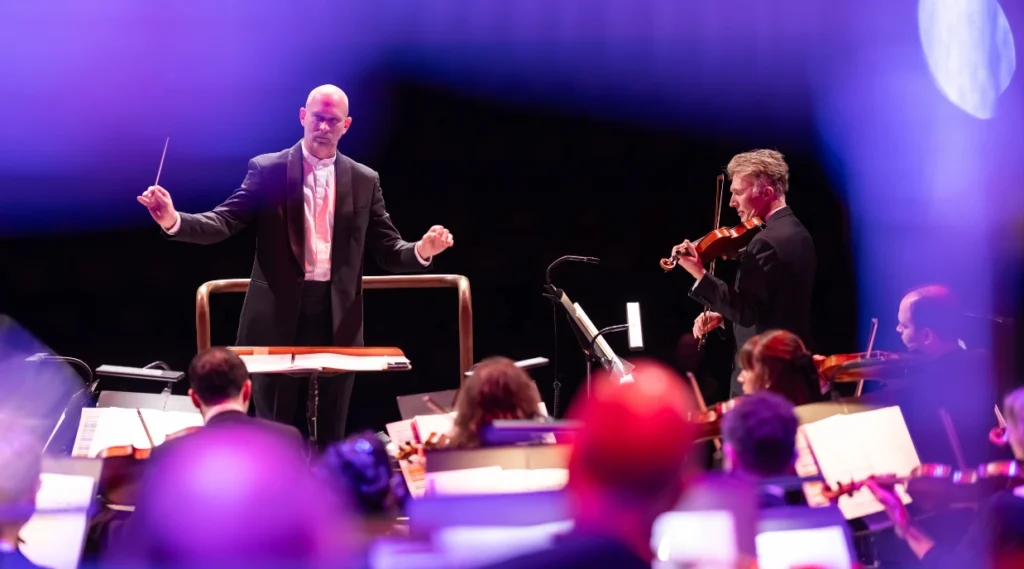
Born in Colchester, Michael England spent years as Musical Director on West End productions including Les Misérables, The Phantom of the Opera and Miss Saigon, conducted the opening weeks and live cast album of Cameron Mackintosh’s 25th anniversary Les Misérables, and has since moved between ballet, film in concert (Hook, Hocus Pocus, Love Actually) and symphony orchestras, from the London Philharmonic, to the NDR Radiophilharmonie. In April 2007 he conducted 5,877 people playing coconut shells in Trafalgar Square, a world record attempt tied to Spamalot, and he remembers exactly how he landed that one:
“I was told I was doing it…! But it was a lot of fun.”
Anime arrived later in his career, and by accident. Before the album he had little personal experience of it, he tells us, and then the music did its work:
“As I started listening to it, you become struck by the variety and emotional range captured in it. The variety of styles, from the pulsing synthesised rock, to more gentle and tender classical style, through to intense dark cinematic music.”
One more thing he told us: he has never been to Japan.
“Sadly, I have never been to the country. Yet!!”
Given he now spends his working life inside the music Japanese pop culture runs on, we would call that trip overdue, and if he ever wants an itinerary, he is talking to the right magazine.


The album behind the concert
The route into the show was the record. England had previously shared conducting duties on Epic Orchestra: New Sound of Classical for Sony and the NDR Philharmonie, and when Sony Music Masterworks made the Epic Anime album with the NDR Radiophilharmonie, he conducted the sessions, recorded from 16 to 20 December 2024 in Hannover and released in February 2026. The concert goes beyond the album played through. Some pieces in the programme are missing from the record, and at least one that is on it, Kiki’s Delivery Service, is performed in a different arrangement live, a detail he confirmed to us that anyone who owns the vinyl will want to know. The album is on Spotify, and if you want a physical copy, it is available as a double gatefold vinyl from Black Screen Records.
Asked to pick favourites from the music he has recorded and conducted for the show, he refused to choose just one:
“It’s a bit like asking a parent which is their favourite child! I love the playfulness of My Neighbour Totoro, and Alba. The emotion of Higeki and Utsusemi, and the rhythmic drive and energy of Il vento d’oro and Attack on Titan. The variety of the music is so great.”
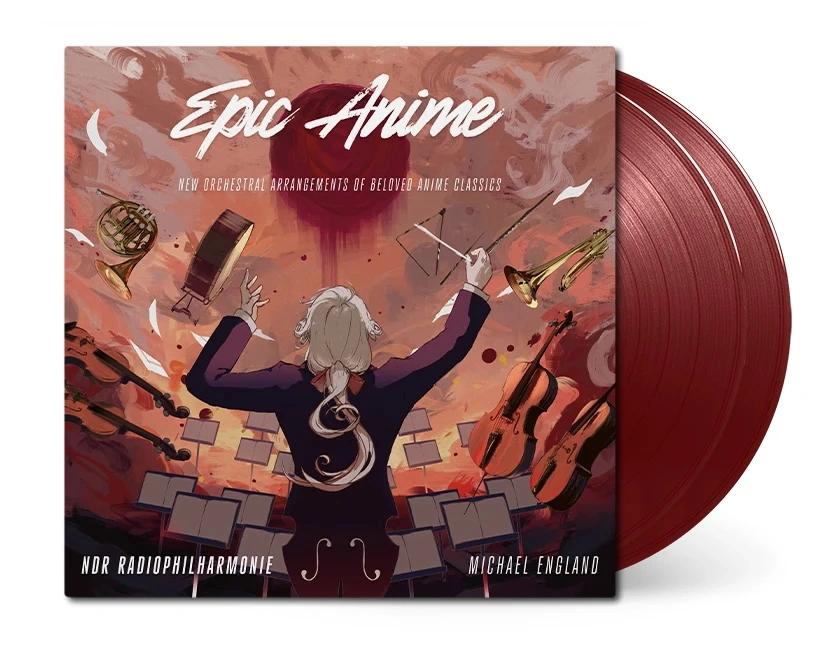
Three of those names reward a look at the album’s JoJo’s Bizarre Adventure run: Alba, Higeki, Tabidachi and Il vento d’oro are all Yugo Kanno’s writing, and Utsusemi is the quiet Naruto Shippuden piece released internationally as Man of the World. Our twelve picks from the programme cover several of them in detail.
Conducting anime music with no screens
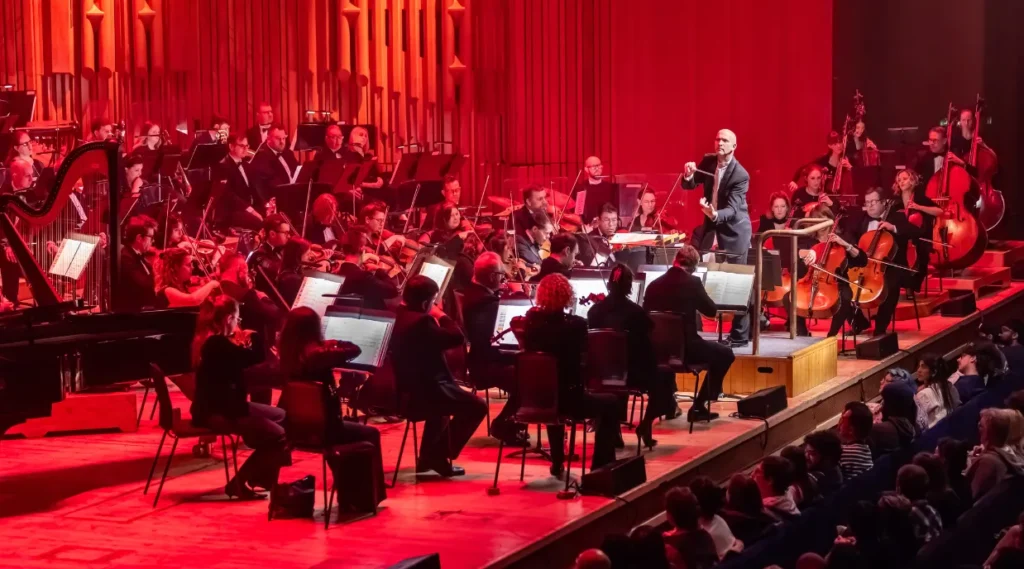
The Sound of Epic Anime plays with no footage at all, and the hall itself is lit. For England, that choice defines the job. Playing in sync to projected scenes means being “very strict with keeping in time with the moving picture”. A concert with no picture hands him something better:
“You have a bit more freedom, and you can give the players room to let the music express itself, and enable the emotion to come to life.”
It is a different discipline from his theatre years:
“When conducting for stage, be it ballet, musical theatre or opera, you are very much collaborating with the live element on the stage, adapting and breathing with them, so there is variation every night.”
Even the hall changes the reading, since the size of the orchestra and the acoustic of the room “can alter tempos or the time you need to give the music space to breathe.”
He is also unconvinced that an anime audience, which famously knows every note, differs much from a classical one:
“Many in a traditional classical audience will go to hear a concert of a Tchaikovsky symphony and know every tune, and every corner of the piece.”
The arrangements are where the interest lives, with “slightly different orchestrations and colours, but all honouring the originals.”
Sequencing an evening that swings from battle themes to lullabies is deliberate work too, partly to spare the audience’s ears and partly the players, “particularly the brass”:
“You want there to be an ebb and flow, and then hopefully you can maximise the emotional impact of all the pieces.”
66 musicians, a rock band and one afternoon to rehearse
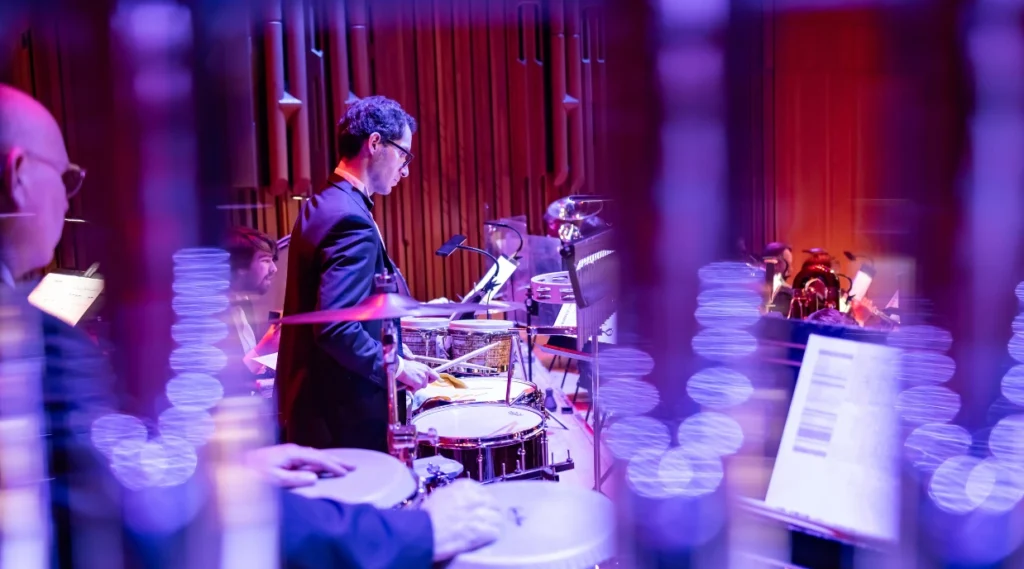
The Barbican performance in February had 66 players, England confirmed to us, and the line up goes beyond a standard symphony orchestra:
“Within the conventional symphonic line up there is the addition of a rhythm section: drum kit, synthesiser and guitars, which provide the added rock element that some of the pieces require. The orchestral percussion section also have a few extra drums, and other instruments that you don’t normally have in a symphonic set up.”
There is no separate host either. At the Barbican, England spoke to the audience himself, delivering around eight short introductions from the podium across the evening, and he expects to do the same at the Royal Festival Hall.
The preparation is leaner than most people would guess. The London Concert Orchestra gets three hours with the programme on the day of the concert. That is normal practice for professional orchestras, and it answers a question plenty of first timers wonder about: the players are sight reading specialists, and the conductor’s job is to spend those three hours on the moments that matter most.




Can you cheer at an anime concert? The conductor says yes
England spent early 2026 conducting Demon Slayer in Concert in Spain, and the crowds have stayed with him:
“We did Demon Slayer in Concert at two arenas in Madrid and Barcelona, and there were so many people in costume. I think that’s great! Leaving the arena after the concert I loved seeing them all in their outfits.”
On etiquette, he takes the long view:
“Let’s not forget in previous centuries concert audiences would applaud between symphonic movements, and they would clap and cheer if they wanted to hear the piece played immediately again. Sometimes whole symphonic movements would be repeated on the spot.”
Jazz crowds still do it, he points out, and his conclusion is the one to bring with you on the night:
“Music is there to entertain, uplift, and move its audience, so if it moves you, react!”
He draws the line in exactly one place: “I hope people don’t talk throughout!” So cheer when your theme starts, gasp at the solos, hum along under your breath, and save the argument about the best story arc for the interval.
For anyone hearing a live symphony orchestra for the very first time, he thinks the room itself will do the work:
“You feel the vibrations through your body, you see the energy and emotion being put in by the players, and you are sharing the same space, the same air, as the players. It’s a very special experience. The music is live, and for that moment, and that audience, only.”
Jan-Peter Klöpfel, the arranger behind the scores
England was brought onto the project for the recording, after the arrangements existed. The main arranger, who supervised the process, was Jan-Peter Klöpfel.
Klöpfel worked directly with Sony’s producer on every arrangement. He sent over mock-up recordings made in Sibelius, the notation software, together with each score, and the producer signed them off. He also corrected an assumption of ours: none of these arrangements involved stretching a short TV theme into a longer orchestral piece. For him, the interesting part of the job is translation, taking a title that was originally a studio production and moving it into the language of the orchestra without losing the character of the composition.
The hardest arrangement was Sparkles, the RADWIMPS song from Your Name. A pop production built around a voice had to move to the orchestra at full size, and the vocal line went to a violin.
On the album that violin is played by Esther Abrami, credited on the track alongside the NDR Radiophilharmonie, which is worth knowing before you hear the piece live.
Where orchestral anime goes next
England’s bet is on growth by discovery:
“Anime has been around for just over one hundred years, but it’s only relatively recently started to find an audience away from its native origins. As more and more people start watching the genre or hearing about the music, and discovering it for themselves, then I think, and hope, that this music will grow a wider fanbase that wants to hear it and experience it live more and more.”
Tickets and the Japan Nakama reader offer

London. Royal Festival Hall, Southbank Centre, Belvedere Road, SE1 8XX. Friday 25 September 2026, 7.30pm. Tickets from £25.50. Book the London performance.
Birmingham. Symphony Hall, Broad Street, B1 2EA. Sunday 15 November 2026, 3pm. Tickets £20.50 to £55.50. Book the Birmingham performance. Full venue and travel details are in our Birmingham guide. [Internal link to add once live: The Sound of Epic Anime Birmingham, post 177637]
Japan Nakama readers get 15 per cent off both dates with the code NARUTO. At the Southbank Centre, enter it in the promotional code box at the top right before choosing seats. At Symphony Hall, pick your seats first and enter the code at checkout.