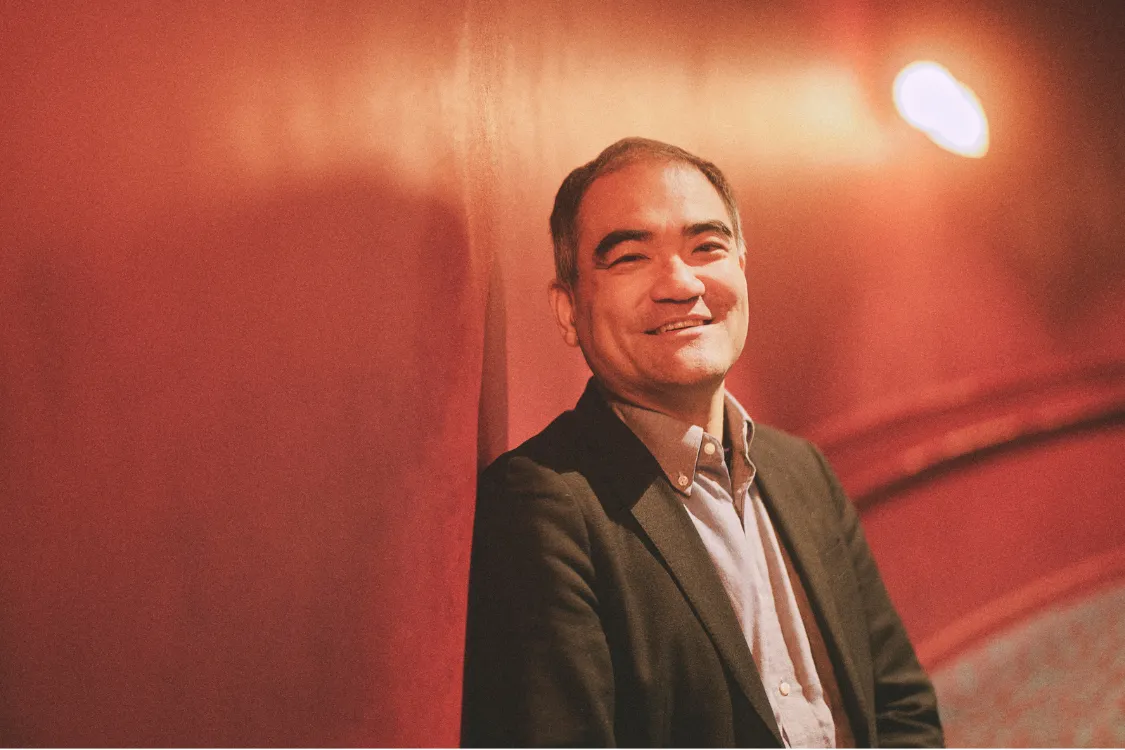
Sir Antonio Pappano opens the London Symphony Orchestra’s 2026/27 season at the Barbican on 18 October with a new piece by Dai Fujikura.
Amber Alchemy is a work for full orchestra, around ten minutes long, commissioned by Nomura to mark the Japanese financial group’s centenary in December 2025 and written for the LSO. It opens a concert that ends in Mahler’s Second Symphony, eighty minutes of orchestra, chorus and soloists.
The orchestra plays it in Japan first. The world premiere is at Suntory Hall in Tokyo on 28 September, then Fenice Sakai in Osaka on 30 September, before the piece comes back to the city it was written in.
It started with the beehives on the roof of Nomura’s London office.
We sat down with Fujikura ahead of the London dates to talk about how the piece came together, and about Pierre Boulez, the conductor who taught him the Mahler symphony that follows it.
Osaka, Dover College and four operas
Fujikura was born in Osaka in 1977 and came to Britain at fifteen, on a music scholarship to Dover College. He studied at Trinity College of Music and the Royal College of Music, then took a PhD at King’s College London under Sir George Benjamin.
He has written four operas: Solaris in 2015, The Gold-Bug in 2018, A Dream of Armageddon in 2020 and The Great Wave in 2026. His awards include an Ivor Novello Award, the Royal Philharmonic Society Award and the Hindemith Prize. From 2017 to 2026, he served as Artistic Director of the Born Creative Festival at Tokyo Metropolitan Theatre, and since October 2024 he has been Music Director of Izumi Sinfonietta Osaka, and his music is published by Ricordi Berlin.
The beekeeper on Nomura’s London roof
Nomura is one of Japan’s largest financial groups and has had a London operation for decades. Fujikura had written for that world before, which surprises people more than it surprises him.
“I know almost nothing about the financial world, although strangely I am fascinated by it. I watch films and TV series about it, and even listen to lectures by people in finance without understanding very much. For some reason I have also been invited to speak at gatherings in the financial world, at Bloomberg, or to rooms full of insurance experts, perhaps more often than I am invited to speak at music colleges.”
Nomura gave him a tour of the London office. He had asked to see the trading floor, “because until then I only knew trading floors from films”. They took him up to the roof as well, where the company keeps beehives.
The person who looks after them told him how she ended up there. She joined Nomura in finance, became more interested in nature and beekeeping, was supported by the company through her studies, and now runs the hives. Fujikura calls it “rather wonderful”.
The orchestra was the part that mattered most to him.
“What was new, and very special for me, was finally being asked to write for the London Symphony Orchestra after living in the UK for more than three decades.”
By then he had met the Nomura team several times, and some had been to his concerts. He kept coming back to that roof and started reading about bees.

Why the piece does not imitate the sound of bees
Fujikura’s orchestral music is full of small, fast, quiet detail: shimmering, fluttering and trembling textures that listeners regularly pick out, and Amber Alchemy has plenty. Given the commission, the obvious conclusion is that the shimmer is a beehive. He says that gets it the wrong way round.
“People often tell me that my orchestral music already contains lots of shimmering, fluttering and trembling sounds, which is true, and Amber Alchemy certainly has plenty of them. But they are not there because I am imitating buzzing.”
What the bees gave him was a structure.
“What fascinated me was the hive as a society: incredibly organised and at the same time completely organic. Thousands of tiny individual actions somehow accumulate into something much larger, a living architecture, almost a shared intelligence. That immediately felt musical to me.”
That idea is audible in the writing. Much of the piece is melodic and lyrical, with many separate lines running at the same time, each going its own way:
“They interweave, cluster, separate, and sometimes suddenly coordinate so that the whole orchestra seems to become a single organism. If the listener carries away that feeling, of a complicated world somehow becoming harmonious without losing all its individual life, I would be very happy.”
The thing to listen for is lines splitting apart and coming back together.
Why the piece is called Amber Alchemy
The two words in the title do different jobs. Amber comes from honey: the colour, the warmth, the glow. Alchemy is the word he cares about, and he explains why:
“Alchemy is perhaps the more important word for me, because it suggests transformation. Inside a hive, everything is constantly being transformed: nectar becomes honey, wax becomes architecture, foraging becomes nourishment, individual movement becomes collective meaning.”
Given who commissioned it, there is a second reading. Money also changes form, he points out, moving “through exchange, trust, risk and time”, and he was happy for that to sit in the background. “I liked that the connection was there without the music needing to become literally ‘about finance.’ The bees sit somewhere between these two worlds.”
Why Tokyo hears it before London
He wrote Amber Alchemy in London, about bees in London, for a London orchestra. The first three performances are in Japan. Asked where the piece belongs, he does not see a contradiction to resolve.
“Maybe it belongs precisely between countries. My life has been going back and forth between Japan and Britain for more than thirty years, while my musical life has always extended far beyond those two countries. I don’t particularly feel that a piece of music has to choose one country.”
The route suits the material, he adds, since the piece is about circulation, “things moving, exchanging and being transformed as they go”.


Pierre Boulez and the remarkably empty dressing rooms
Ten minutes of Fujikura, then eighty minutes of Mahler. He did not write with the pairing in mind. “I don’t really think about ‘the other guy’s’ music when I write my own,” he says. “Who knows what Amber Alchemy will be paired with when other orchestras programme it in the future.”
The Mahler still means something to him, for reasons outside the music. He came to know the Resurrection through Pierre Boulez, who was mentoring him at the time and conducting it often. Boulez gave the world premiere of Fujikura’s Stream State at the Lucerne Festival in 2005, and commissioned Code 80 for the Ensemble intercontemporain, for his own eightieth birthday concerts at the Cité de la Musique in Paris that year.
What he remembers most clearly is the dressing rooms.
“I particularly remember his dressing rooms. They were always remarkably empty. He would ask me to come in and sit down, then ask what I had been writing, who had performed my music, and where. He remembered everything.”
People kept coming in. Musicians and hall staff needed Boulez, once before an LSO concert, and he moved between their questions and Fujikura’s, “while still insisting that I stay sitting there”.
Boulez died in January 2016. Twenty years on, Fujikura’s music opens an LSO concert that ends in the symphony he learned from him. He is careful to say that is memory rather than design: “When I was writing Amber Alchemy, I wasn’t trying to answer Mahler or contrast with him. I was simply writing my own piece.”
From The Great Wave to ten minutes of orchestra
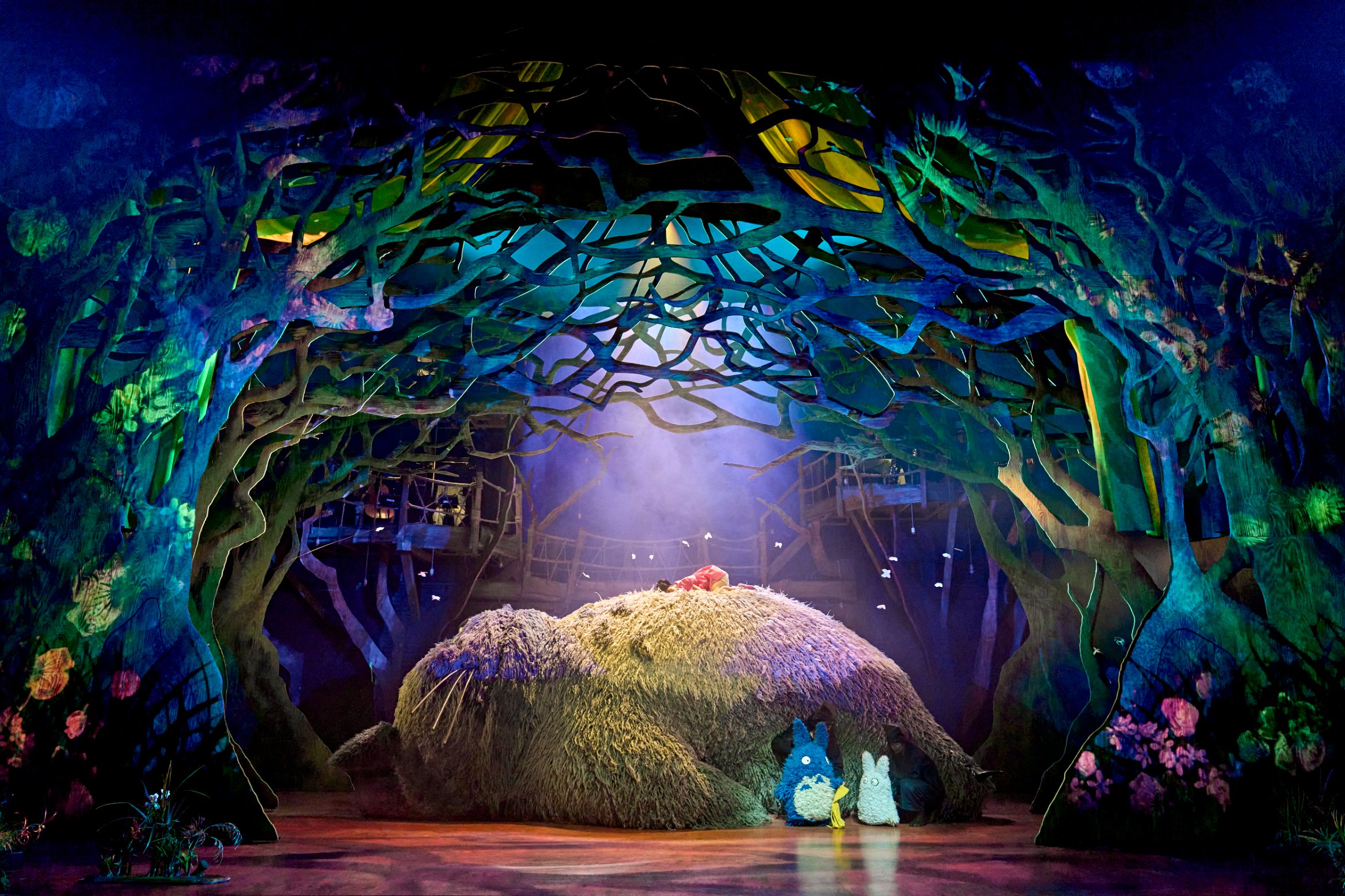
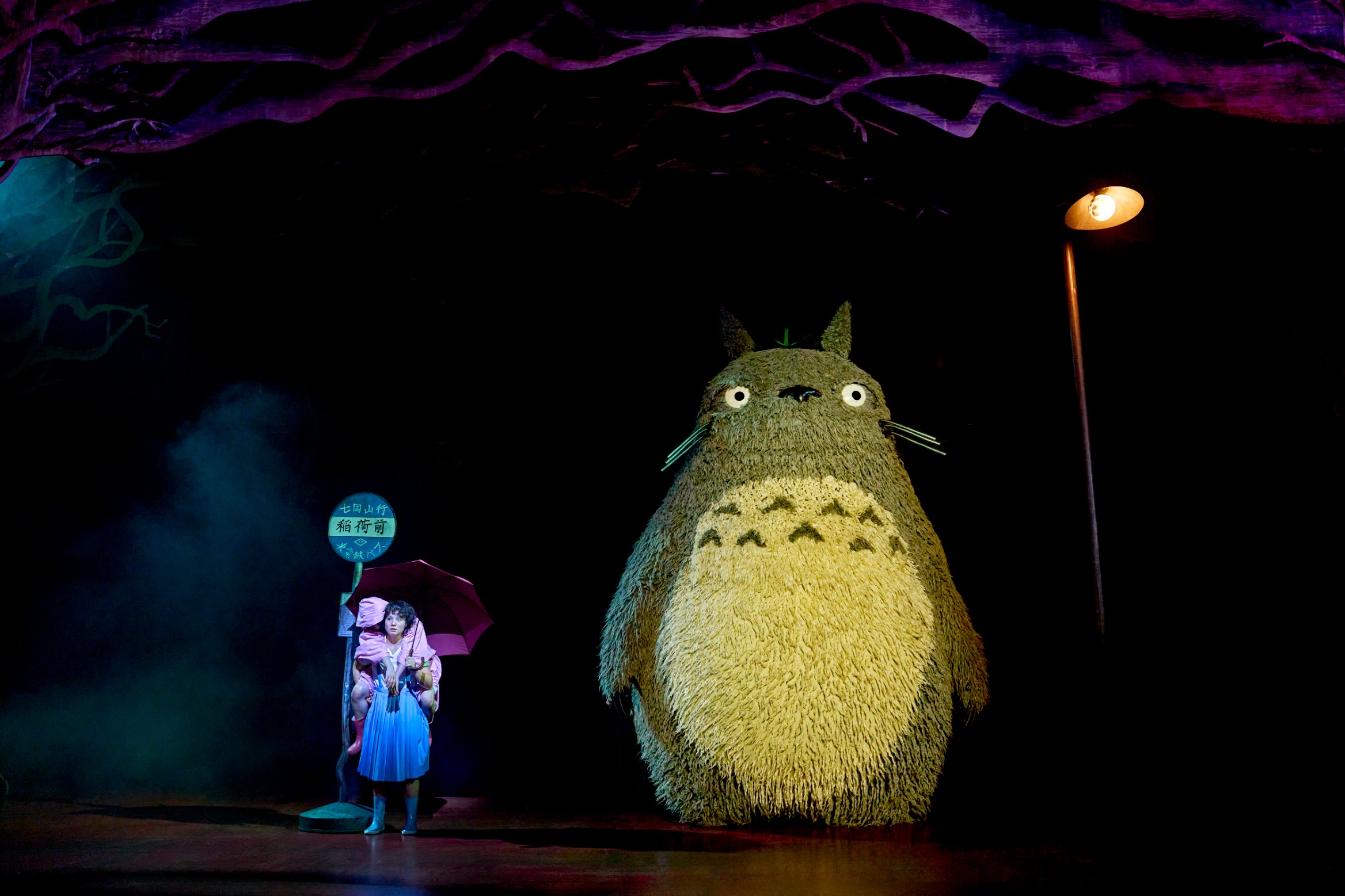
Fujikura’s fourth opera reached the stage seven months before this commission. Scottish Opera premiered The Great Wave at Theatre Royal Glasgow on 12 February 2026 and took it to the Festival Theatre in Edinburgh the following week. It runs a little over two hours and follows the artist Katsushika Hokusai and his daughter Ōi, an accomplished ukiyo-e painter who worked in his studio. Daisuke Ohyama sang Hokusai and Julieth Lozano Rolong sang Ōi.
Harry Ross wrote the libretto and Stuart Stratford conducted. Satoshi Miyagi staged it, the director London audiences know from his Antigone and from the Meiji era Medea he brought to The Coronet in 2025.
Opera means working with a librettist across a whole evening. Amber Alchemy is ten minutes with no words at all. Fujikura says the two jobs are closer than they look, because of how he thinks about sound before anything else:
“For me, all sound is deeply connected to sensory feeling. I am not only thinking about what is happening in the story. I am thinking: how warm is this scene? What does this sound taste like? How acidic, crispy or sweet is this passage if you could eat the sound? What is its fragrance? These things are very real to me when I compose.”
With concert music he works more loosely, as an abstract story that listeners, players and he himself read differently each time. It is also why he keeps writing for orchestras. Every player is a different person, “but collectively they can create one sound together at one particular moment. That is something only a group of human beings can do.”
If you know Hokusai’s The Great Wave off Kanagawa as an image and nothing more, the opera is a good way into the story behind it.
Shakuhachi, koto and the instruments he found after leaving Japan
Fujikura writes for traditional Japanese instruments, for baroque flute and strings, and for full orchestra. The Japanese instruments were the ones he came to latest.
“Traditional Japanese instruments were actually completely new instruments to me. I grew up in Japan, but I did not grow up studying shakuhachi, koto or shamisen. I first became seriously interested in them after I had already left Japan.”
He approached them “with exactly the same curiosity I would have towards any instrument I did not yet know”, and that curiosity later took him to the traverso flute, baroque strings, and Korean and Chinese traditional instruments.
What stays constant is the person playing. He learns an instrument by meeting a musician and working out “what it can physically do, what kind of sound it can make, but also what that particular performer can do with it”. His Double Concerto, for flautist Claire Chase and violinist Leila Josefowicz, came out of that.
Solaris, The Great Wave and the only-child analogy
We asked whether a thread runs through the work. He tends to approach each piece for what makes it different from the last one, he said, then offered a comparison and immediately questioned it:
“Maybe it is a little like siblings who are biologically related: other people might notice similarities between them, or perhaps not at all, but the siblings themselves are simply different individuals. Although I am not completely sure about that analogy, because I am an only child.”
Timothy Clark, and what British audiences already know about Japan
We asked what a British listener pictures when they hear the phrase contemporary Japanese composer. He would not generalise, and his reason is worth repeating: much of what he knows about Japanese traditional instruments came from British musicians.
He gave an example from the opera. The British Hokusai specialist Timothy Clark advised the team on The Great Wave, and Fujikura found it moving that someone from Britain “had devoted so much of his life to Japanese art, history and culture, and had become an internationally recognised authority on it”.
“I would be very reluctant to assume that a British listener has one particular image of what a ‘Japanese composer’ should sound like. Sometimes the person listening may know far more about a part of Japanese culture than I do.”
Barbican dates, returns and the LPO premiere on 4 November
LSO Season Opening: Mahler 2 and Fujikura
Barbican Hall, London. Sunday 18 October 2026, 7pm (UK premiere). Thursday 22 October 2026, 7pm.
Sir Antonio Pappano, conductor. Maria Bengtsson, soprano. Noa Beinart, mezzo-soprano. London Symphony Chorus and London Symphony Orchestra.
Fujikura, Amber Alchemy (10 minutes). Mahler, Symphony No 2 “Resurrection” (80 minutes). Around 90 minutes, no interval.
Both dates are currently sold out. Tickets ran from £18 to £75. Two routes still work: returns released by the LSO and Barbican box offices in the days before each concert, and the LSO’s Wildcard scheme for under 30s, which puts seats out at £12 to £16.
If you miss it, there is another London premiere three weeks later. The London Philharmonic Orchestra gives the UK premiere of Radiance at the Royal Festival Hall on 4 November 2026 under Karina Canellakis. In February 2027 the BBC Scottish Symphony Orchestra and Ilan Volkov play the Double Concerto in Glasgow and Aberdeen.
Before any of that, the piece gets its world premiere run on the LSO’s Japan tour. Osaka, where Fujikura was born, hears it on 30 September.
More performances and trailers are on his YouTube channel, and his site collects interviews going back years.