Cyberpunk: Edgerunners (2022) is an anime series made by Studio Trigger for Netflix and set in Night City, the world of the video game Cyberpunk 2077. It leads our list of 15 cyberpunk anime films and series, alongside classics such as Akira (1988) and Ghost in the Shell (1995).
The Cyberpunk genre is a classic, and since its early days, it has grown into a powerful source of inspiration for anime. Both Western and Japanese cyberpunk creators have added their own ideas that peek into the not-too-distant dystopian future.
From the Hong Kong-inspired Los Angeles of Blade Runner to the Chiba City of William Gibson’s novels, Asian high-tech cities shaped the look of cyberpunk. Japanese artists and animators took the idea and made it their own, and Katsuhiro Otomo’s Akira, a manga from 1982 and a film from 1988, put Japan at the centre of the genre. By the 1990s its style had spread through anime, manga and fashion.
“Modern Japan simply was cyberpunk. The Japanese themselves knew it and delighted in it. I remember my first glimpse of Shibuya… all that towering, animated crawl of commercial information… It is Blade Runner town. And it was. It so evidently was.”
William Gibson, writing in The Observer in 2001
Here are 15 cyberpunk anime films and series worth your time, from classics like Akira and Ghost in the Shell to Cyberpunk: Edgerunners, plus a few close relatives from space opera and mecha that share the genre’s big questions.
Circuit Dreams and Neon Shadows
What is Cyberpunk?
Before we step into the world of Cyberpunk Anime, let’s take a look into where it all started.
The word comes from Bruce Bethke’s short story “Cyberpunk”, written in 1980 and published in 1983. He joined cybernetics, the study of how machines and living things control and communicate, with punk, the chaotic music and nihilistic attitude of the late 1970s.
William Gibson’s novel Neuromancer (1984) then established cyberpunk as a genre in its own right, drawing on punk and early hacker culture. It opens in Chiba City, a Japanese city given over to black-market technology, before moving across a world run by corporations and artificial intelligence.



What Are the Main Themes in Cyberpunk Anime?
The themes covered in Cyberpunk typically contain futuristic technology features such as artificial intelligence, megacities, and advanced cybernetic technological developments. Cyberpunk narratives are often set in dystopian futuristic worlds that juxtapose gritty urban decayed worlds with high-tech advances.
Main characters are often shown in societies with sophisticated AI and cybernetics, against the backdrop of societal instability or revolution.
The beauty of Cyberpunk lies in its ability to create worlds and stories centred around one advanced technology, expanding it to a highly complex level.
1. Cyberpunk: Edgerunners (2022)
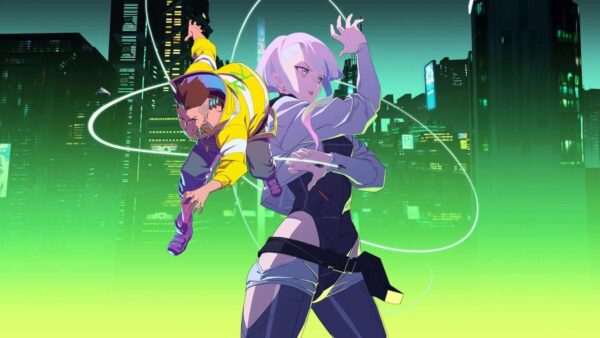
Cyberpunk: Edgerunners is a 10 episode series made by Studio Trigger for Netflix and set in Night City, the world of the video game Cyberpunk 2077. With its slick visuals and fast storytelling, it is one of the best cyberpunk anime of recent years, and it digs into a society consumed by advanced tech, corporate power and chaos.
The anime follows David, a street kid struggling to survive among cyber-enhanced criminals and powerful corporations. When he becomes an Edgerunner, he takes on the risky life of a mercenary working on the edge of the law.
What is an Edgerunner?
Edgerunners live on society’s fringes, doing whatever it takes to survive. They work as fixers, couriers or mercenaries who operate just outside the law, and they take pride in it.
Each member of David’s crew has their own cybernetic upgrades. Among them is Lucy, a skilled Netrunner with a mysterious past who dreams of escaping to the Moon.
All 10 episodes of Cyberpunk: Edgerunners (2022) are on Netflix. A standalone sequel, Cyberpunk: Edgerunners 2, arrived on Netflix on 20 October 2026 with a new crew and another 10 episodes.
2. The Animatrix (2003)
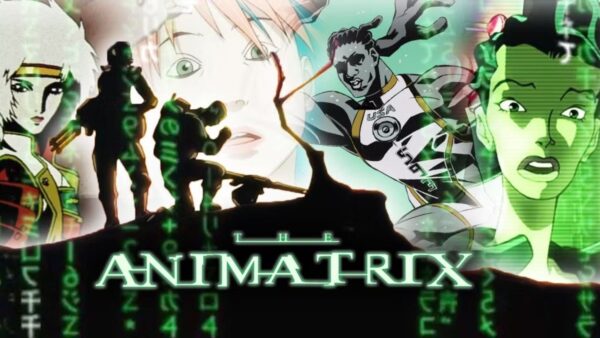
The Animatrix (2003) is a collection of nine short animated films that expand the Matrix universe, from the origins of the war between humans and machines to the lives of people trapped in the simulation. Most of the shorts were made by Japanese directors, including Shinichiro Watanabe of Cowboy Bebop, Yoshiaki Kawajiri and Koji Morimoto, so each one has its own animation style.
The Second Renaissance, Kid’s Story and Beyond
The Second Renaissance, directed by Mahiro Maeda, shows how artificial intelligence turned against humanity and started the war that devastated the planet. The Final Flight of the Osiris follows a ship’s crew on a desperate mission to warn the human resistance of a machine attack.
Kid’s Story and Beyond follow ordinary people who start to notice the cracks in their world and try to break free of it. Together, the shorts deepen the Matrix mythology and keep returning to the same questions of freedom, control and what counts as real, which makes The Animatrix a must-watch for any Matrix fan or cyberpunk lover.



3. Paprika (2006)
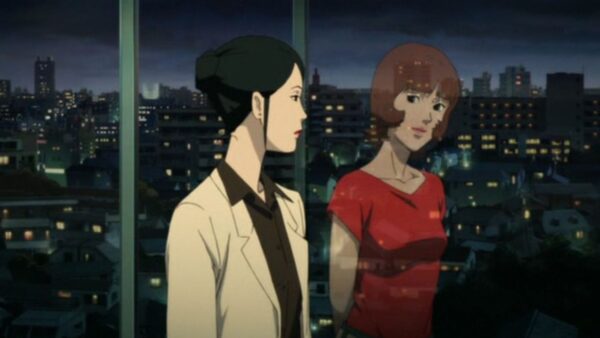
In Satoshi Kon’s last feature film, scientists have created a device called the DC Mini, which lets therapists enter their patients’ dreams. When it is stolen, dreams start to spill into the waking world, and Paprika, the dream detective alter ego of the psychiatrist Atsuko Chiba, has to stop the chaos. The film was made by Madhouse and is based on Yasutaka Tsutsui’s 1993 novel.
Dreams, Identity and the DC Mini
Paprika plays with identity and the blurry line between dreams and reality, and it asks what happens when technology gives other people access to our subconscious. Its parade of dream images is one of the most dazzling sequences in anime, and its themes make it a natural partner to the films on this list that ask where the mind ends and the machine begins.
4. Serial Experiments Lain
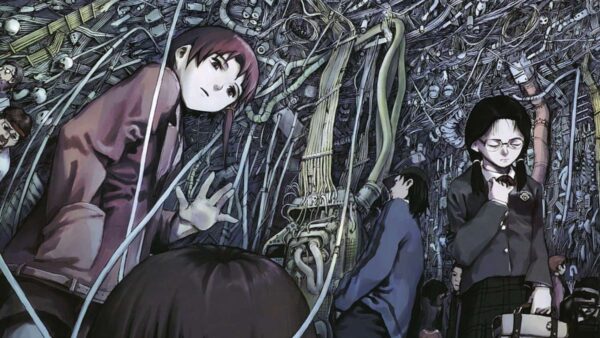
Serial Experiments Lain is a 13 episode series from 1998, written by Chiaki J. Konaka with character designs by Yoshitoshi ABe. It aired just as home internet was spreading in Japan, and its eerie atmosphere and surreal animation still make it one of the most unsettling shows in the genre.
Lain Iwakura and the Wired
Lain Iwakura is a shy 14-year-old girl who becomes curious about the Wired, a network much like the internet, after classmates receive emails from a girl who has recently taken her own life. The deeper Lain goes into the Wired, the more she learns about who she really is, and the line between the virtual world and the real one starts to disappear.
The show asks questions about identity, consciousness and life online that feel even sharper now than they did in 1998, which is why it is a must-watch for fans of cyberpunk.
Is Serial Experiments Lain Banned?
There is no official ban on Serial Experiments Lain. Its disturbing themes, including suicide, can make it hard viewing, which is probably where the idea that it was banned comes from.
5. Neon Genesis Evangelion
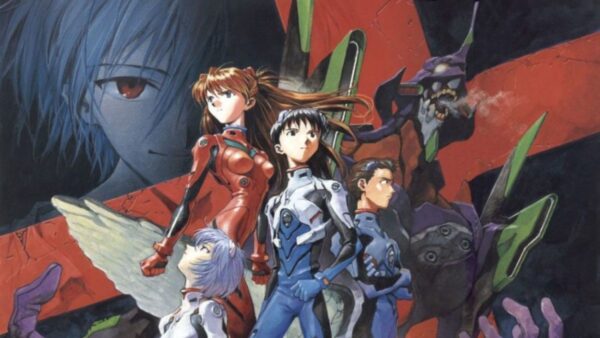
Hideaki Anno’s Neon Genesis Evangelion is a legendary 1990s mecha series. First airing in 1995, it follows Shinji Ikari, a teenager who must pilot a giant biomechanical robot called an Eva to fight monstrous beings known as Angels. Alongside him are Rei Ayanami and Asuka Langley Soryu, each with their own struggles, and its mix of action, religion and psychoanalysis makes it one of the most complex anime series ever made.
Themes and Cyberpunk Influence
Evangelion is a mecha show first, so it sits on the edge of cyberpunk. It earns its place here through its secretive organisation NERV, its fortress city Tokyo-3 and its questions about identity, mental health and what technology does to the people who use it, all told in a dark, introspective tone that cyberpunk fans will recognise.
Neon Genesis Evangelion Watch Order
To fully understand the Neon Genesis Evangelion franchise, follow this watch order:
- Neon Genesis Evangelion (episodes 1 to 26)
- Neon Genesis Evangelion: Death & Rebirth
- The End of Evangelion (for the original ending)
- Rebuild of Evangelion films (for a modern retelling)
Start with the original 26 episode series. Death & Rebirth (1997) is mostly a recap, so the essential follow-up is The End of Evangelion (1997), which replaces the series’ famously abstract last two episodes with a full, apocalyptic ending.
Rebuild of Evangelion
The Rebuild of Evangelion films began in 2007, more than a decade after the series ended. Hideaki Anno planned them as four films that retell the story for a new audience before heading somewhere entirely new, and the last one arrived in 2021.
To watch the Rebuild of Evangelion, follow this order:
- Evangelion: 1.0 You Are (Not) Alone (2007)
- Evangelion: 2.0 You Can (Not) Advance (2009)
- Evangelion: 3.0 You Can (Not) Redo (2012)
- Evangelion: 3.0+1.0 Thrice Upon a Time (2021)
Neon Genesis Evangelion Characters and Angels
Shinji, Asuka and Rei drive the emotional core of the series. The Angels they fight are each completely different, from a giant floating crystal to a virus that infects NERV’s computers, so every battle has to be solved in a new way. Evangelion’s influence spans anime, manga and mainstream pop culture, and it is still regarded as one of the best anime of all time.
6. Metropolis
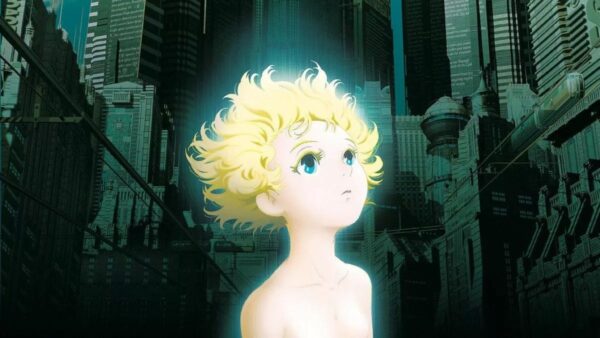
Metropolis (2001) was directed by Rintaro, with a screenplay by Akira creator Katsuhiro Otomo, and is based on Osamu Tezuka’s 1949 manga, which borrowed its title from Fritz Lang’s 1927 silent film. It pairs retro-futuristic art deco design with a story about who gets to count as human.
Shunsaku Ban, Kenichi and Tima
In the sprawling city of Metropolis, a world where humans and machines live side by side, tension runs high as inequality and discrimination grow worse each day. Violence and unrest fill the streets. The story follows Japanese investigator Shunsaku Ban and his nephew Kenichi, who arrive in Metropolis to track down Dr. Laughton, a scientist accused of illegal human experiments like organ trafficking.
While searching, Kenichi finds Tima, a girl in the scientist’s lab with no memory of her past, and helps her escape. Shunsaku, determined to find both Kenichi and the truth, digs into the city’s darkest secrets and the powerful Duke Red, who is pulling the strings behind the scenes. Duke Red and his adopted son Rock both have dangerous reasons for chasing Tima, whose origins hold the key to controlling Metropolis itself.
The film is a feast to look at, with detailed backgrounds and fluid character animation. Every frame feels alive, filled with small actions like characters smoking, tossing coins or hurrying past in the crowd.
7. Blame! (film)
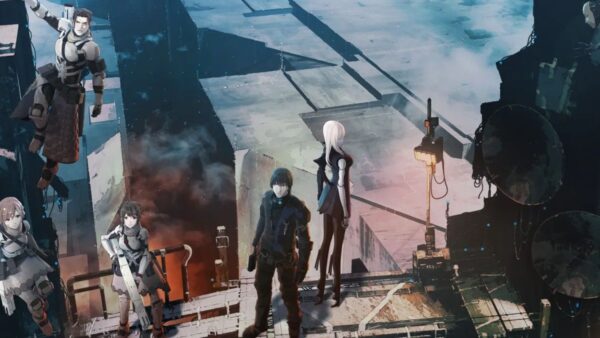
Blame! (2017) is a Netflix film made by Polygon Pictures and based on Tsutomu Nihei’s manga. It is set in the City, a megastructure that has grown out of control for so long that nobody knows where it ends, and it is a dark, atmospheric journey with very little dialogue.
Killy, Zuru and the Net Terminal Genes
Zuru, a young girl from a dwindling village, is searching for food when her group triggers the Safeguard, the City’s robotic defence system. They are saved by Killy, a silent wanderer who has travelled up from deep below the City looking for humans who carry the Net Terminal Genes. Those genes could let people take back control of the City and shut down the Safeguard, so Zuru’s group joins him on what may be humanity’s last hope.
Like Akira, Blame! is about technology growing beyond human control, and its vast, empty architecture makes the loneliness of that future feel physical. It is streaming on Netflix.
8. Akira (film)
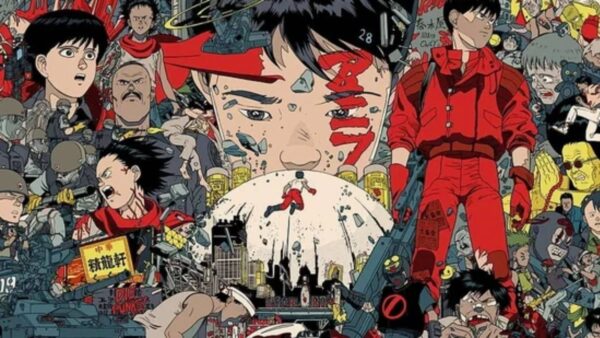
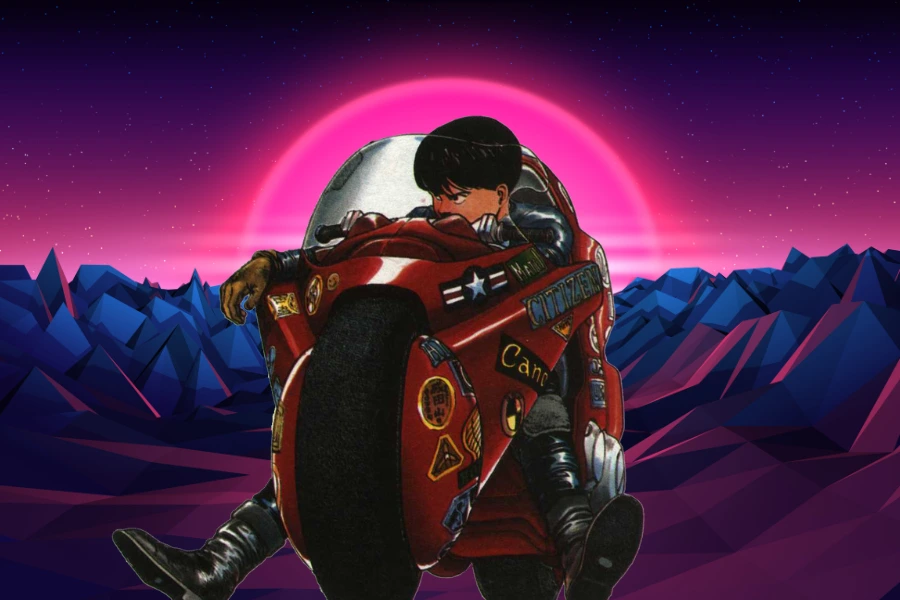
Katsuhiro Otomo’s Akira (1988), based on his own manga, is the film that introduced many Western viewers to anime, and its influence on science fiction and animation is hard to overstate.
Kaneda, Tetsuo and Neo-Tokyo in 2019
In 1988, a boy with psychic powers causes a massive explosion that destroys Tokyo and leads to World War III. Fast forward to 2019, and Tokyo has been rebuilt into Neo-Tokyo, a city plagued by gang violence and terrorist acts against the government.
Shoutarou Kaneda is the leader of a gang called “The Capsules,” known for riding powerful, customised motorbikes. They frequently clash with a rival gang called “The Clowns.” During one of these fights, Kaneda’s best friend, Tetsuo Shima, is in an accident with a mysterious boy who has escaped from a government lab. After the encounter, Tetsuo starts developing strange and dangerous powers. As the government tries to capture Tetsuo to prevent another disaster, his abilities grow, threatening to destroy the city once again.
Underneath the bike chases, the film is about human experimentation, a government that hides what it has done, and power that grows faster than anyone can control. Kaneda’s red motorbike and the slide he makes on it have been copied in films, series and games ever since.
9. Ghost in the Shell
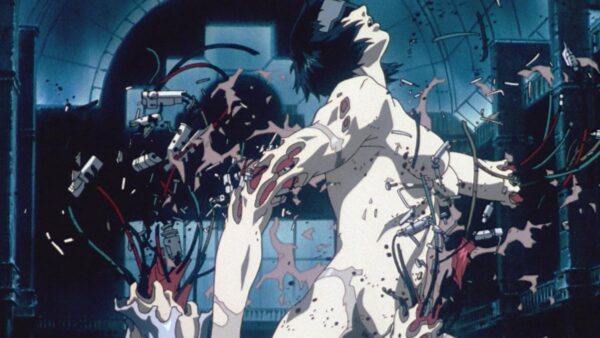
Mamoru Oshii’s Ghost in the Shell (1995), made by Production I.G and based on Masamune Shirow’s manga, is one of the most famous anime of the 1990s and has captivated audiences with its philosophical story and groundbreaking animation ever since.
Brief Overview of the Story
The plot follows Major Motoko Kusanagi, a cybernetically enhanced government agent, as she tracks a mysterious hacker known as the Puppet Master. As she delves deeper into the investigation, questions about identity, consciousness, and what it means to be human emerge. Alongside a team of diverse characters, including Batou and Togusa, Major Motoko faces not only external enemies but also inner conflicts about her existence.
Why Ghost in the Shell Is a Cyberpunk Classic
Oshii modelled the film’s crowded, rain-soaked city on Hong Kong, and scenes like the Major vanishing in thermo-optic camouflage and the final fight against a spider tank have become genre landmarks. Kenji Kawai’s haunting choral score adds to the mood, and the Wachowskis have named the film as an influence on The Matrix.
10. Planetes
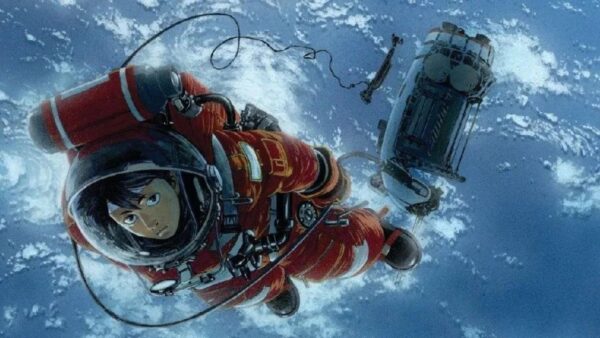
Planetes (2003) is a hidden gem for fans of science fiction. Made by Sunrise and based on the manga by Makoto Yukimura, who later wrote Vinland Saga, it is set in 2075, when so much junk is circling Earth that collecting it has become a job. Its take on future technology is unusually realistic, from zero gravity to the long-term effects of living in space.
Ai Tanabe, Hachimaki and the Toy Box
Ai Tanabe, an energetic new recruit, lands a job in Technora Corporation’s Debris Section, the team that clears hazardous debris between Earth and the Moon. She soon learns the section is the laughingstock of the company, underfunded and short-staffed, and stuck with a worn-out ship called the Toy Box. Her new colleagues include Hachirota Hoshino, known as Hachimaki, a hot-headed astronaut who dreams of owning his own ship.
Around its everyday working life in orbit, Planetes tackles corporate greed, the gap between rich and poor nations, environmental damage and terrorism, and asks what humanity’s push into space really costs.
11. Legend of Galactic Heroes/Ginga Eiyuu Densetsu
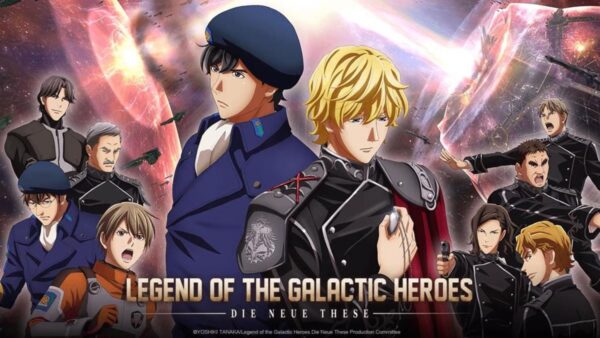
Legend of the Galactic Heroes (Ginga Eiyuu Densetsu) is based on Yoshiki Tanaka’s novels and was first animated as a 110 episode series released between 1988 and 1997. It is less a cyberpunk story than a vast space opera, but it is often praised as one of the most complex anime ever made, and fans of political science fiction should not miss it.
Reinhard von Lohengramm and Yang Wenli
The story follows a 150-year war between the Galactic Empire and the Free Planets Alliance, which finally starts to shift when two brilliant commanders emerge: Reinhard von Lohengramm, an ambitious military genius, and Yang Wenli, a reluctant strategist who believes in democracy.
Reinhard, with his close friend Siegfried Kircheis at his side, rises through the Imperial ranks to topple the decaying Goldenbaum Dynasty and rescue his sister. Yang stays loyal to his ideals and teaches his young ward, Julian Mintz, that freedom is worth fighting for even as authoritarianism looms. As they clash in huge space battles, both men start to question what they are fighting for, and the series weighs democracy against autocracy, the cost of war and the morality of leadership.
Production I.G began a remake, Legend of the Galactic Heroes: Die Neue These, in 2018, and the prequel Legend of the Galactic Heroes Gaiden adds background to key characters.
Watch Order for Legend of the Galactic Heroes
- Legend of the Galactic Heroes: My Conquest is the Sea of Stars (Movie)
Start with this to get an introduction to the main characters and the universe. - Legend of the Galactic Heroes: Overture to a New War (Movie)
This movie expands on the first two episodes of the main series with more depth. - Legend of the Galactic Heroes (OVA)
Watch the original 110-episode OVA series, which is the core story of the saga. - Legend of the Galactic Heroes Gaiden (OVA)
These are prequel episodes that dive deeper into the backgrounds of key characters. It’s optional but recommended for more context. - Legend of the Galactic Heroes: Die Neue These (Remake)
This is the modern remake of the original series. You can watch it after or before the OVA series depending on your preference. It brings updated visuals while staying true to the story.
12. Cowboy Bebop
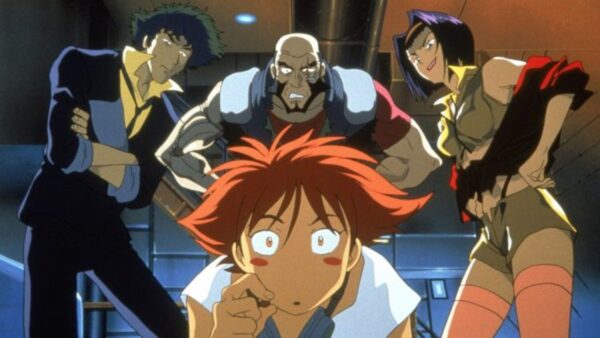
Cowboy Bebop (1998), directed by Shinichiro Watanabe at Sunrise, is often called one of the best anime of all time. Its 26 episodes follow a crew of bounty hunters, known as cowboys, aboard their battered ship, the Bebop, in a future where humanity has spread across the solar system.
Spike, Jet, Faye, Ed and Ein
The crew is made up of the laid-back Spike Spiegel, the ship’s owner and former cop Jet Black, the gambler Faye Valentine, the teenage hacker Ed and Ein, a very clever corgi. Between bounties, Spike’s past in a crime syndicate catches up with him in the shape of his former partner, Vicious. The show blends space western, film noir and cyberpunk, and its unforgettable soundtrack by Yoko Kanno and her band The Seatbelts is as famous as the series itself.
Every character is haunted by their history, and the series keeps returning to loneliness and the pull of the past, right up to its bittersweet finale and the closing card that has become a fan catchphrase: “See you, space cowboy.” The story continues in the film Cowboy Bebop: The Movie (2001). Netflix’s 2021 live-action version was cancelled after one season.
13. Kurau: Phantom Memory
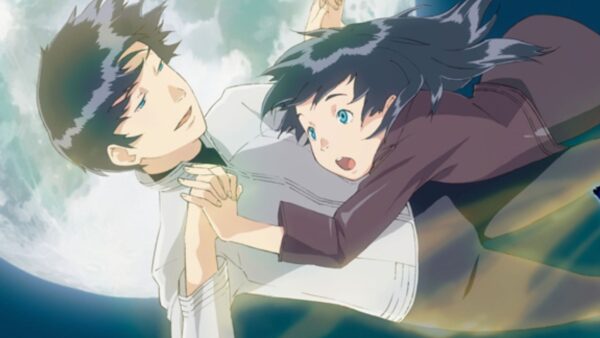
Kurau: Phantom Memory is an underrated 2004 series from the studio Bones that mixes science fiction action with a quiet, emotional story. It is set in 2100, when people have settled on the Moon.
Kurau, the Rynax and Christmas
On her 12th birthday, Kurau Amami visits the lunar lab where her father is researching a new energy source. An experiment goes wrong, and Kurau’s body is taken over by a Rynax, one of a pair of energy beings. The new Kurau has extraordinary powers, which make her a target, and years later she finally meets her missing pair, a girl she names Christmas. The series follows their bond and their fight to survive in a society that fears them, and it asks what it means to be human in a world of government secrets and human experimentation.
14. Levius
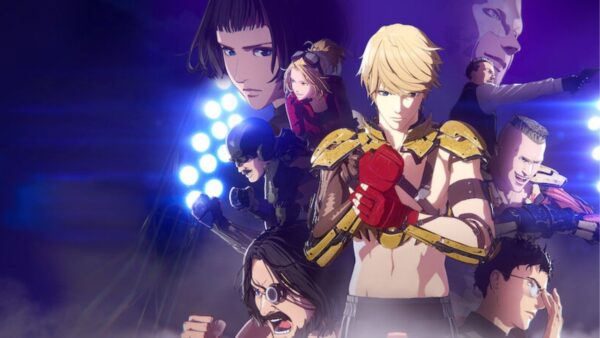
Levius (2019) is a Netflix series made by Polygon Pictures and based on Haruhisa Nakata’s manga. It is set in a steam-powered, cybernetically enhanced world still rebuilding after a devastating war, where fighters with mechanical limbs compete in brutal arenas in a sport called mechanical martial arts.
Levius Cromwell and Mechanical Martial Arts
Levius Cromwell is a young fighter whose father was killed in the war, which also left his mother in a coma and cost him his right arm. He fights with a mechanical arm, trained by his uncle Zacks. He wants to win to survive, and his rise through the rankings pulls him towards the dark secrets of the sport and the people who run it. The fights mix strategy with nonstop action, and the series deals with trauma, loss and how technology can both help and dehumanise.
Levius is streaming on Netflix, and the manga continues the story for readers who want more.
15. Casshern Sins
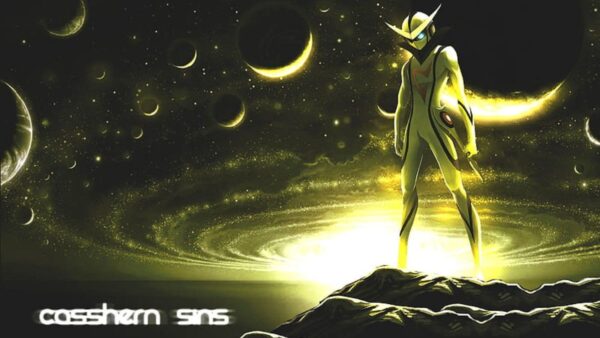
Casshern Sins (2008) is a Madhouse reboot of the 1973 Tatsunoko series Casshern. It takes place in a decaying future where humanity is close to extinction and the world belongs to robots, and it follows Casshern, an immortal warrior who is blamed for the destruction around him.
Casshern, Luna and the Ruin
The robots were built to last forever, but after Casshern is said to have killed Luna, a figure once worshipped as a saviour, a decay called the Ruin spreads, rusting their bodies beyond repair. Their last hope is a rumour that eating Casshern will make them immortal again. Casshern himself has no memory of who he is or what he did, and he wanders the broken world hunted by the robots who refuse to accept their fate.
The series has a slow, reflective pace, with long moments of stillness and philosophical dialogue, and it is about confronting death and searching for meaning while everything falls apart.
The Netflix release date of Cyberpunk: Edgerunners 2 was checked against CD PROJEKT RED’s press release on 21 November 2026.