The Osaka Science Museum stands as a striking white cubic landmark in Nakanoshima, offering visitors an accessible journey through scientific discovery. This hands-on institution provides four floors of interactive exhibits, demonstration shows, and one of Osaka’s largest planetariums, all designed to make learning engaging for curious minds of all ages.
For international visitors, navigating this attraction can present unexpected challenges, from ticketing procedures to language barriers. This practical guide will help you maximise your experience at this educational destination, whether planning a family outing or seeking an indoor activity in central Osaka.
Osaka Science Museum at a Glance
Getting the Most Out of Osaka Science Museum


Visiting the Osaka Science Museum

Knowing what Osaka Science Museum has in store for its visitors will help you decide whether it fits your travel plans and expectations.
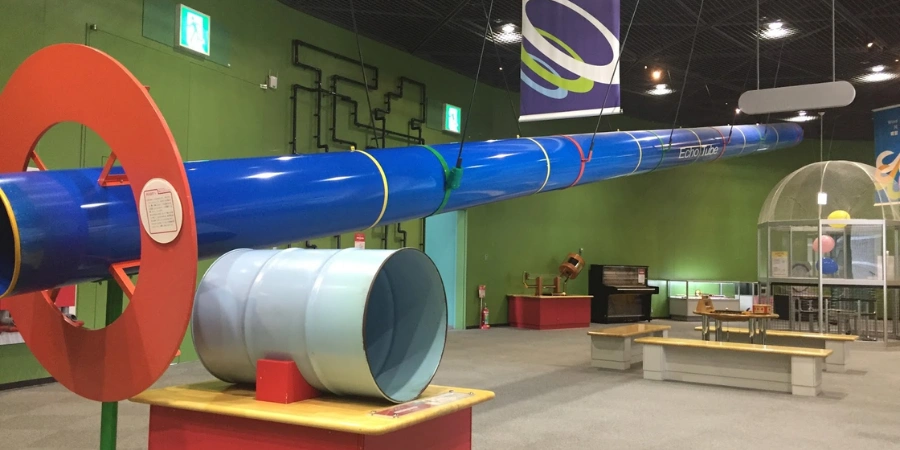
From the get-go, the Osaka Science Museum is recommended for families with young children aged roughly 6 to 14 years old who enjoy hands-on learning. Much of the experience is built around interactive exhibits such as pedal-powered generators, sound tubes, and robotic spaces that let children “do” science rather than just read about it. Even children who do not speak Japanese can easily participate in these exhibits as they’re designed to be intuitive. The Osaka Science Museum is ideal for parents who want to take their children to a playful yet educational environment that’ll teach them the basics of physics, electricity, and other scientific concepts.
The Osaka Science Museum is also a strong choice for visitors who are highly interested in science. Many adults visit the museum simply because it’s fun! Those who appreciate practical demonstrations will find the museum exciting with its planetarium, lightning shows, and small-scale chemistry exhibits. It doesn’t present itself as a high-end research institution; instead, it showcases complex scientific phenomena in an approach that is simple, relatable, and memorable.
Just a heads up though, the majority of the science exhibits in the museum are designed at an elementary-level, so don’t expect displays that are highly theoretical or intricate. Most of them are geared towards school-age children and families, so some may feel that the museum is too simple or too focused on play-based learning. Non-Japanese speakers may also encounter some limitations as some exhibits with narration, like the planetarium shows and live science demos, remain primarily in Japanese.
If you’re planning to visit the Osaka Science Museum, be prepared to spend at least half a day in it. It’s not just a fast-paced sightseeing destination, it’s an immersive museum experience. Going through all of the floors of the museum may take around 2 to 3 hours, so spend your time wisely at the Osaka Science Museum learning more about the beauty of science.
Finding and Accessing the Museum
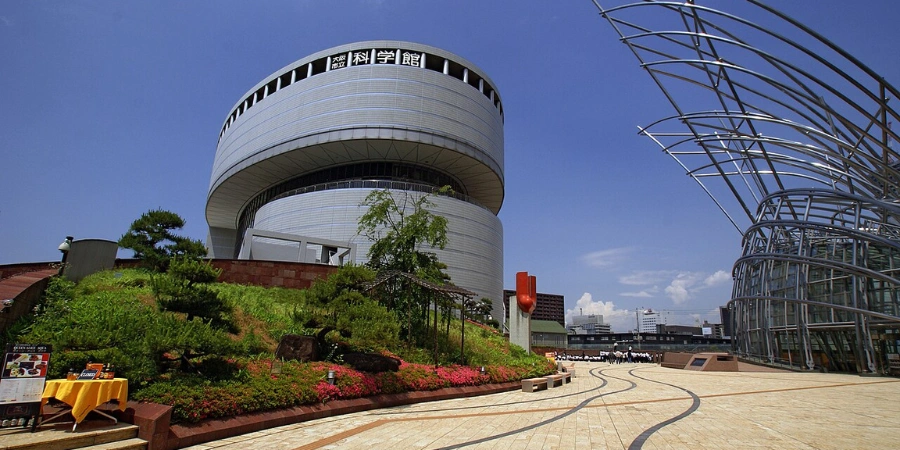
The Osaka Science Museum occupies a prominent position on Nakanoshima island, identifiable by its distinctive white cube structure topped with a silver dome. Here are the options on how to get there.
By Public Transit (Easiest and Cheapest Option)
Here are the two main stations that people use to access the museum easily.
- Higobashi Station (Yotsubashi Line): Exit 3 drops you onto a straight 5-minute (500m) walk across the bridge to the museum entrance. Ideal if coming from bustling Umeda (north) or Namba (south), just 10-15 minutes by subway.
- Watanabebashi Station (Keihan Nakanoshima Line): Exit 2 is about a 5-minute (400m) walk, and the closest option if you are arriving on the Keihan.
- Nakanoshima Station (Nakanoshima Line): Exit 1 leads to a relaxing 10-minute (800m) stroll through Nakanoshima Park. This route is ideal for those who are not in a rush and want to sightsee along the way.
Pro tip: Use Suica cards for seamless fares (around ¥200-300 one-way). Download Hyperdia or Google Maps for real-time schedules.
By Bus or Taxi (For Groups or Luggage)
- Buses: City Loop Bus (¥150) stops right outside of Osaka Station or Umeda. From Kansai Airport, take the Airport Limousine Bus to Nakanoshima (1 hour, ¥1,200).
- Taxis: Quick 15-20 minutes from central Osaka (¥2,000-3,000). Ask for “Nakanoshima no Kagaku Kan” (中之島の科学館). Rideshare apps like JapanTaxi work well.
Unlike many Japanese attractions integrated with transit hubs, reaching the Osaka Science Museum requires outdoor walking from any station. During summer heat or rainy season downpours, this affects visitor comfort, plan accordingly or bring weather protection.
How the Split-Ticketing System Works
The Osaka Science Museum has a different kind of ticketing system that leaves some visitors confused, so here’s a guide on how it works. Understanding how it works will help you budget properly and avoid frustrations, especially if you’re keen on seeing the planetarium.
The museum operates two main ticket types:
- Exhibition Hall ticket
- This covers access to the four floors of interactive exhibits, but it does not include the planetarium.
- Prices: ¥400 for adults, ¥300 for high school and university students, and free for junior high school students and younger. The exhibition hall ticket is valid for one day.
- Planetarium ticket
- A separate admission specifically for one planetarium show; this is sold individually.
- Prices: ¥600 for adults, ¥450 for high school and university students, and ¥300 for junior high school students and younger.
Pro-tip: The final projection of the planetarium starts at 4:00 PM (16:00), and the entrance and re-entry to the exhibition hall are until 4:30 PM (16:30). You can check the schedule of the planetarium shows before your visit here.
When and How to Buy Tickets
First and foremost, check the schedule board near the entrance or information counter first and identify which shows or events are available for the day. From here, decide whether or not you and your group want to just buy the exhibition hall ticket or avail of the planetarium show.
If you’re unsure about the planetarium, you can buy the exhibition-hall ticket first, then decide later whether to add a planetarium ticket. However, in busy periods, this “save it for later” approach may mean no seats remain.
Pro Tip: To avoid long lines for tickets on the day of your visit, you can already purchase your tickets in advance via their website here. The purchase period should be 7 days before the date of visit.
Strategic Museum Navigation
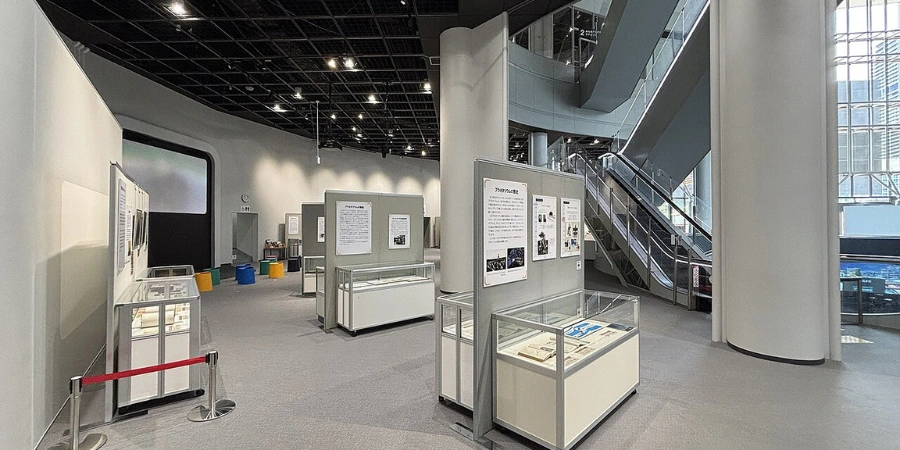
The “Elevator First” Approach
The Osaka Science Museum is easy to navigate, but using the “Elevator First” approach can make your visit feel more efficient. Instead of following the usual instinct to start at ground level and work up, the smoother strategy is to head straight to the top and then move down.
Upon entering, take the elevator directly to the 4th floor before heading into the main galleries. From there, explore each floor in sequence down to the 1st. This approach may feel counterintuitive at first, but it offers two clear advantages.
Energy Efficiency
Moving downward through the museum is easier on your legs and joints than repeatedly climbing stairs or riding elevators between floors. This is especially helpful for families with young children, strollers, or older visitors who may tire more quickly.
Starting high and working down lets you save energy for hands-on exhibits on the lower levels, while still catching the major highlights at the beginning of your visit.
Narrative Coherence
The museum’s layout is designed to tell a kind of story:
- The 4th floor focuses on the universe, the basic principles of science, and Osaka’s history with science and technology.
- The 3rd floor shifts to natural phenomena with matter, including minerals, crystals, molecules, and atoms through exhibits and live demos.
- The 2nd floor explores gravity, wind, sound, and other physics topics through playful, child-friendly experiments.
- The 1st floor concludes with seasonal exhibitions, an outdoor sundial, and the reconstruction of the “Gakutensoku” robot.
- The basement hosts the beloved planetarium that runs 45-minute shows every day.
This structure helps families and groups absorb the material more naturally, as each floor builds on the sense of wonder created on the one before.



A Tour Through Osaka Science Museum’s Floors
The museum spans four floors from cosmic scales to human ingenuity. Prioritize these highlights and use the “Elevator First” approach to fully maximise your Osaka Science Museum experience!
4F: Scientific Exploration
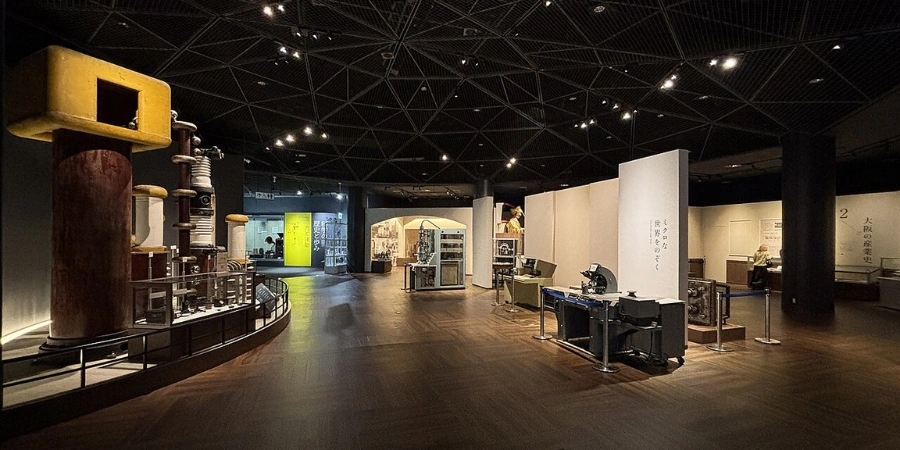
Starting your tour here will introduce to you three main exhibits; the universe, the history and progress of science, and the role of science in Osaka.
On this floor, you will first encounter the “Our Universe” section, which invites you to look at phenomena beyond Earth like the phases of the moon, the aurora, and the milky way galaxy. Hands-on activities like the Planet Weight Scale lets you measure your weight on different planets, and the Digital Planisphere lets you explore constellations and starry skies.
Next, the section of “Science of Osaka” gives you a glimpse of how the city developed its identity as a centre for scientific industry and innovation. This exhibit is especially interesting if you want your visit to include a bit of historical context, not just interactive science displays.
The final area of the 4th floor focuses on “The History of Science and Progress” with various hands-on exhibits that let you experiment with different science principles like force and motion, light and heat, and electricity and magnetism.
Together, these activities show how science has evolved from simple observations to modern technologies, giving you an exciting start of the museum as you go down to the next floor.
3F: Exploration of Matter
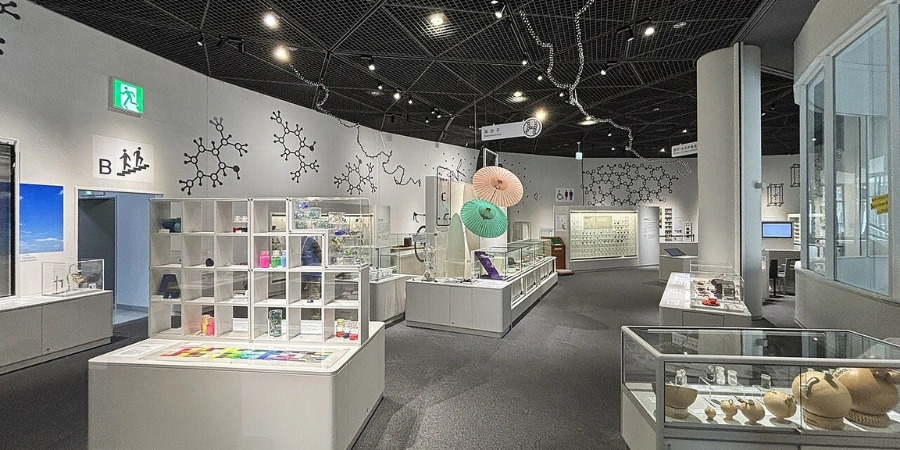
The 3rd floor, titled as the “Exploration of Matter,” focuses on the building blocks of everyday materials, with a hands-on library, interactive exhibits, and a science stage for live demonstrations. Expect engaging displays on minerals, crystals, metals, ceramics, glass, plastic, and even the chemistry of colour.
2F: Science for everyone to enjoy
You can use microscopes, experiment on the growth of crystals, and try out an atomic scale. On this floor, the science stage hosts hourly shows with staff-led experiments on electricity, chemistry, and physics. This floor is perfect for curious kids and adults to touch, test, and learn how chemistry and natural materials create the objects we rely on everyday.
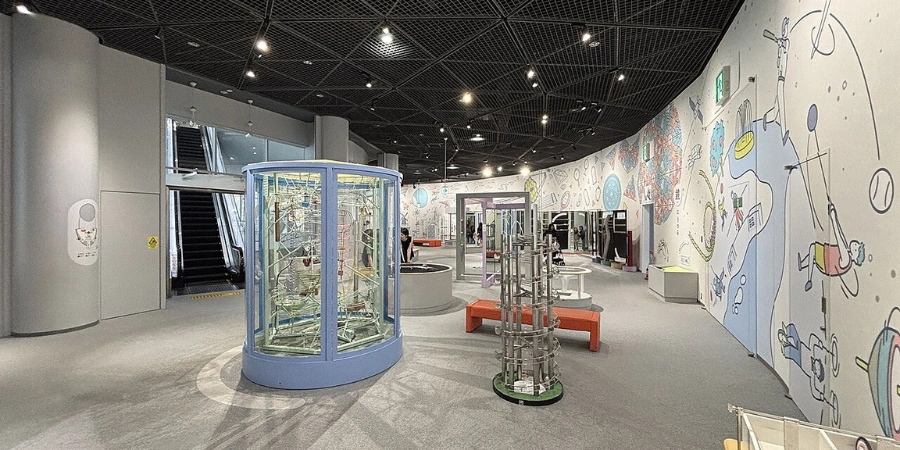
This floor is designed for younger children but is genuinely fun for all ages thanks to its playful and highly interactive exhibits on rolling balls, mirrors, wind, sound and magnets. Learn more about projectile motion trajectories on bouncy ramps, create optical illusions with their anti-gravity mirror, and make tornadoes from swirling air at the wind exhibit.
Additionally, there are sound stations that feature musical instruments from all over the world, Kundt’s Tubes, and even wave projectors. Amuse yourself with magnets as you fish iron balls with electromagnets, levitate globes, and watch dancing chains. The second floor is considered the museum’s “playground” with all of its fun activities, offering a more light-hearted experience.
1F: Everyone’s Science Lab
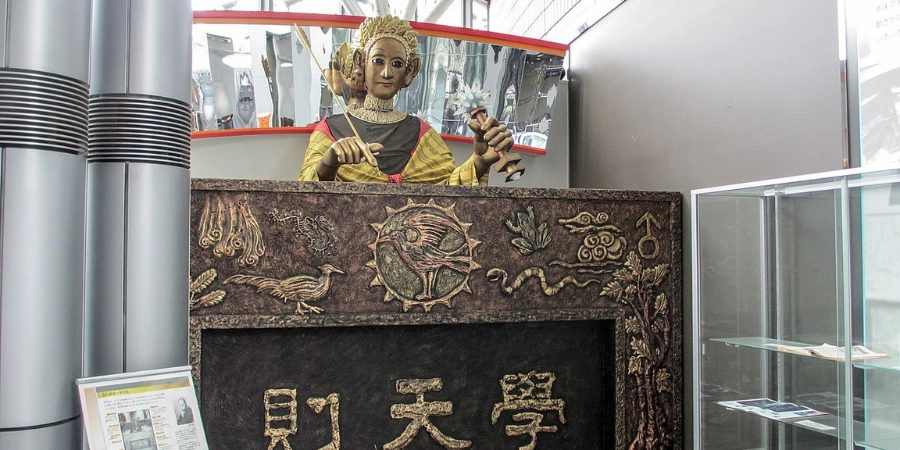
The first floor serves as both the museum’s welcoming entry point and the conclusion to your Osaka Science Museum adventure. Labeled as “Everyone’s Science Lab,” this area is where the museum holds temporary special exhibitions, which rotate seasonally and feature a diverse set of topics like robotics or environmental science.
Outdoors, a large sundial invites you to track time using the sun’s shadow before heading inside and being greeted by a detailed replica of Gakutensoku, Japan’s first humanoid robot built in 1928 for the Kyoto Imperial Commemoration Exposition. If you follow the top-to-bottom strategy of touring the museum, you can end your day here by browsing through the museum’s shop and grab a memento before leaving.
B1F: Zeiss Plaza
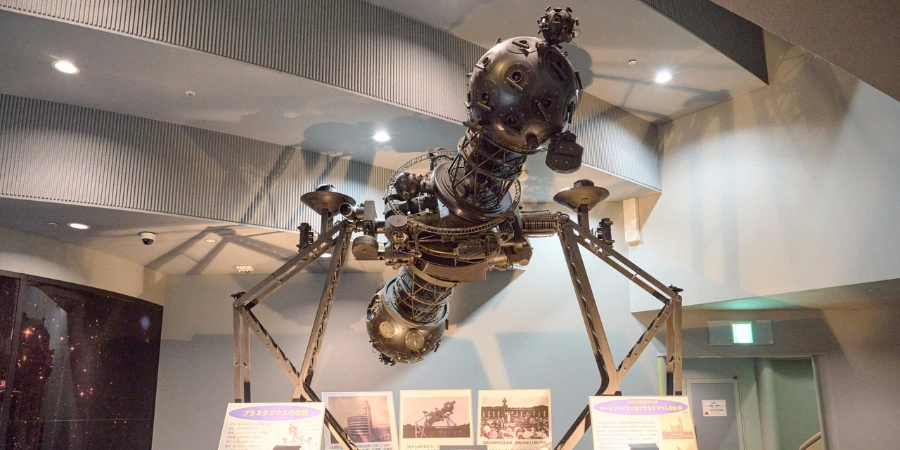
The planetarium is one of the star attractions of the museum, tucked in the basement called “Zeiss Plaza.” The iconic planetarium is a 26.5-metre dome that recreates the night sky and stars visible from Osaka, with changing seasonal programs that last for around 45 minutes per show.
Make sure to buy planetarium tickets at the counter as soon as you arrive! Take note that the planetarium shows are live-narrated lectures conducted entirely in Japanese, but you can still enjoy it nonetheless as a visual spectacle.
Alongside the planetarium, this floor also showcases the Zeiss Planetary Model II which is Japan’s first planetarium projector installed in 1937. Nearby sits the Minolta MS-10, another projector that has contributed to Japan’s early planetarium technology.
To make the most of your time at the Osaka Science Museum and avoid any setbacks, a little planning goes a long way. Here are some practical tips to keep your visit running smoothly.
Practical Tips for a Smooth Visit
Timing Strategy
The time when you visit really matters at the Osaka Science Museum. The quietest times are Monday afternoons and mid-week afternoons (Tuesday to Thursday around 13:00 to 15:00), making it easier to explore the exhibits and reserve planetarium seats.
On the other hand, the busiest times include weekends, national holidays, and weekday mornings (roughly 9:30 to 11:30) when school groups and large families visit, so expect longer lines all over the museum during these times.
Pro tip: Plan for 2 to 3 hours for a full visit, including at least one planetarium show. If you skip the planetarium or only attend one session, 1.5 to 2 hours are usually enough.
Accessibility and Weather
The walk from stations to the museum involves some inclines, so opt for taxis if mobility is a concern. Nakanoshima is an open, riverside island, so allow extra time for outdoor walking from the nearest stations (Higobashi or Nakanoshima). In summer heat or the rainy season, bring water, a hat, and an umbrella or light raincoat.
At the museum itself, there are elevators and ramps that make the venue wheelchair-friendly. For families with kids, the museum’s paths are suitable for strollers. Wear comfortable shoes since you’ll be on your feet for most of the visit, and consider using coin-lockers near the entrance if you’re carrying bags or purchases.
Osaka Science Museum
Nearby Attractions in Nakanoshima
Enhance your Osaka Science Museum visit by turning it into a whole-day itinerary on Nakanoshima island. The area between the Dojima and Tosabori rivers is a quiet area of nature and riverside scenery, all within easy walking distance of the museum.
The National Museum of Art
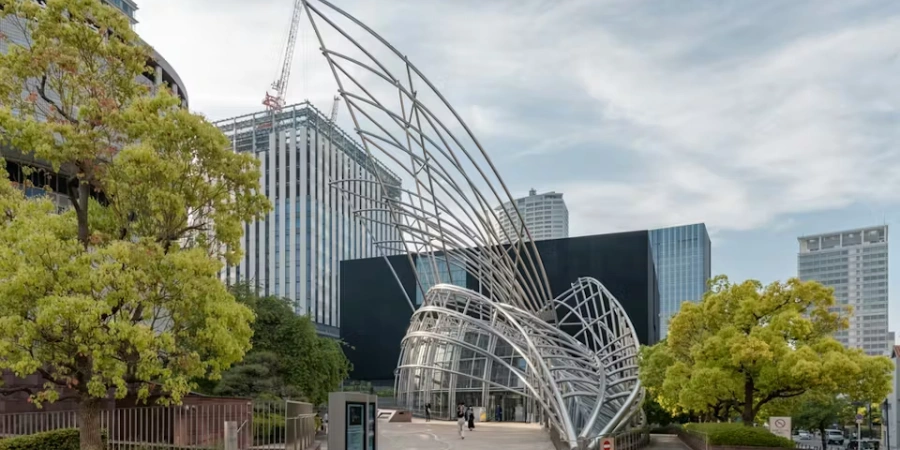
Just a short stroll east of the Osaka Science Museum, the National Museum of Art showcases contemporary Japanese and international art in a unique building partly set below ground. After the hands-on science exhibits, the art displays here offer a different kind of sensory experience. The installations here are more reflective and appealing to those who prefer visual art, making it ideal for a more calm and relaxing addition to your itinerary.
Nakanoshima Park

Another chill and laidback destination is the Nakanoshima Park that runs along the island between the two rivers. It is lined with tree-shaded promenades, lawns, and scenic bridges with a rose garden that has about 3,700 rose bushes of over 300 varieties. The lawn square and riverside promenade are perfect for travellers who would want to take a quick stroll around nature before or after their visit to the Osaka Science Museum.
Osaka City Central Public Hall
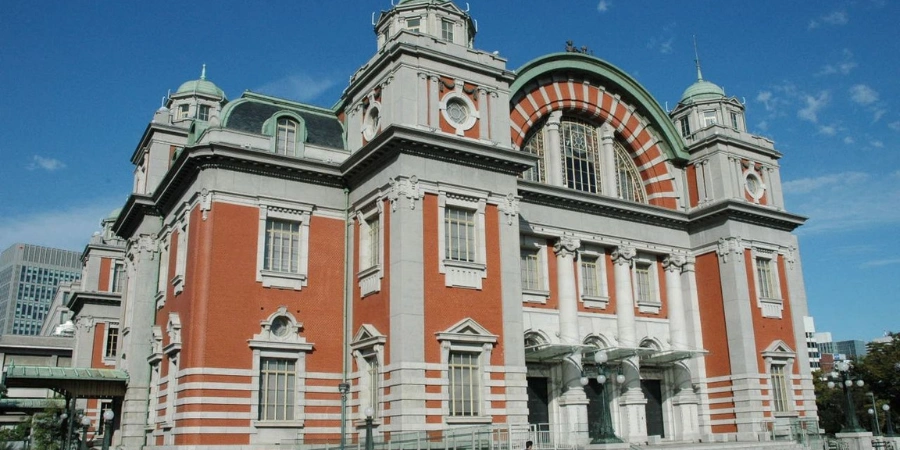
The Osaka Central Public Hall is an architectural landmark of Osaka, known for its Taisho-era red-brick exterior. Completed in 1918, the structure was heavily inspired by Western architecture and has become one of Osaka’s most photographed buildings. It’s located at the western end of Nakanoshima Park, easily reached by a 10 to 15-minute walk from the museum. Even if you don’t go inside, the exterior and surrounding plaza are worth a pause to appreciate Osaka’s early-20th-century architecture.
Nakanoshima Museum of Art
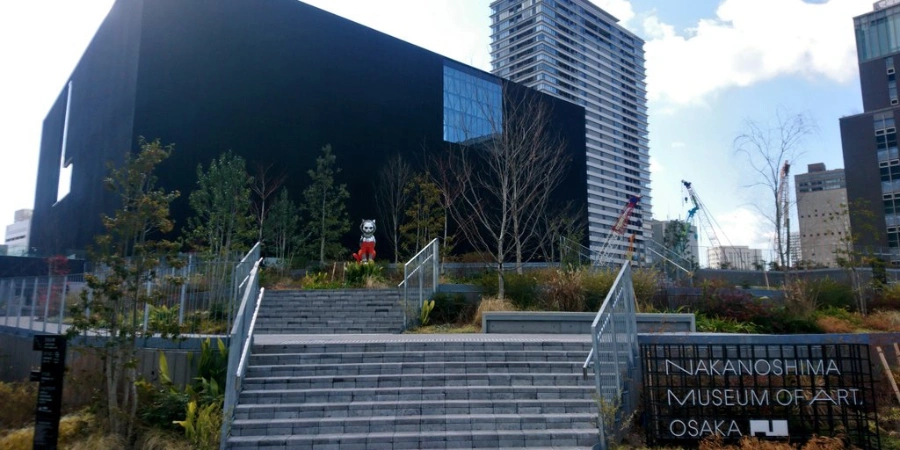
Opened recently in 2022, the Nakanoshima Museum of Art is just one crosswalk away from the Osaka Science Museum. Not to be confused with The National Museum of Art, as both museums showcase contemporary arts and design. Nonetheless, the Nakanoshima Museum of Art is still a worthy visit because of its sleek architecture, rotating art exhibitions that focus on modern Japan art, and galleries that feature Japanese artists like Yuzo Saeki and the Gutai Art Association. This can be another addition to your itinerary for a more serene and cultural trip.
Osaka Prefectural Nakanoshima Library

Pair your trip to the Osaka Science Museum with more knowledge and curiosity by visiting the Osaka Prefectural Nakanoshima Library and explore a wide range of materials on Osaka including literature, history, politics, and the economy. The entry is free, the atmosphere is quiet, and the exterior embodies the neo-baroque style. The reading rooms offer views of the Nakanoshima Park and the Yodogawa River, giving you time to slow down and rest before or after your trip to the museum.
Putting It Together: A Mini-Itinerary with the Osaka Science Museum
With the Osaka Science Museum and all the cultural destinations around it, let’s see how we can put them all together and create a half-day trip around Nakanoshima.
- Morning (2-3 hours): Start at the Osaka Science Museum when it opens (9:30 AM) and maximise your time there, especially if you’re availing of a planetarium show.
- Midday (2 hours): Have lunch at Lumiere (right across the museum) before visiting either The National Museum of Art or the Nakanoshima Museum of Art.
- Early Afternoon (1 hour): Find your way to Nakanoshima Park (13-minute walk, 900m) and stroll through the rose garden or riverside promenade. Grab a light snack and some desserts at MOTO COFFEE nearby.
- Afternoon (45 minutes): Take a 1-minute walk to the Osaka Prefectural Nakanoshima Library and browse through their diverse collection of reading materials. Cross the street and end your day early by taking a few photos by the Osaka City Central Public Hall.
This route keeps walking simple, allows for breaks, and gives you a satisfying mix of science, art, and greenery… ideal for families or friend groups who want a compact but immersive adventure throughout a part of central Osaka.
Final Words
The Osaka Science Museum takes visitors on a scientific journey through interactive displays, collaborative learning, and immersive exhibitions that remind us of the wonders of science. From cosmic projections to playful experiments, there’s so much you can do here. That’s why it’s important to approach the museum with clear expectations by understanding the ticketing system, strategising your museum route, and recognising the different sections per floor.
As a worthwhile destination for science education, the Osaka Science Museum remains a solid indoor cultural hub in central Osaka, particularly when combined with nearby cultural attractions for a well-rounded day. Our Osaka Guide can show you more aspects of Osaka, including other notable landmarks and one-of-a-kind activities.