The Osaka Museum of History invites you on an adventure through 1,400 years of the city’s evolution, from ancient Naniwa palaces to the postwar streets of Japan.
Unlike typical museums, this museum’s layout prompts visitors to start at the top, descending from the 10th floor to the basement floor. Each floor consists of massive dioramas, artefacts, and exhibits that are curated into an immersive narrative full of Osakan history.
With this guide, learn more about insider tips for a seamless, snapshot-filled visit that reveals Osaka’s resilient soul.
Osaka Museum of History at a Glance
Getting the Most Out of Osaka Museum of History

Is the Osaka Museum of History Right for You?
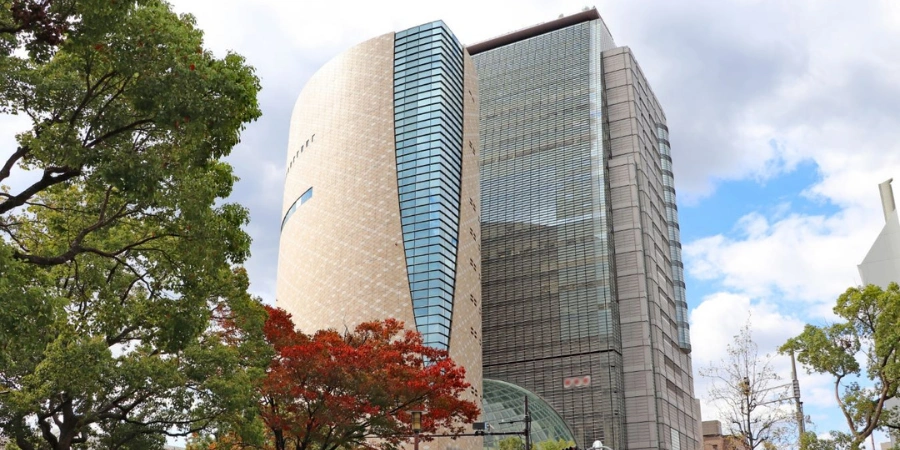
The Osaka Museum of History is a fantastic choice if you’re interested in learning about the city’s past through life-sized dioramas and engaging displays. It’s especially perfect for history enthusiasts eager to trace the evolution of Osaka from the ancient periods to now.
With interactive exhibits, life-sized reconstructions of historical monuments, and fun facts displayed everywhere, families with kids will enjoy how the museum turns learning into play. Anyone who appreciates historical replicas, artefacts, and sculptures will find plenty to admire during a relaxed visit.
That said, the museum might not suit everyone. If you have less than 90 minutes to spare, touring the museum may feel rushed, as its seven floors suggests slow and thoughtful pacing. The museum’s layout follows a strict structure that some visitors may not like, especially if they prefer a more free-flowing path.
To make the most of your time, expect a museum experience that starts from top to bottom, starting from the 10th floor and descending chronologically, the museum’s narrative is built this way. Visitors relying on comprehensive English translations should note that signage and audio guides vary in quality, while food options are limited to a small café near the entrance.
The opening hours of the Osaka Museum of History are 9:30 AM , 5:00 PM (17:00), with last admissions at 4:30 PM (16:30). The museum is closed on Tuesdays, or the following day when a Tuesday falls on a national holiday, and from 28 December to 4 January for the New Year break. Keep in mind there’s no re-entry once you exit the paid exhibition area, so plan your bathroom breaks and gift shop stops accordingly.
The admission rates are affordable, with adult tickets priced at ¥600. Tickets for high school and university students are ¥400 while elementary and junior high school students can enter for free.
Pro Tip: The Osaka Museum of History does not have a direct website to purchase tickets so you’re expected to buy them onsite on the day of your visit. However, Klook offers online reservations for convenience.
Getting There: Easy Transport Options
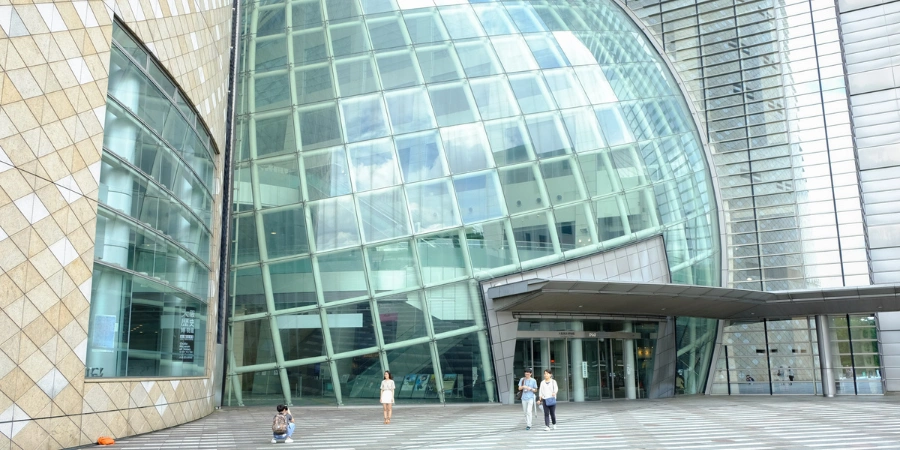
The Osaka Museum of History is conveniently located in Chuo Ward, right next to Osaka Castle Park’s southwest edge, making it easy to reach via public transit. It’s best to utilise Osaka’s efficient public transportation system, with fares staying budget-friendly, ranging from ¥200 to ¥300.
By Public Transit
The nearest station to the museum is the Tanimachi 4-chome Station. The best route is to transfer to Higashi-Umeda Station from the Osaka Station.
- Tanimachi 4-chome Station (Tanimachi and Chuo Lines)
- If you’re getting off the Tanimachi Line, walk to the east about 300 m from Exit 2 and you’ll find the museum already.
- If you’re getting off the Chuo Line, you’ll find the museum right next to Exit 9.
- A one-way ticket for both lines costs ¥240 per person.
By Bus
Several Osaka City Bus lines serve the area around the museum.
- The museum is located right next to Osaka Municipal Bus’s Banbacho Bus Stop.
Other Transportation Options
- You can hail taxis from the Osaka Station which’ll cost around ¥800 to ¥1,200 depending on the traffic. It’s costly, but it’ll take only 3 minutes to get to the museum. We recommend taxis for big groups or those with luggages.
- Travelling by car is an option, as the museum has a parking lot in the second basement level. The parking fees are ¥500 for the first hour and ¥200 per 30 minutes thereafter.
Pro Tip: Buy an ICOCA or IC card for seamless subway/bus taps, arrive before 10 AM to beat crowds (museum opens 9:30), and check Google Maps for real-time schedules.
The Unique Museum Layout: Why You Must Start at the Top
The most important thing to understand is that your visit must begin on the 10th floor. This structure is essential to the museum’s design.
The Osaka Museum of History flips the usual museum script by requiring you to start at the top, specifically the 10th floor all the way down to the 7th floor, as these levels contain the permanent exhibitions.
This “chronological descent” may feel counterintuitive, but this design actually makes it more convenient for you to immerse yourself in the museum’s narrative as climbing down stairs is easier than climbing up. At the same time, going through the museum with a top-to-bottom sequence ends your tour on the 1st floor where the gift shop and restaurant is to end your visit with souvenirs and snacks.
Here’s a brief overview of each floor and their features, starting from the 10th floor.
10F: The Ancient Period
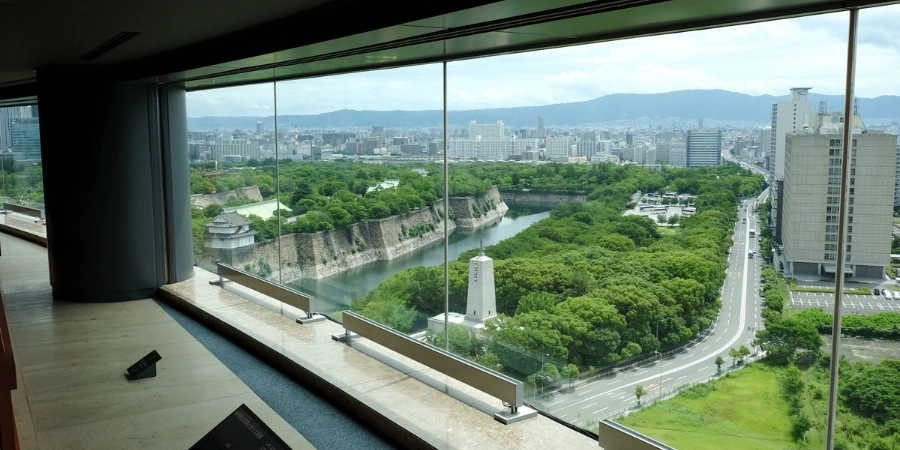
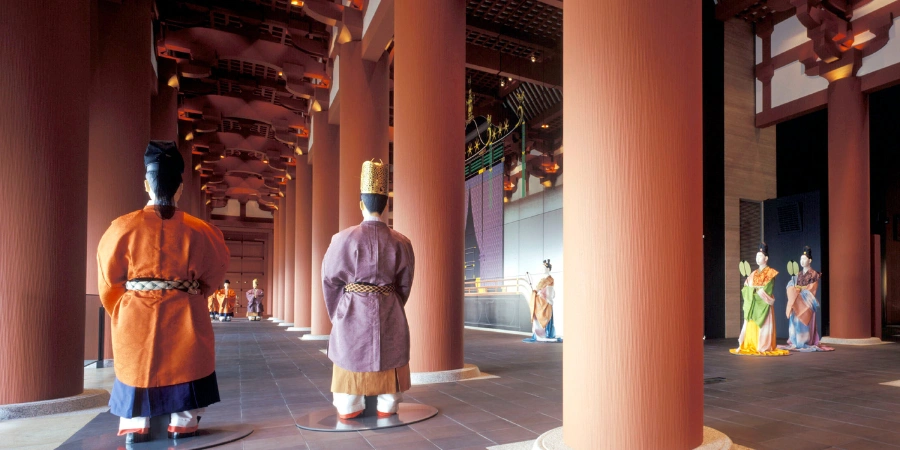
From the Entrance Hall, take the elevator to the 10th floor and start your tour with ancient Naniwa (7th-8th centuries), featuring a full-scale reconstruction of Naniwa-no-miya Palace complete with towering vermilion pillars and costumed mannequins enacting court life. Here, don’t miss the Observation Hall’s panoramic views of Osaka Castle and subtle details like tiny figures in immersive dioramas of early settlements.
9F: Middle Ages and Early Modern Period

Descend to the 9th floor and you’ll arrive in Osaka during the time of the Hongan-ji Temple which fought with Lord Oda Nobunaga. This floor spotlights the city’s development towards becoming the “Nation’s Kitchen” through bustling merchant quarter miniatures, market recreations, and interactive trade displays that highlight commerce and urban growth. Enjoy a tour of “the Water City” in the Edo Period Zone, the Bunraku puppet “Naniwaya,” and miniature models of the bustling life of the lively townspeople of Naniwa.
8F: Excavating the Past and Featured Exhibitions
The 8th floor is known as the “Naniwa Archaeological Resource Center” which presents a life-sized archaeological excavation replica that you can interact with using authentic archaeological tools provided by the staff. You can sift sand through artefacts, learn excavation techniques with real historical fragments, and appreciate the science of archeology!
7F: Modern and Contemporary Period
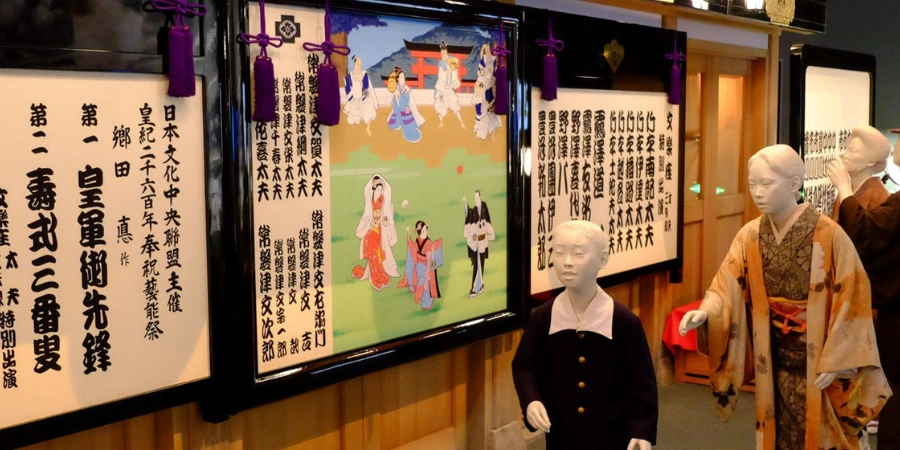
Your museum tour ends on the 7th floor which leads you to the modern Taisho-Show Osaka period,which started in the early 20th century. Here, you will encounter a more familiar Osaka with life-size streetscapes of shopping arcades, suburban homes, and different forms of media (photos, videos, props) that showcase Osaka’s postwar recovery and industrialization. Stroll “through” retro neighbourhoods to relive the energy of “Greater Osaka.”
6F: Special Exhibition Hall
The 6th floor is open to the public but does not hold any permanent exhibitions. Rather, it’s reserved as a space for special exhibits aside from those created by this museum which are displayed in the Feature Exhibition Hall. These special exhibits include travelling exhibits and jointly sponsored exhibits, usually collections from the National Treasures and Important Cultural Properties.
2F: Discovery Center “Naniwa History School”
For those interested in research, the 2nd floor is home to the museum’s library and boasts a wide range of 6,000 books and other items related to Osaka’s history and culture. Available and free for all, the “Naniwa History School” allows visitors access these resource materials through their information terminals. Specially-trained staff are also around for consultation and assistance in research.
1F: Museum Shop, Restaurant, Entrance Hall, and Atrium
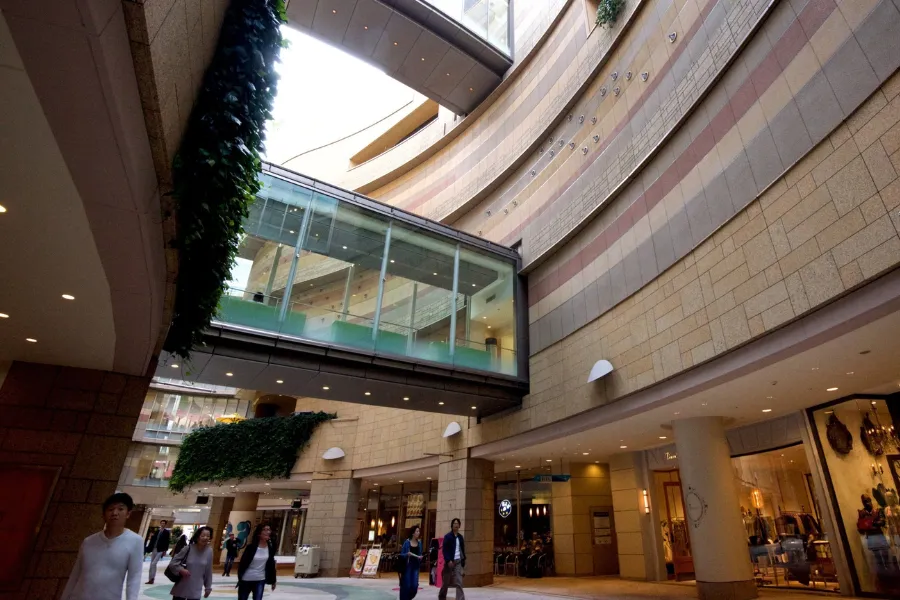
The 1st floor serves as both the entrance and exit of the museum, consisting of the gift shop, restaurant (LUNCH JAPONICA), and atrium. Here, you can browse through different kinds of souvenirs and books available at the gift shop or dine in at the restaurant after touring the museum. Every so often, special events are held in the spacious atrium with a 35m tall ceiling that connects the museum with the NHK Osaka Broadcasting Center.
BF: Archaeological Remains
About 1,350 years ago in the Asuka Period, the site now occupied by the Osaka Museum of History was the location of the Naniwa-Nagara-Toyosaki Palace. Excavations in this area unearthed a warehouse, walls, and water supply systems for the palace, with many of these partially dug remains preserved and kept visible to display here at the museum. A free volunteer-led tour of the excavated remains runs during opening hours, and part of the preserved foundations near the entrance can be seen at any time without a separate ticket.
Note: The 3rd, 4th, and 5th floors do not hold any exhibitions for the public. They’re dedicated to lecture halls, training rooms, and restricted areas for staff only.

Practical Tips for the Best Museum Experience
Just like every other museum, it’s important to take note of any practical tips to ensure your visit unfolds without a hitch.
Photography Etiquette
Photography is permitted throughout the permanent exhibitions for personal use only. However, some areas have “Do Not Photograph” signs. The museum does not allow flash photography, additional lighting, tripods, selfie sticks, and other props that may disrupt other visitors. It is also not allowed to film videos being played in the museum for copyright purposes.
Glare from windows is a common challenge for photographers. If you want to take a picture of the Osaka Castle from the 10th floor view, press your camera lens or phone directly against the glass window, drape a jacket or cloth around your device to block indoor reflections. We suggest timing your visit in the morning when natural light isn’t as glaring compared during midday.
The No-Reentry Reality: Food Planning and Timing
It’s important to remember that all floors except the first contain no dining facilities. Once you exit the paid area, re-entry is not permitted, so plan meals accordingly. Consider eating before entering the museum to avoid getting hungry while you’re exploring the venue.
However, nearby food options still exist such as NHK Building Café for quick coffee and light bites, 1F Museum Shop & Café for sandwiches and pastries, or the nearby restaurant Kirari (輝羅) for authentic Japanese dishes like sashimi and wagyu.
Navigating Interactive Exhibits, Baggage, and Language Barriers
The Osaka Museum of History offers two touring layouts to suit your schedule and depth of interest. The “Highlight Course” lets you take in Osaka’s history in about an hour, zeroing in on must-sees like life-size reconstructions, scale models, key photographs, and films for a quick yet vivid overview. For a deeper dive, opt for the “Complete Course,” which guides you slowly through every floor and exhibits so that you can enjoy all the individual exhibits at your own pace.
For families with young children, baby strollers are allowed inside the museum unless the museum is very crowded. You can find a nursery room on the first floor, as well as coin-operated lockers that take a ¥100 coin, refunded when you collect your things. The General Information Counter can also safekeep baggage that do not fit into the lockers.
When it comes to language accessibility, the museum has free brochures for general guidance in English, Chinese, Korean, French, Spanish, Arabic, and Thai. They also have a digital museum guide (¥400 per unit) available in English, Chinese, and Korean. Some displays such as signs and explanatory panels in the museum are written in English.
Combining with Nearby Attractions
The Osaka Museum of History pairs perfectly with other attractions for a daytime adventure. Check out these other destination highlights and see how they can all blend together to make the perfect Osaka itinerary.
Osaka Castle (5 to 10 min walk)
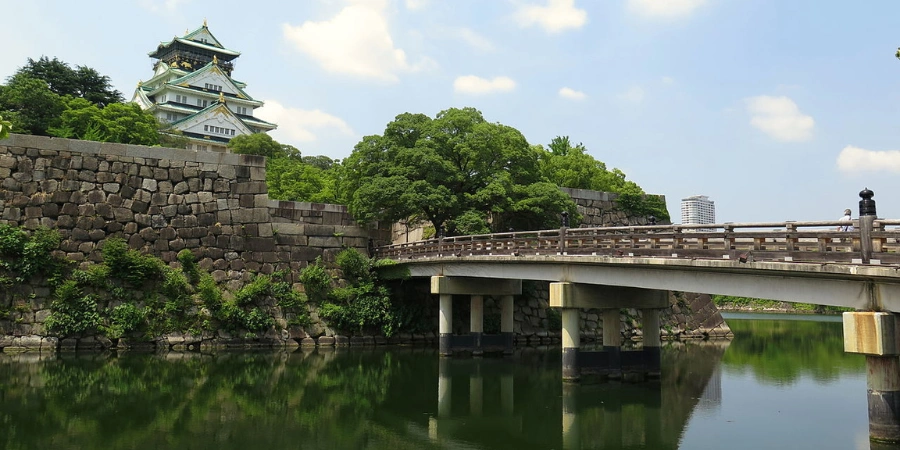
Upon exiting the museum, walk a few minutes and you’ll arrive at the Osaka Castle. Admire its main tower with gold-leafed eaves, rising eight stories amid massive stone walls and deep moats that once made it Japan’s most formidable fortress. Combining the Osaka Castle with the Osaka Museum of History offers one of the most authentic cultural experiences in the city.
Osaka Jo-Hall & Castle Park (1 to 5 min walk)
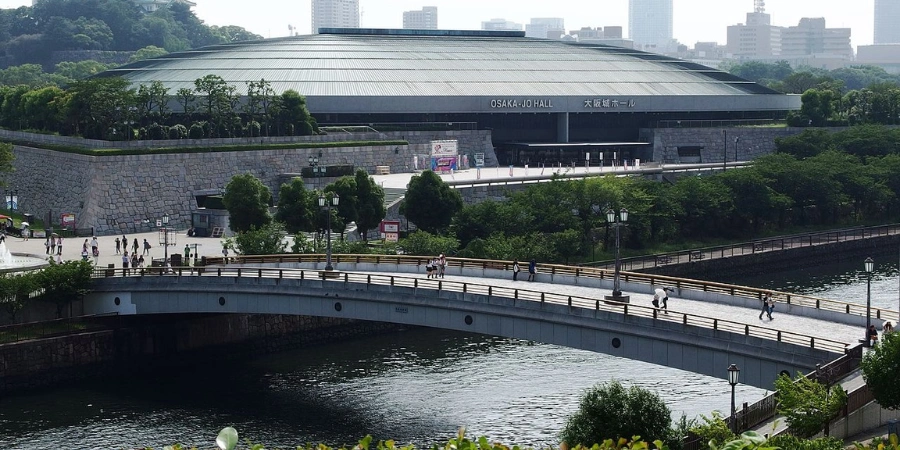
At the heart of the Osaka Castle Park is the Osaka Jo-Hall, a sail-shaped arena that hosts concerts, events, and sports tournaments surrounded by the park’s 105 hectares of greenery and fields of over 3,000 cherry trees. Try attending an event inside the Osaka Jo-Hall or simply enjoy what the park has to offer, picnic areas, busking performances, and nature spots for relaxation.
NHK Osaka & Kyobashi Area (5 to 10 min walk/subway)
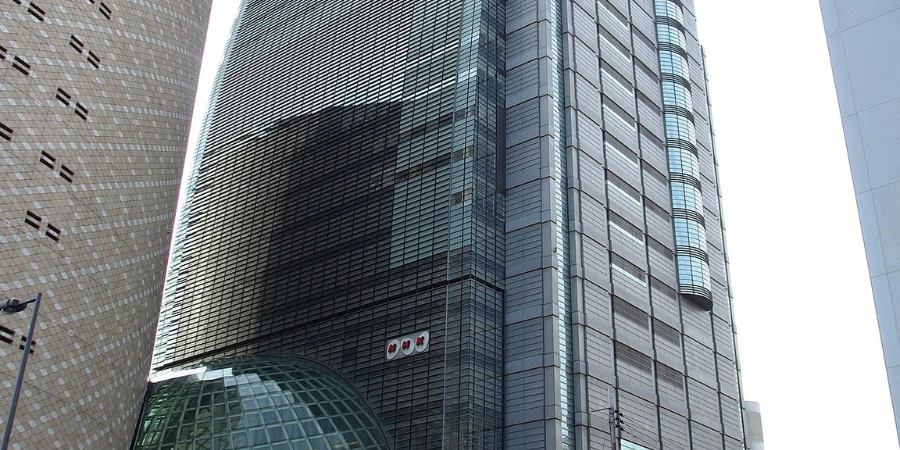
Adjacent to the museum is the NHK Broadcasting Center, the headquarters of Japan’s major broadcaster for radio and television. It includes studios and offices, as well as shops and the Studio Park, which is a popular attraction for schoolchildren and tourists for its free interactive media exhibits. Just a quick subway hop away from the centre is the Kyobashi Area, an entertainment hub with shopping arcades, street food stalls, and traditional Japanese bars.
Mint Museum (Osaka Mint Bureau) (15 to 20 min walk/subway)
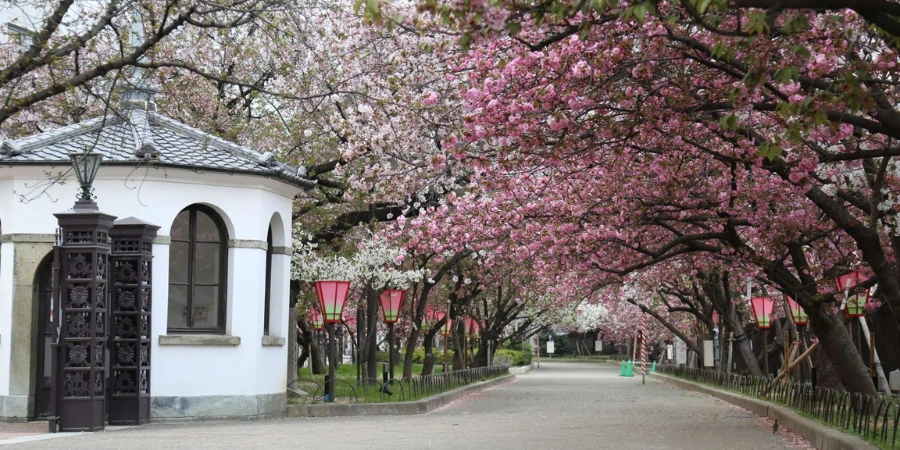
For a full-fledged history adventure, visit the Osaka Mint Bureau right after the Osaka Museum History. The Osaka Mint Bureau is the head office of Japan Mint, the governmental agency responsible for the supply of coins and medals in Japan. Free and open to the public, this agency introduces the history of the coin production process through exhibits and displays. Besides coins, the Osaka Mint Bureau is famous for its line of over 300 cherry trees outside.
Sample Half-Day Itinerary
Kick off your Osaka day with this efficient 4 to 5 hour loop which includes the museum and other nearby spots.Tailored for first-timers or families, this itinerary guarantees a day full of history!
- 9:30 AM: Osaka Museum of History (90 to 120 min)
- Arrive at the Osaka Museum of History once doors open to avoid long lines and crowds to easily purchase your tickets.
- Before starting your tour, grab a quick breakfast at the museum’s restaurant, LUNCH JAPONICA.
- Take the elevator up to the 10th floor and descend chronologically until the 7th floor.
- 11:30 AM: Osaka Castle Park & Tower (60 min)
- Take a short walk to the Osaka Castle and stroll through the park’s moats until you reach the castle itself.
- You can tour through the castle’s main keep and stone wall museum for ¥1,200.
- 12:30 PM: Osaka Jo-Hall & NHK Broadcasting Center (30 to 45 min)
- Circle back through the park’s paths and check out the Osaka Jo-Hall in case there are any interesting events you might want to participate in. Continue your itinerary by visiting the NHK Broadcasting Center and learn more about the history of media broadcasting in Japan.
- 1:15 PM: Kyobashi Area & Mint Museum (90 min)
- End your trip by going to the Kyobashi Area for street food and shopping. Spend an hour or two browsing through stores and dining in one of their restaurants, we recommend Tomizuri for yakiniku!
- If you still want to extend your itinerary, visit the Mint Museum to cap off your trip.
Estimated Itinerary Cost: ¥2,000 to ¥3,000 per person.
Making the Most of Your Visit
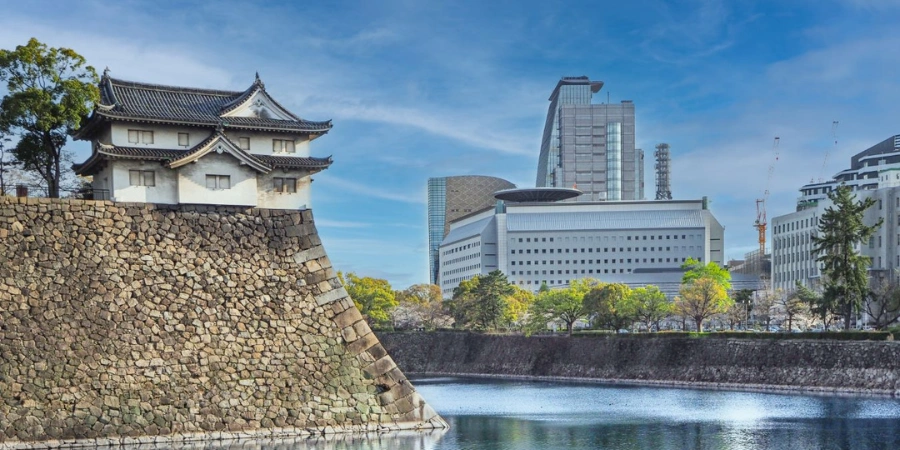
The Osaka Museum of History transforms a simple museum visit into an interactive, immersive, and insightful experience. Travel through time and witness the history of Osaka with the museum’s well-curated layout, exhibits, and resources that remind us of just how important it is to learn about our past.
All tourists are welcome to the Osaka Museum of History, delivering Osaka’s soul through a series of stories found through the museum’s dioramas, special exhibitions, and reconstructions of past historical sites. The history of Osaka unfolds perfectly when you follow the top-to-bottom flow of the museum.
Add the Osaka Museum of History to your itinerary along with other notable city hotspots. Let our Osaka guide help you create the perfect adventure.