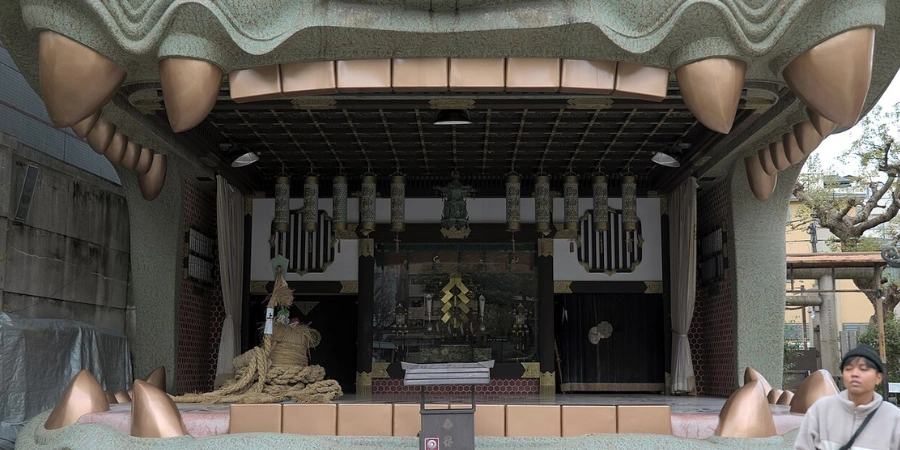
Hidden in a quiet residential corner of Osaka’s bustling Namba district, Namba Yasaka Shrine (難波八阪神社) stands out as one of the city’s most photographable spiritual sites, thanks to its massive 12-metre-tall wooden lion head stage (Shishi-den).
Unlike other massive shrines of Osaka like the Katsuoji Temple, this compact shrine sits quietly within the heart of the city. Although it isn’t a major attraction, it has become widely recognised among tourists because of its simple yet distinctive features.
Namba Yasaka Shrine becomes a perfectly paced micro-stop in your Osaka itinerary, offering striking photo opportunities, interesting spiritual souvenirs, and cultural depth that complements broader exploration of Namba.
Namba Yasaka Shrine at a Glance
Getting the Most Out of Namba Yasaka Shrine


Why Visit the Namba Yasaka Shrine?
Namba Yasaka Shrine is a historically significant spiritual site in Osaka, though its precise founding date is unknown. What’s known is that it was built as far as 4th Century AD, dedicated to Susanoo-no-Mikoto (須佐之男命), a deity believed to protect against misfortune, disease, and calamities.
The original structures of the shrine were destroyed during the World War II bombings, so reconstructions were made in the latter half of the 20th century. The current buildings include the Main Hall and the iconic Lion Head (Shishi-den) that was designed to “swallow evil spirits” and attract good fortune for business, academics, and relationships.
Today, the shrine continues its protective role and is a recognised spiritual landmark, hosting the annual Tsunahiki (Tug-of-War) festival, a significant cultural event of the Osaka Prefecture.
The best reasons to go
To this day, this centuries-old site continues to captivate visitors with its massive, cave-like lion head (shisa) statue, unique spiritual practices, and its overall peaceful atmosphere that allows you to take a breather from the bustling districts nearby.
The Namba Yasaka Shrine is highly recommended for tourists seeking cultural imagery that’s one-of-a-kind, distinctive from other shrines around Osaka. The shrine’s photogenic head, surrounded by colourful ema prayer blocks and vibrant greenery, make the location an ideal spot for photography enthusiasts who want to capture the beauty of Osakan spirituality through the lens of their camera or phone.
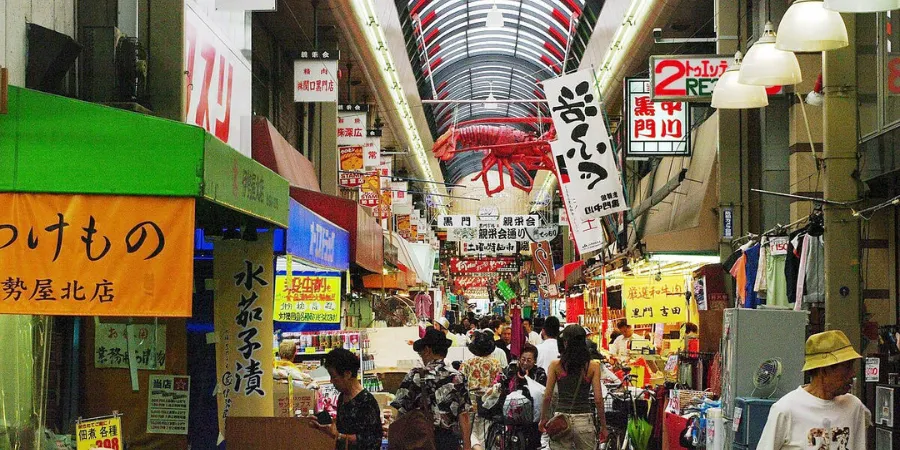
Because of how compact the shrine’s grounds are, the Namba Yasaka Shrine can easily serve as a “micro-stop” for travellers on tight schedules but still want to experience a Japanese shrine visit. You can easily insert a 15 to 20-minute visit to the Namba Yasaka Shrine between shopping in Dotonbori or Kuromon Market without derailing your itinerary.
Of course, those interested in Japanese folklore can learn more about the site’s history tied to Osaka’s past and witness how spirituality still shapes the lives of Osakans every day. If you’re already exploring the broader Namba district, add the Namba Yasaka Shrine to your itinerary to enhance your day out and add a serene spiritual contrast to the hustle and bustle of Osaka.
A few hurdles to expect
With every landmark or tourist site in Japan, it’s always best for travellers to be prepared and expect any possible setbacks along the way.
For the Namba Yasaka Shrine, don’t expect to spend hours here. You’ll only need 15 to 20 minutes of your time to check out the entire shrine grounds. It’s not ideal for visitors expecting expansive temple grounds or landscaped gardens, the Namba Yasaka Shrine is small and simple yet still culturally significant.
Because of the area size, signages around the shrine are limited and most of them are in Japanese. Limited English signages means apps like Google Translate are necessary when visiting the shrine. Do also expect that brief queues for photo spots within the grounds may be longer during busy periods, like weekends or evenings.
In short, visit if you love discovering Japan’s soul in unexpected places, Namba Yasaka delivers a special cultural experience in one bite-sized package.
Finding Your Way to the Lion’s Mouth

Namba Station is one of Osaka’s largest and most confusing transit hubs, with multiple train lines, numerous exits, and a sprawling underground shopping complex. Using the wrong exit can add at least minutes of unnecessary walking, so make sure you know your way around. Lucky for you, this guide has mapped the fastest routes to guide you straight to the shrine.
Pro tip: Here’s the Google Maps pin for “Namba Yasaka Shrine” (難波八阪神社) for reference.
Fastest Routes from Namba Station
Follow these line-specific paths for minimal hassle. Exits are clearly marked once you’re underground.
- From Midosuji Subway Line (most common for tourists): Take Exit 14. Head east along the main road past Lawson convenience stores; it’s a straight ~450m walk, about 6 minutes. Easiest for first timers.
- From Daikokucho Station (Midosuji or Yotsubashi lines): about 7 minutes on foot, and usually quieter than the Namba approach.
- From the Nankai Line (from Kansai Airport): Use the Northeast Exit. Walk north on the wide pavement toward Namba Elementary School; ~550m, about 7 minutes. Spot the red torii gate on your left.
- From Kintetsu-Namba or Hanshin-Namba Lines: Exit E7 (Kintetsu side). This is the most direct, head east ~400m, 5 to 6 minutes through lively side streets.
- From JR Namba Station (Sora Namba area): Exit 5 or 6, then east along Sennichimae-dori Avenue (~600m, 8 to 10 minutes). Great if coming from Nara or Kyoto.
Key Landmarks to Guide You
Sometimes, navigation apps may occasionally struggle in certain areas. These landmarks can lead you to the Namba Yasaka Shrine better.
- Kuromon Ichiba Market (黒門市場): From the market’s east end, walk (7 minutes) toward Namba Elementary School. The shrine is directly opposite.
- Dotonbori (道頓堀): From the Glico Man sign, head south on Midosuji Avenue, turn left at Sennichimae Street. Walk east and reach the shrine in about 12 minutes (650m).
Alternative Options
Other modes of public transportation can also bring you to the shrine.
- By Bus: City Loop Bus stops at Namba (near OCAT); get off at Nipponbashi and take a 5-minute walk to the shrine from there.
- Taxi/Uber: You can find taxis all around central Osaka. Tell the driver “Namba Yasaka Jinja” or show the kanji (難波八阪神社), a ride may cost ¥1,000 to 1,500.
Pro tip: Watch for the red torii gate and stone markers engraved with “難波八阪神社” (Namba Yasaka Jinja).
Shrine Hours and Best Timing
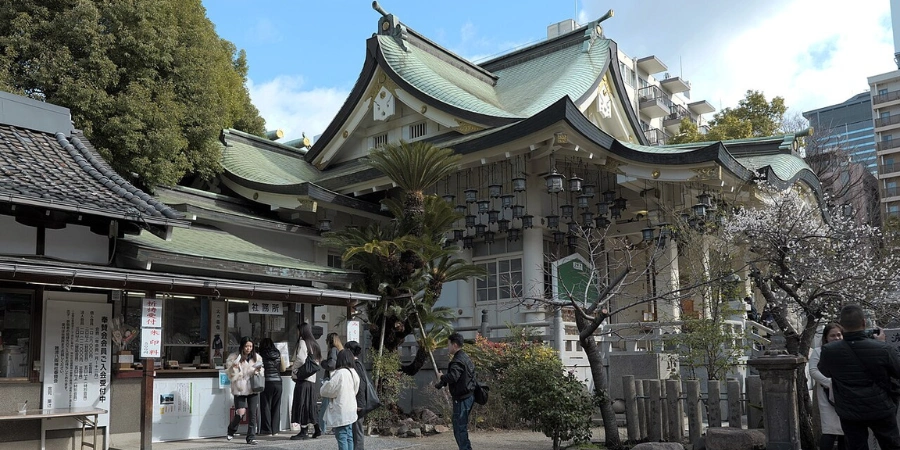
Namba Yasaka Shrine keeps no closing days and welcomes visitors all year, but specific areas have set hours to focus on prayers and purchases.
The shrine is listed as open every day of the year, but the main hall accepts prayers from 9:00 AM to 5:00 PM only. On the other hand, the small office/shop that sells offerings and goshuin (御朱印) stamps operates from 9:00 AM to 4:30 PM. Admission is always free, aligning perfectly with its role as an accessible urban spiritual spot.
Peak Periods
On a regular day, the Namba Yasaka Shrine is usually pretty quiet until the peak seasons come in. Take note of the following periods where the shrine has the most visitors.
- January 1 to 3 is the New Year season, drawing New Year’s crowds for hatsumode (first shrine visit) prayers.
- The third Sunday of January hosts the annual Tug-of-War Ritual (Tsunahiki Shinji), which re-enacts Susanoo-no-Mikoto’s defeat of the eight-headed serpent and was designated Osaka City’s first Intangible Folk Cultural Property in 2001. A lot of locals attend this event.
- Late March to early April is a popular time to visit the shrine because of cherry blossom season. Crowds of both locals and tourists flock to Namba Yasaka Shrine to look at the cherry blossom trees and watch the petals flutter away.
- In mid-July, on the 13th and 14th, the shrine hosts its Summer Festival (Natsumatsuri), with lion dances performed on what the shrine calls Japan’s largest dedicated lion-dance stage, plus mikoshi processions through Sennichimae, Dotonbori and Ebisubashi-suji. This is another significant festivity that locals flock to every year.
Pro tip: Visit early weekdays for solitude or drop by during peak season if you want to experience lively and immersive energy, it’s up to your liking.








Navigating the Shrine Grounds
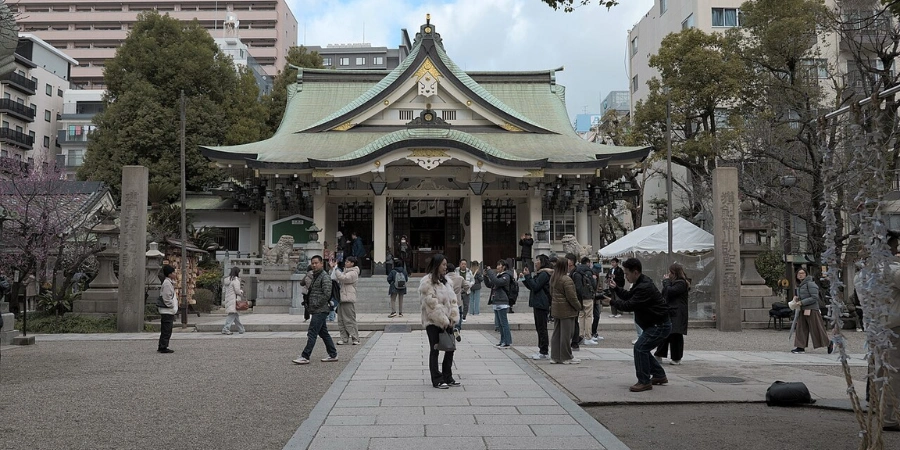
Now that you’re at the shrine, it’s time to navigate it. The shrine is straightforward and serene,
with clear paths guiding you from the purification fountain to the iconic lion head.
Layout Overview
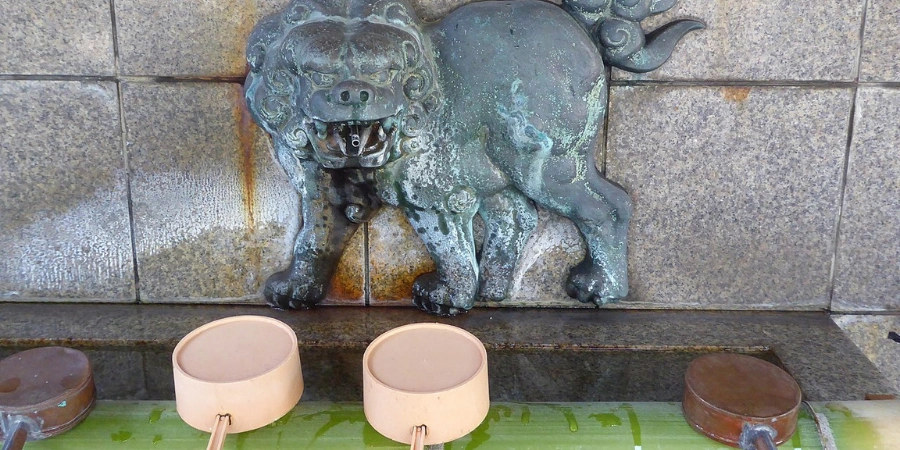
- Outer courtyard with chozuya (手水舎) or the purification fountain
- Main prayer hall (haiden / 拝殿)
- Lion-faced stage (Shishi-den / 獅子殿)
- Small office (amulets & goshuin)
The layout of the shrine starts with the red torii gate into the outer where the chozuya, a hand-water basin, is located. Straight ahead lies the main prayer hall (haiden), a simple wooden structure for clapping prayers and offerings.
The main attraction, the lion-faced stage (Shishi-den), looms large nearby. You’ll see that the massive, open-mouthed shisa statue is covered in colourful ema plaques filled with people’s wishes and prayers. Off to the side, a small shop sells amulets (omamori) for protection and goshuin stamps for you to take home.
Pro tip: Do not climb on the lion’s mouth and stay on the stone paths to respect the space. The lion’s mouth is a ceremonial stage, not an entryway.
Spiritual Practices and Offerings
Dedicated to Susanoo-no-Mikoto (須佐之男命), the shrine symbolises protection from evil and misfortune. At the Namba Yasaka Shrine, you can participate in the different kinds of spiritual practices and offerings such as the purification ritual, prayer offerings, and buying talismans.
Participating in Chozuya (Purification Ritual)
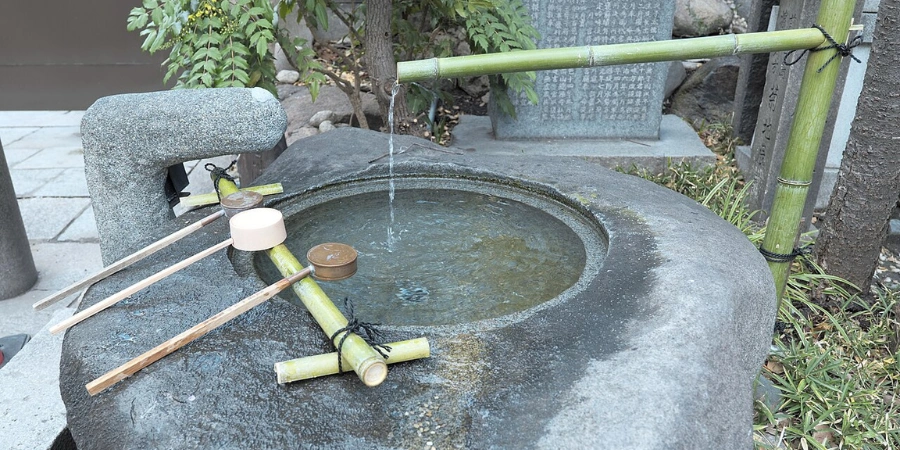
Before approaching the prayer hall, pause at the chozuya for this quick Shinto cleansing ritual. This is important: use the wooden ladle sparingly to conserve water.
- Fill the ladle in your right hand and rinse your left hand, letting water flow off your fingers.
- Switch to rinse your right hand the same way.
- Cup your left hand, scoop water from the ladle into it, rinse your mouth (don’t swallow), and spit gently to the side.
- Tilt the ladle vertically to rinse its handle with remaining water, then place it back facing down.
This is a brief but meaningful ritual before prayer at the next stop, the main prayer hall.
Praying at the haiden
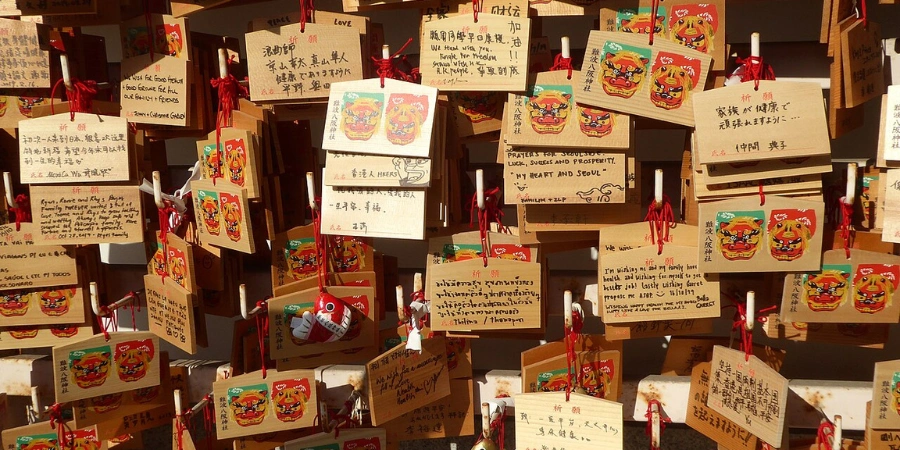
At the haiden, toss a coin (¥5 to ¥100) into the offering box, bow twice, clap twice, and bow once more while making your wish. For extra fortune, you may buy an ema plaque from the office, write your prayer on it, and hang it inside the lion’s mouth alongside thousands of others.
Pro tip: Go on weekday mornings for quiet reflection. Wear comfy shoes for pebbly paths and silence your phone.
Collecting Goshuin (御朱印)
Goshuin (御朱印) are handwritten stamps or seals that you can obtain from shrines in Japan that serve as a token of your visit. To collect these stamps, you need a special notebook called a goshuin-cho (御朱印) which you can buy at many bookstores, stationery stores, and tourist shops in Japan. If you don’t have one, the shrine will provide a special paper slip (¥300) instead.
This service is available from 9:00 AM to 4:30 PM for ¥300. To avail, line up politely and have your goshuin-cho or special paper slip ready for the staff to stamp your goshuin onto it as a dated memento of your visit.
Omikuji and Omamori
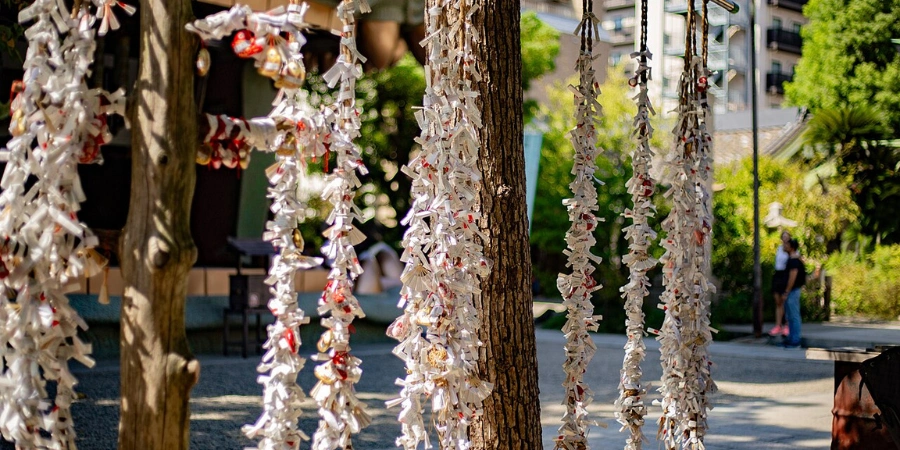
The small shop at the Namba Yasaka Shrine offers keepsakes that are blessed, bringing good luck home with you. Choose between two lion-themed trinkets; the omikuji and the omamori.
- Lion-shaped omikuji (¥200): Draw a wooden stick, then read its fortune for you, keep it as a souvenir if you get a good one, tie it up in a branch if it’s a bad one.
- Omamori talismans (¥500 to ¥800): Pocket-sized charms for specific blessings like kaiun (good fortune and safe travel), gakugyou (academic success), or enmusubi (romantic relationships).
Note: Credit cards are accepted for purchases over 1,000 yen.
Pro tip: Time your visit mid-morning for shorter lines and fresher stamps.
General Shrine Etiquette: Do’s and Don’ts
General shrine etiquette at Namba Yasaka Shrine ensures a respectful and sacred visit for all goers. Follow these do’s and don’ts to fully immerse yourself in the spirit of a Japanese shrine.
Do’s
- Make sure to participate in the chozuya before praying. Remember the steps!
- Follow the ritual at the main prayer hall: offer a coin (¥5 to 100) at the haiden, bow twice, clap twice, and bow once more with your wish.
- Speak softly, especially near those praying or collecting goshuin.
- Stay on stone paths and remove hats in the main hall or lion stage area.
- Write sincere prayers on ema plaques before hanging them thoughtfully in the lion’s mouth.
Don’ts
- Eat, drink, smoke, or chew gum on the grounds to keep the space pristine.
- Touch ema plaques, statues, the lion stage, or any offerings that aren’t yours.
- Play phone audio, take calls loudly, or use flash photography.
- Litter; carry trash until you find bins nearby.
- Visit while intoxicated or act overly boisterous.
Upon visiting the shrine, it’s no surprise to want to capture a shot of the lion’s head and other features of the area. There are no specific rules when it comes to taking pictures at the Namba Yasaka Shrine, but let these tips help you photograph the area with proper etiquette.
Photography Etiquette and Tips
Lighting Notes and Best Angles
Morning light (8:00 AM to 10:00 AM) is softer but shadowed, perfect for bright yet calm tones. Midday offers even lighting amid crowds, suiting wide shots. Late afternoon (3:00 PM to 5:00 PM) delivers dramatic shadows thanks to the magic of the golden hour.
To take a picture of the lion head, frame from the direct centre for classic symmetry showcasing the open mouth crammed with ema plaques. Take a shot of the lion head from its right-side profile to showcase the city skyline from afar. You can experiment with low angles to highlight scales or zoom in on colourful ema plaques for intimate details.
Photography-Specific Etiquette
Photos are allowed everywhere, but flash is discouraged near the main hall to avoid startling those who are praying. Drones are prohibited while tripods are restricted during peak times to keep paths clear.
When taking pictures, give yourself a time limit to 1 to 2 minutes as others are waiting to get the perfect shot too. Lastly, climbing into the lion stage is strictly not permitted.
Combining with Nearby Attractions
As mentioned earlier, a trip to the Namba Yasaka Shrine will only take less than 30 minutes, so you can easily combine this landmark with nearby attractions to create an effortless half-day adventure in Osaka’s Namba district. With this suggested itinerary, you can visit the shrine, grab some food, check out other destinations, and go shopping all within half a day.
Suggested Half-Day Itinerary
This route will take around 3 to 4 hours with a total walking distance of around 3 to 4 kilometres.
- Kuromon Ichiba Market (30 to 60 mins)
- Have an early lunch (10:00 AM to 11:00AM) at Kuromon Ichiba Market and choose from a variety of Osakan delicacies like fresh sashimi, grilled scallops, and wagyu skewers.
- Sennichimae Doguyasuji Shotengai (30 mins)
- From Kuromon Ichiba Market, take a 5-minute walk to Sennichimae Doguyasuji Shotengai, a 150-metre-long shopping arcade of 170+ shops selling knives, ceramics, and all kinds of cookware, ideal souvenirs for chefs and foodies!
- Namba Yasaka Shrine (15 to 20 mins)
- Continue touring through the Namba district and walk for about 12 minutes to the Namba Yasaka Shrine. Get your spiritual reset here and relax for a moment before heading out again.
- Namba Parks (60 mins)
- Walk for about 8 minutes to the Namba Parks and explore this unique complex, featuring a multi-level rooftop garden, 200+ shops, and entertainment facilities including a cinema and seasonal art installations.
- Hozenji Yokocho (30 to 60 mins)
- End the day with one of the most beautiful alleyways in all of Osaka, Hozenji Yokocho. It only takes around 12 minutes to get here from Namba Parks. Discover more than 60 traditional shops and restaurants that sell quality beef, Osaka-style okonomiyaki, and alcoholic beverages like craft beer.
- The Hozenji Temple sits right beside it as well, so do pay respects at the temple by rubbing the mossy Fudo statue for good luck.
Pro tip: Download an offline map, wear comfy shoes for uneven paths, and don’t be afraid to ask locals for assistance. The Namba district of Osaka is very welcoming, inviting all tourists to enjoy its cultural landmarks, local scenery, and homey atmosphere.
Conclusion: Setting the Right Expectations
Namba Yasaka Shrine is a functioning neighbourhood shrine distinguished by not only its one extraordinary lion head, but also its feature as a cultural micro-stop. It gives a glimpse of Japanese spirituality without demanding hours, perfect for visitors who enjoy concise yet memorable cultural experiences and self-guided exploration.
Setting the right expectations transforms your visit to Namba Yasaka Shrine from a random stop into a deliberate highlight of Osaka’s urban tapestry. Its compact layout prioritises intimacy over grandeur. With this guide, you’ll get the full experience of the Namba Yasaka Shrine with its rituals, festivities, and unique souvenirs.
Step into the soul of Osaka through the Namba Yasaka Shrine among other nearby attractions, cultural landmarks, and entertainment districts. Let our Osaka guide help you explore other areas of this grand city.