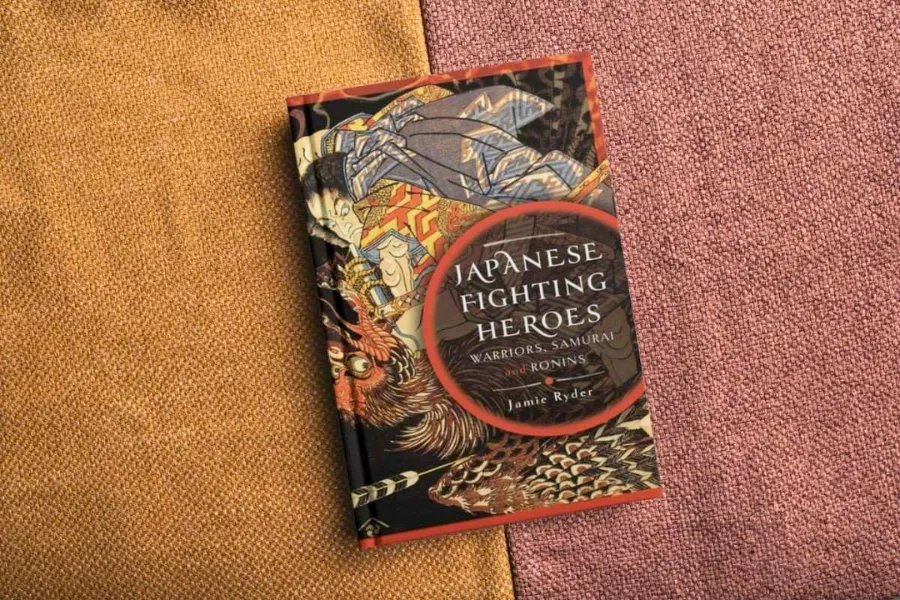
When I first opened Jamie Ryder’s Japanese Fighting Heroes: Warriors, Samurai, and Ronins, I expected an interesting read about some of Japan’s most legendary figures. But what I found was much more than a collection of heroic tales. This book is an exploration of Japanese culture, philosophy, and history, all woven together through the lens of folklore. Ryder doesn’t just tell the stories—he helps us understand why these stories matter, both within Japan and beyond. The book digs into what these figures represent and what they can teach us today.
Heroes Forged in Myth and Battle
Understanding the Folklore of Japan

Kidomaru by Utagawa Kuniyoshi
The folklore of Japan is rich with stories of Japanese myths warriors, samurai, and mythical beings, each embodying values that have shaped Japanese culture for centuries. Ryder takes us on a journey through these tales, offering insight into the lessons they impart. What stands out about Japanese Fighting Heroes is how Ryder connects these ancient stories to universal themes like honour, courage, and the struggle between good and evil. This makes the book not just a recounting of old tales, but a reflection on human nature itself.

Minamoto Yorimitsu in Ashigarayama by Utagawa Kunihisa
One of the central themes in the book is the idea of strength—not just physical strength, but moral and emotional resilience. In the chapter on Kintaro, often called the “Japanese Hercules,” Ryder explores this concept in depth. Kintaro, a boy of extraordinary strength raised in the wilderness, becomes a symbol of the strength it takes to protect others and to fight for what’s right. Ryder writes, “Kintaro’s strength wasn’t just about defeating enemies; it was about standing up for those who couldn’t stand up for themselves.” This portrayal of strength as a tool for justice, rather than mere power, is a theme that runs throughout the book.
The story behind the chapter: In the version Yei Theodora Ozaki retold in Japanese Fairy Tales (1908), Kintaro grows up in the Ashigara Mountains, where his mother fled after his father fell into disgrace at court and died, and his playmates are a bear, a deer, a monkey and a hare. A vassal of the warrior Minamoto no Yorimitsu, better known as Raiko, spots the boy’s strength and brings him into Raiko’s service. As the grown man Sakata no Kintoki, he became one of Raiko’s Four Heavenly Kings, the band of retainers who, in the best-known legend, got the oni chief Shuten-dōji drunk on enchanted sake at his lair on Mount Ōe and cut off his head. Kintaro is often paired with Momotaro, the boy born from a peach who sails to Ogre Island with a dog, a monkey and a pheasant, and Ozaki retells both stories in the same book.


Lessons from Japanese Myths
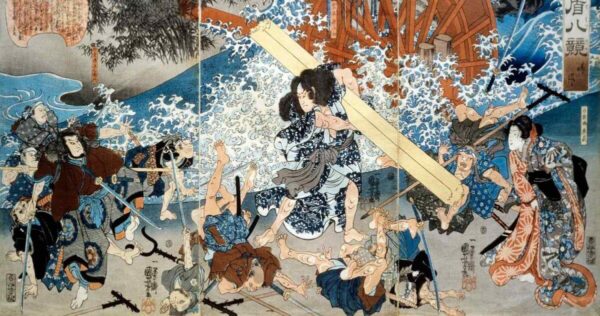
Miyamoto Musashi Tokugawa-Period Warrior “Sword Saint” by Utagawa Kuniyoshi
One of the most engaging aspects of the book is how Ryder distils the teachings of these myths into practical lessons. For example, the chapter on Miyamoto Musashi, one of Japan’s most famous swordsmen, goes beyond his legendary duels to explore his philosophy of life. Musashi, who lived by the code of Bushido—the way of the warrior—left behind a legacy that is as much about wisdom as it is about swordsmanship. Ryder quotes Musashi, saying, “The way of the warrior is the resolute acceptance of death.” This might sound grim, but in the context of the book, it’s a call to live with purpose and without fear, to commit fully to one’s path.
Ryder’s exploration of Musashi’s life and teachings is one of the highlights of the book. He doesn’t just recount Musashi’s exploits; he breaks down his philosophy into actionable insights that are relevant even today. For instance, Musashi’s emphasis on discipline and focus is something that anyone, not just a warrior, can apply in their daily life. Ryder writes, “Musashi believed that true mastery came not from raw talent, but from relentless practice and the ability to remain calm under pressure.” This is a powerful reminder of the value of perseverance, no matter what challenges we face.
The Human Side of Legends
Ryder is careful to show that these legendary figures, while larger than life, were also deeply human. The chapter on Tomoe Gozen, one of the few female warriors in Japanese history, is a perfect example. Tomoe Gozen’s story is not just about her skills on the battlefield, but also about the challenges she faced as a woman in a male-dominated world. Ryder paints a vivid picture of Tomoe as both a fierce warrior and a woman who had to fight for her place in history. He writes, “Tomoe Gozen was not just fighting battles on the field; she was fighting for the right to be seen as equal, to have her strength and bravery recognized.” This adds a layer of depth to her story, making it not just a tale of warfare, but also a story of resilience and empowerment.
The story behind the chapter: Almost everything known about Tomoe comes from The Tale of the Heike, the medieval epic of the Genpei War of 1180 to 1185, and historians still debate whether she existed, because she does not appear in the primary records of the war. In the Heike, and in Frank Brinkley’s A History of the Japanese People (1915), she fights beside the general Minamoto no Yoshinaka until his last stand at Awazu in 1184, when he orders her to leave him rather than fall into enemy hands. One of the commanders who defeated Yoshinaka that day was his cousin, Minamoto no Yoshitsune, whose own legend is bound up with the giant warrior monk Benkei. When Yoshitsune was cornered at Koromogawa in 1189, Benkei is said to have died on his feet, riddled with arrows, holding off the attackers to the last.

Tomoe Gozen, by Tsukioka Yoshitoshi
In addition to Tomoe Gozen, Ryder covers a wide range of characters from different periods of Japanese history. Each chapter brings out a different aspect of Japanese culture, whether it’s the loyalty and sacrifice of the 47 Ronin or the philosophical musings of Musashi. Ryder does an excellent job of connecting these stories to broader cultural themes, showing how they reflect the values and beliefs of Japanese society.
Philosophy and Morality in Japanese Mythology
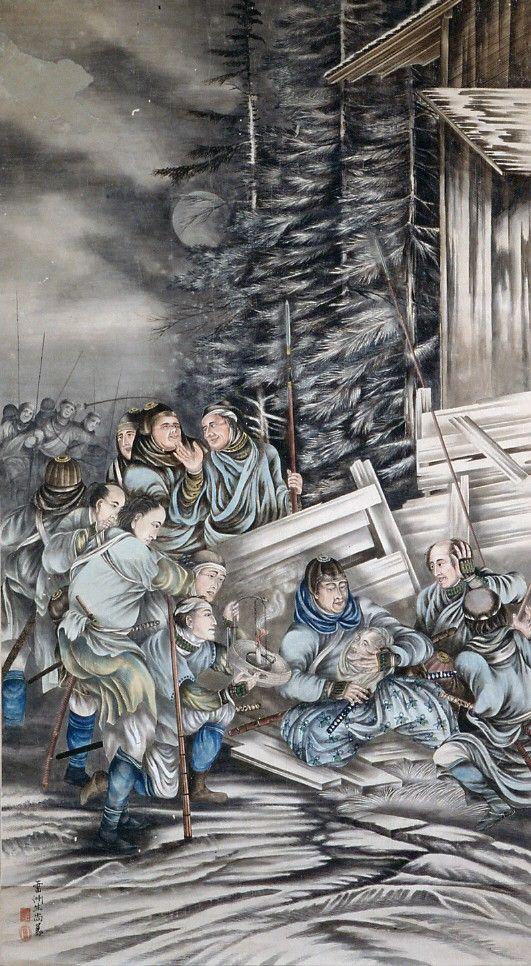
“Revenge of the Loyal Samurai of Akō” by Yasuda Raishū in Folklore of Japan japanese myths
The book also delves into the Japanese philosophical and moral lessons embedded in these stories. For instance, the chapter on the 47 Ronin is a deep exploration of Bushido, the samurai code of honour. The story of the 47 Ronin is a powerful example of loyalty and duty. They avenged their master’s death, knowing it would lead to their own. Ryder examines this story as more than just a historical event. He sees it as a reflection of the Japanese mythology that has shaped Japanese society.
He writes, “The story of the 47 Ronin is not just about revenge; it’s about the lengths to which people will go to uphold their principles, even at the cost of their lives.” This makes the story more than just a tale of vengeance. It becomes a meditation on honor and the human need to live by a moral code.
The story behind the chapter: The ronin served Asano Naganori, lord of Akō, who was ordered to commit seppuku in 1701 after drawing his sword on the shogunate’s master of ceremonies, Kira Yoshinaka, inside Edo Castle. They killed Kira in a night raid on his Edo mansion in January 1703, were ordered to commit seppuku themselves that March, and were buried in front of their lord’s tomb at Sengakuji temple in Tokyo. A. B. Mitford’s Tales of Old Japan (1871) records a story told at those graves. A man from Satsuma, who had once trampled on the ronin leader Ōishi Kuranosuke and spat in his face, taking him for a worthless drunk, came to beg his pardon and took his own life at the grave, and the temple buried him beside the ronin.
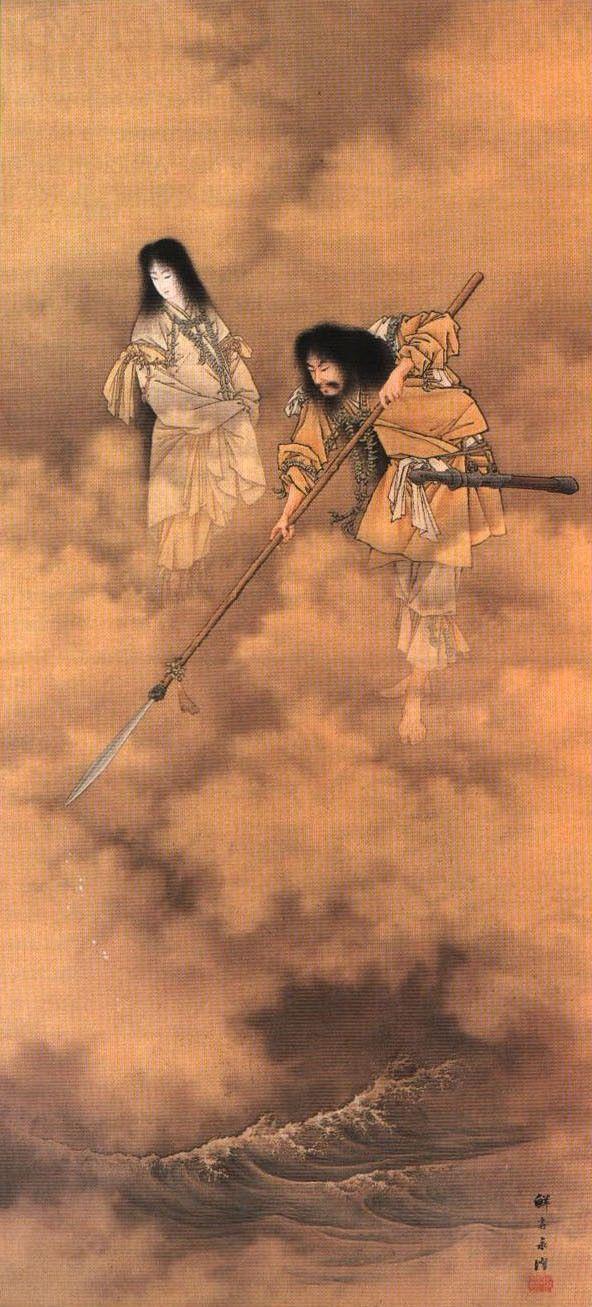
Searching the Seas with the Tenkei (天瓊を以て滄海を探るの図, Tenkei o motte sōkai o saguru no zu). Painting by Kobayashi Eitaku. Izanagi with the spear Amenonuhoko to the right, Izanami to the left.
Ryder also explores the interplay between different philosophies within the folklore of Japan, such as the relationship between Shinto and Buddhism. The chapter on Musashi, for example, touches on how these two belief systems influenced his worldview. Musashi was known for his Zen-like approach to life, which was shaped by both Shinto‘s reverence for nature and Buddhism‘s emphasis on inner peace and enlightenment. Ryder explains how these philosophies are reflected in Musashi’s famous “Book of Five Rings,” which combines practical advice on strategy with deep philosophical insights. By connecting these teachings to broader cultural currents, Ryder helps readers appreciate the complexity and depth of Japanese mythology.








Cultural Significance and Modern Relevance
What makes Japanese Fighting Heroes particularly compelling is how it bridges the gap between the folklore of Japan, Japanese mythology and modern life. Ryder doesn’t just tell these stories—he explains why they still matter. The themes of honour, loyalty, and courage are timeless, and Ryder does an excellent job of showing how these values are still relevant today. Whether you’re a fan of Japanese culture or just someone looking for meaningful stories, there’s something in this book for you.
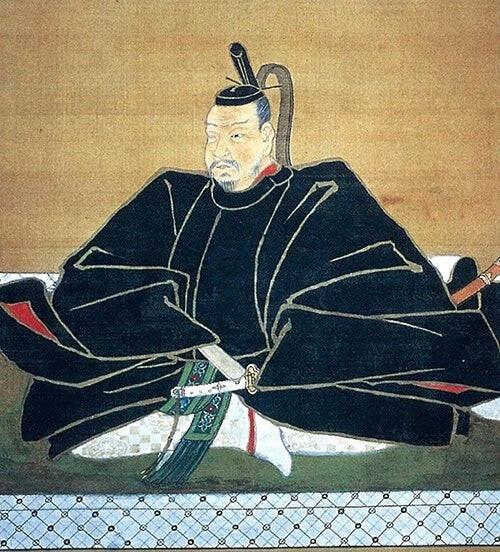
Date Masamune: The One-Eyed Dragon
For example, the chapter on Date Masamune, the one-eyed dragon, explores how his life was shaped by his determination to forge his path. Masamune, who lost an eye to smallpox as a child, refused to let his disability define him. Instead, he became one of the most powerful and respected samurai of his time. Ryder writes, “Masamune’s story is a reminder that true strength comes not from physical ability, but from the will to overcome adversity.” This is a lesson that resonates with anyone who has faced challenges in their own life.
Similarly, the chapter on the “Tea Master” Sen no Rikyu highlights the value of simplicity and mindfulness. Sen no Rikyu, who perfected the Japanese tea ceremony, believed that beauty could be found in simplicity and that even the most mundane activities could be elevated to an art form. Ryder connects this philosophy to the broader Zen tradition, showing how it has influenced everything from Japanese design to modern mindfulness practices. He writes, “Rikyu’s teachings remind us that true beauty lies in the simple, the imperfect, and the fleeting moments that make up our lives.”
The story behind the chapter: Two stories about Rikyu, both told by Okakura Kakuzō in The Book of Tea (1906) and best read as legend, show why he became the model tea master. When the warlord Toyotomi Hideyoshi asked to see Rikyu’s celebrated morning glories, he arrived to find every flower in the garden gone, and a single perfect bloom waiting in the tearoom. Their friendship ended in 1591, when Hideyoshi ordered Rikyu to take his own life, for reasons historians still cannot pin down. In Okakura’s telling, Rikyu hosts a last tea for his disciples, gives each of them a utensil as a keepsake and breaks his own tea bowl so that no one can use it again.
The Power of Storytelling
At its core, Japanese Fighting Heroes is a celebration of storytelling of the folklore of Japan. Ryder understands that these myths and legends are not just entertainment—they are a way for cultures to pass down their values and lessons from one generation to the next. By retelling these stories, Ryder ensures that they continue to inspire and teach. His writing is clear and engaging, making even the most complex ideas accessible to a broad audience.
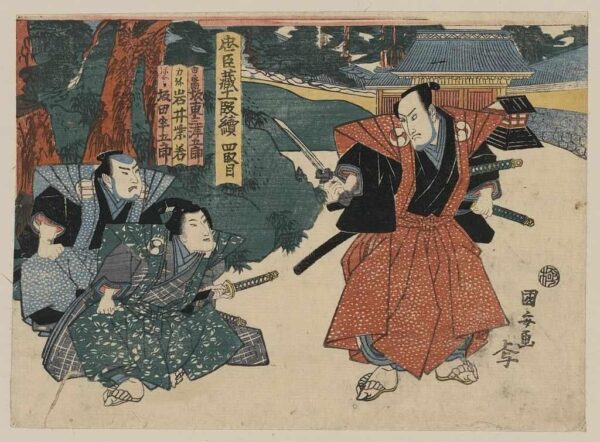
Yodanme by Utagawa Kuniyasu
Ryder’s respect for Japanese mythology shines through in every chapter. He treats each story with the care it deserves, providing historical context and cultural insights that deepen our understanding. For example, in the chapter on the 47 Ronin, Ryder explains how their story has been interpreted differently over time, from a tale of loyalty to a critique of blind obedience. He writes, “The story of the 47 Ronin has been retold countless times, each version reflecting the values and concerns of the time. What remains constant is the core message about the importance of honour and duty.” This thoughtful approach makes the book not just informative, but also thought-provoking.
Why You Should Read This Book
If you’re interested in the folklore of japan, it’s culture, history, or Japanese mythology, Japanese Fighting Heroes is a must-read. But even if you’re not a Japan enthusiast, there’s still plenty to gain from this book. The stories are engaging, the lessons are timeless, and the writing is accessible without being simplistic. Ryder’s ability to connect ancient myths to modern life makes this book relevant for everyone.
For me, the real value of this book lies in its ability to inspire reflection. Each chapter left me thinking about how the values embodied by these heroes can be applied to my own life. Whether it’s Musashi’s discipline, Tomoe Gozen’s resilience, or Sen no Rikyu’s appreciation for simplicity, there’s a lesson in this book for everyone.
In a world where we are constantly bombarded with information and distractions, it’s refreshing to read a book that encourages us to slow down and think about what matters. Ryder’s Japanese Fighting Heroes is more than just a collection of stories—it’s a guide to living with purpose, honour, and mindfulness. It’s a reminder that the past is not just something to be studied, but something to be learned from.
Final Thoughts

Jamie Ryder is the founder of Yamato Magazine, a Manchester-based publication that celebrates Japanese culture worldwide. A qualified sake sommelier and copywriter, Ryder helps mental health, hospitality and tech brands make more connections, leads and sales through the written word.
Japanese Fighting Heroes: Warriors, Samurai, and Ronins by Jamie Ryder is an insightful and engaging book that offers much more than just tales of legendary figures. It’s a deep exploration of Japanese culture, philosophy, and values, all wrapped up in a series of compelling stories. Whether you’re a student of Japanese history or simply someone who enjoys a good story, this book has something to offer. Ryder’s writing is both informative and thought-provoking, making this a book that stays with you long after you’ve finished reading.
Therefore in a world where ancient wisdom is often overlooked, Japanese Fighting Heroes is a powerful reminder of the lessons we can learn from Japanese mythology. By exploring these stories, we gain a better understanding of Japanese culture and the universal values that connect us. This book shows the enduring power of storytelling and the timeless lessons these stories impart. Whether you’re seeking inspiration, knowledge, or simply a good read, Japanese Fighting Heroes is a book that delivers on all fronts.
Sources and further reading
- Yei Theodora Ozaki, Japanese Fairy Tales (1908)
- Frank Brinkley with Dairoku Kikuchi, A History of the Japanese People (1915)
- A. B. Mitford, Tales of Old Japan (1871)
- Okakura Kakuzō, The Book of Tea (1906)