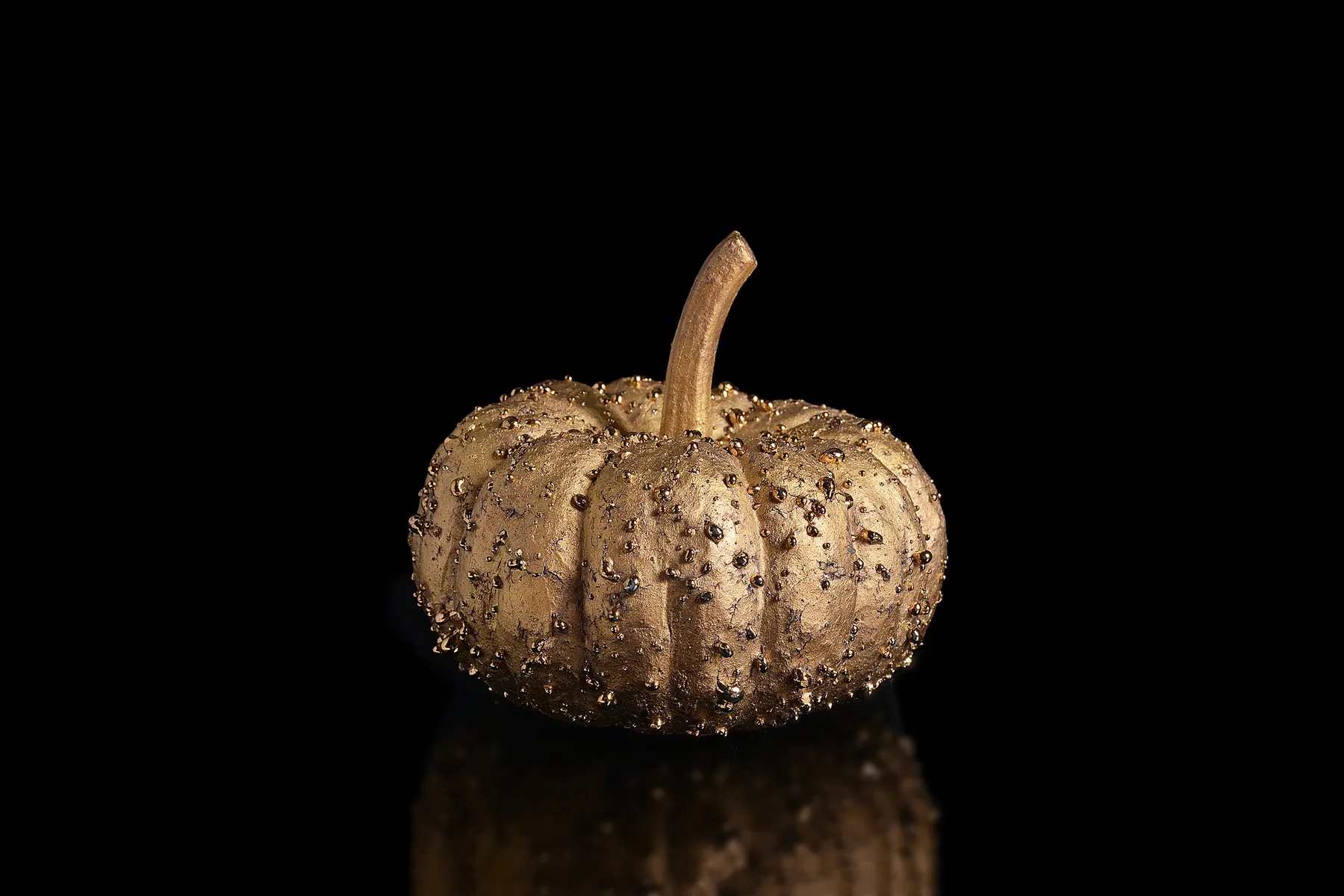
Elemental, Maak’s auction of modern and contemporary Japanese ceramics, returns this November with 139 lots. All of them go on show at 40 Earlham Street in Covent Garden from Saturday 14 November, the morning online bidding opens. The room stays open until midday on Thursday 19 November, a few hours before the first lots close.
Maak’s Elemental Ceramics Auction
Japanese ceramics in London, on view to all at 40 Earlham Street, Covent Garden- Address
- Maak, 40 Earlham Street, Covent Garden, London WC2H 9LH
- Admission
- Free to view
- Starts
- November 14, 2026, 11:00 AM
- Ends
- November 19, 2026 7:18 PM
More about the event
- Lot closing times
- Lot 1 closes at 5pm on Thursday 19 November and the rest follow a minute apart, ending with lot 139 at 7.18pm. A bid in a lot’s last five minutes extends it by up to five minutes.
- Buyer’s premium
- 25% of the hammer price, with VAT charged on the premium. The catalogue estimates do not include it.
- Youngest maker
- Nakashima Sota, born in 1996, whose stoneware skull ‘Inishie Katari’ (Commune with the Ancient) was made in 2025.
- Bids over £10,000
- Maak needs photo ID before an account can bid beyond £10,000, under anti-money laundering rules.
- Third edition
- Elemental is the third edition of Maak’s auction dedicated to modern and contemporary Japanese ceramics.
Anyone can walk in, and the viewing runs over two floors of Maak’s pop up gallery. Maak invites visitors to handle the work with its specialists on hand, which matters for pots made to be held. The catalogue moves from the founders of the Mingei folk craft movement to makers born in the 1990s. Names below follow Maak’s catalogue, with the family name first.
Marijke Varrall-Jones, who founded Maak, sees the sale as a chance to look past the usual story. “Japanese ceramics have had an extraordinary influence on studio pottery in Britain, but the field extends far beyond the familiar story of Mingei and the tea bowl,” she says. “It is particularly exciting to introduce our audience to artists who are not yet widely known in the UK.”
Japanese Pottery From the Mingei Masters to Kyoto’s Avant Garde


Hamada Shoji’s Monumental Bowl and a Jar First Sold in London in 1963
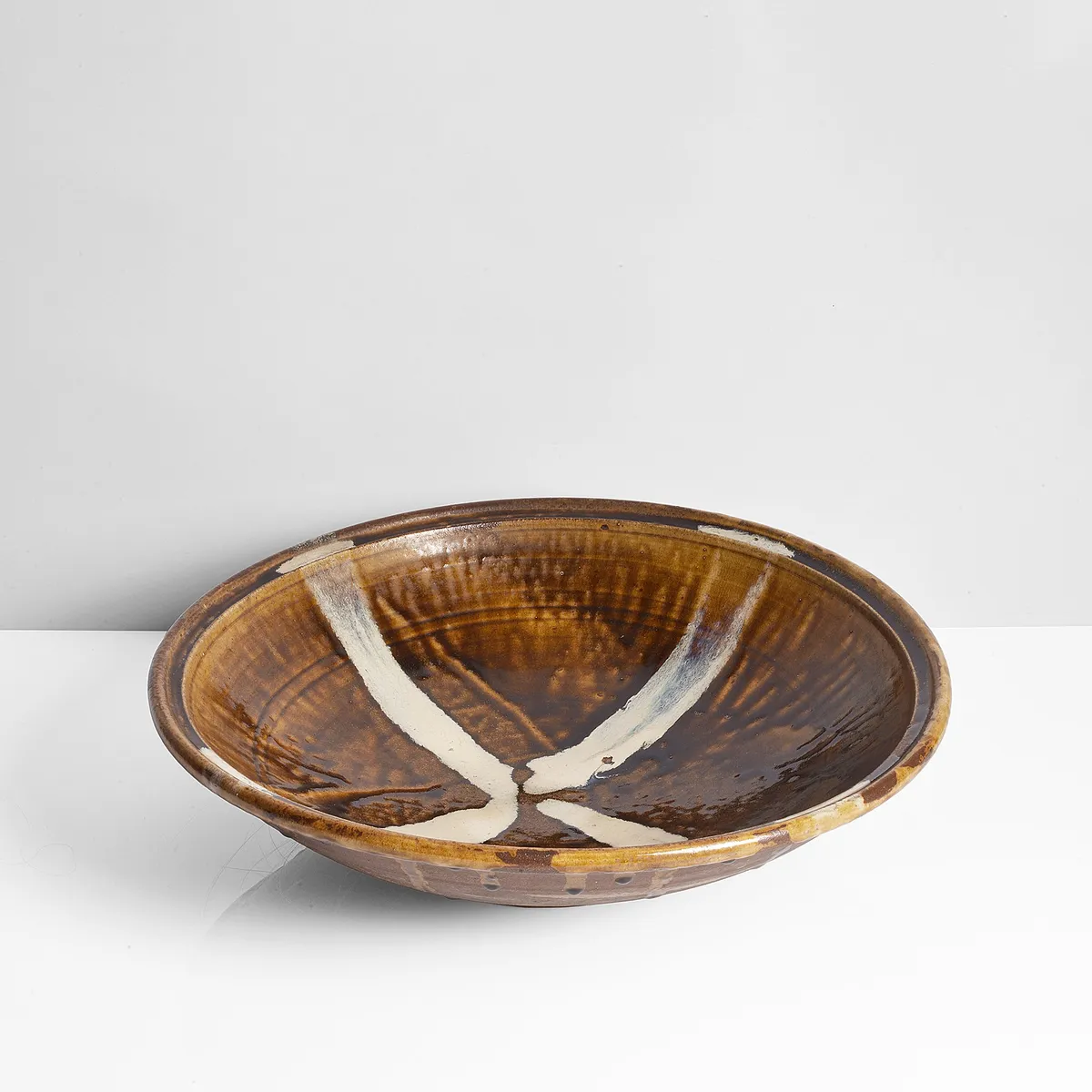
The sale opens with a white porcelain jar from 1933 by Tomimoto Kenkichi, its octagonal body softly lobed. Hamada Shoji follows with 15 lots. They range from a yunomi (an everyday tea cup) estimated at £400 to £600 up to a monumental bowl of around 1955, nearly half a metre across, with amber glaze running over iron and a cross of cream poured into the well. That bowl is estimated at £6,000 to £8,000. Hamada was named a Living National Treasure in 1955, Japan’s official honour for a master of a traditional craft.
One of his large jars has a London story. It was shown at the Crafts Centre of Great Britain on Hay Hill in November 1963, where the English studio potter Richard Batterham bought it, and it later joined the Keith Seeley Collection in the UK. It carries a wax resist motif repeated around a body of layered iron and persimmon glazes (£2,500 to £3,500).
Hamada spent three years with Bernard Leach in St Ives and later built his workshop in Mashiko. Maak’s artist page on Hamada shows works it has sold before. The family line continues in three works by his son Hamada Shinsaku and one by his grandson Hamada Tomoo.
Three Founders of Kyoto’s Sōdeisha Group in One Sale
Sōdeisha was founded in Kyoto in 1948, an avant garde group that took Japanese ceramics towards sculpture. Three of its founders are in Elemental. Yagi Kazuo’s Flower Vase wraps a white slip chrysanthemum around a rich orange body (£2,500 to £3,500). Suzuki Osamu is represented by five small zodiac animals, from an ox to a monkey, each estimated at £400 to £500. Yamada Hikaru has a tsubo, a rounded storage jar.
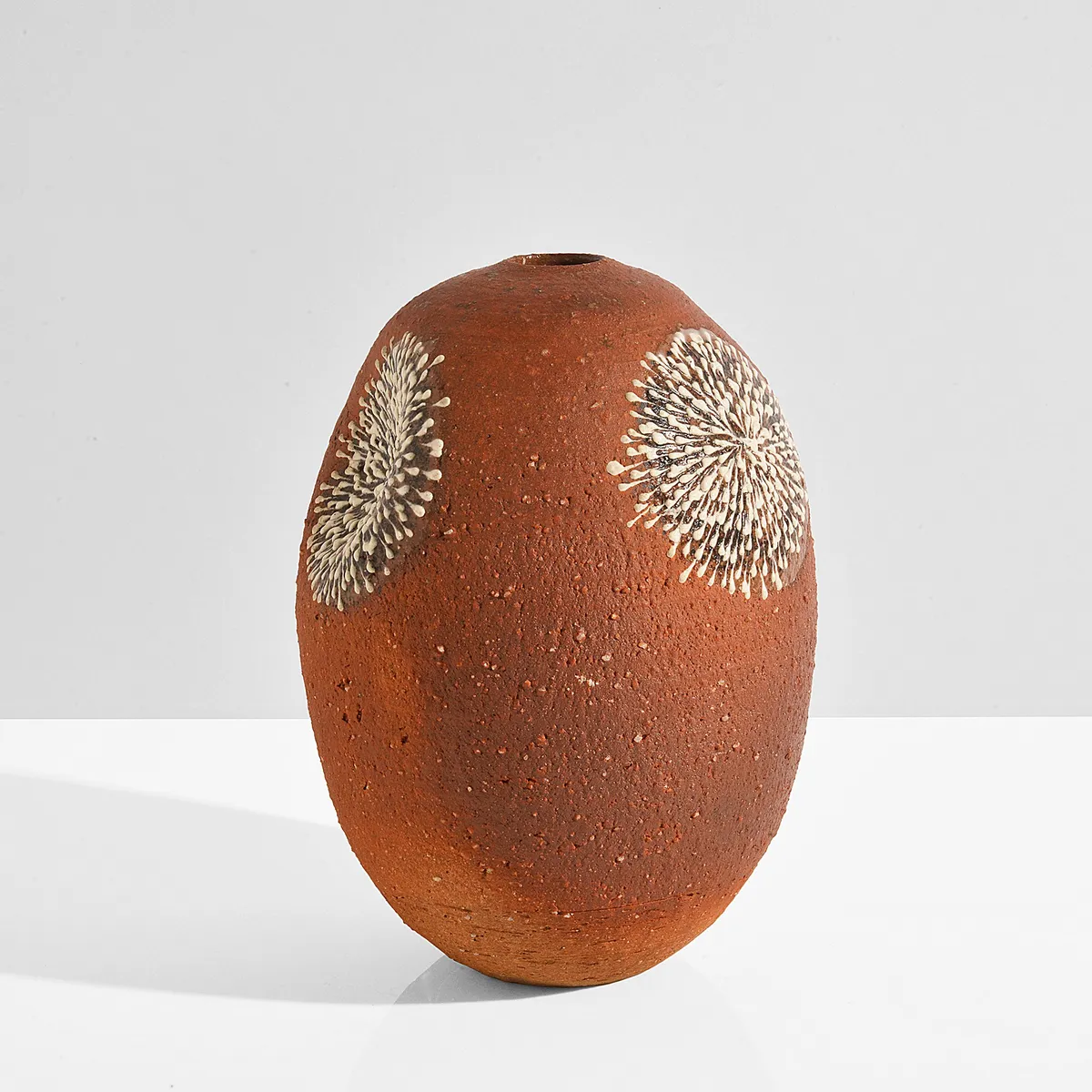
Later sculptors take that thinking further. Kishi Eiko’s two Noh-inspired sculptures from 2008 use her saiseki zogan, or coloured inlay, technique. She kneads coloured clays and grogs together, builds the form, pricks tiny holes across the surface, fills them with slip and finishes the piece under a clear glaze. Takiguchi Kazuo’s untitled forms swirl cream, grey and terracotta clays together. Akiyama Yo’s ‘Untitled T-014’ (2001) is a black, cracked hollow estimated at £5,000 to £7,000.
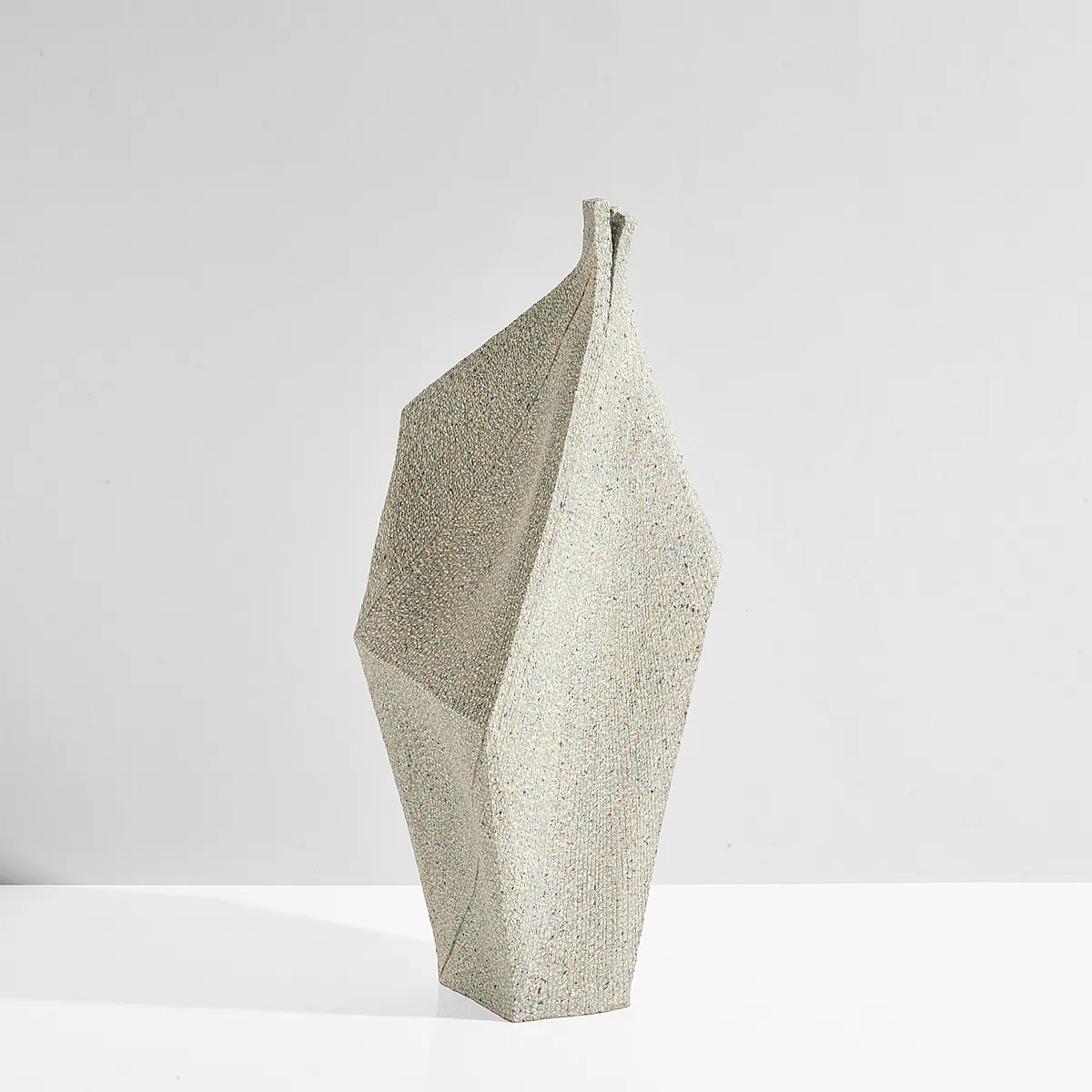
The highest estimate in the sale belongs to Kamoda Shoji’s Large Vase of 1979. Fanned lines are cut into its mottled brown surface and inlaid with red, green and blue enamels. The vase was shown at his eighth solo exhibition in Tokyo that year (£7,000 to £9,000).
Seventeen Chawan Tea Bowls, Plus Sake Cups and Flasks
Tea drinkers will find 17 lots of chawan, the bowls used to whisk matcha in the tea ceremony. Koie Ryoji, who died in 2020, has five, estimated from £400. Goto Hideki’s ‘Watatsumi’ (Sea God) bowl is squeezed and carved under a thick shino glaze, the white glaze first made in Japan’s Mino region, streaked here with orange.
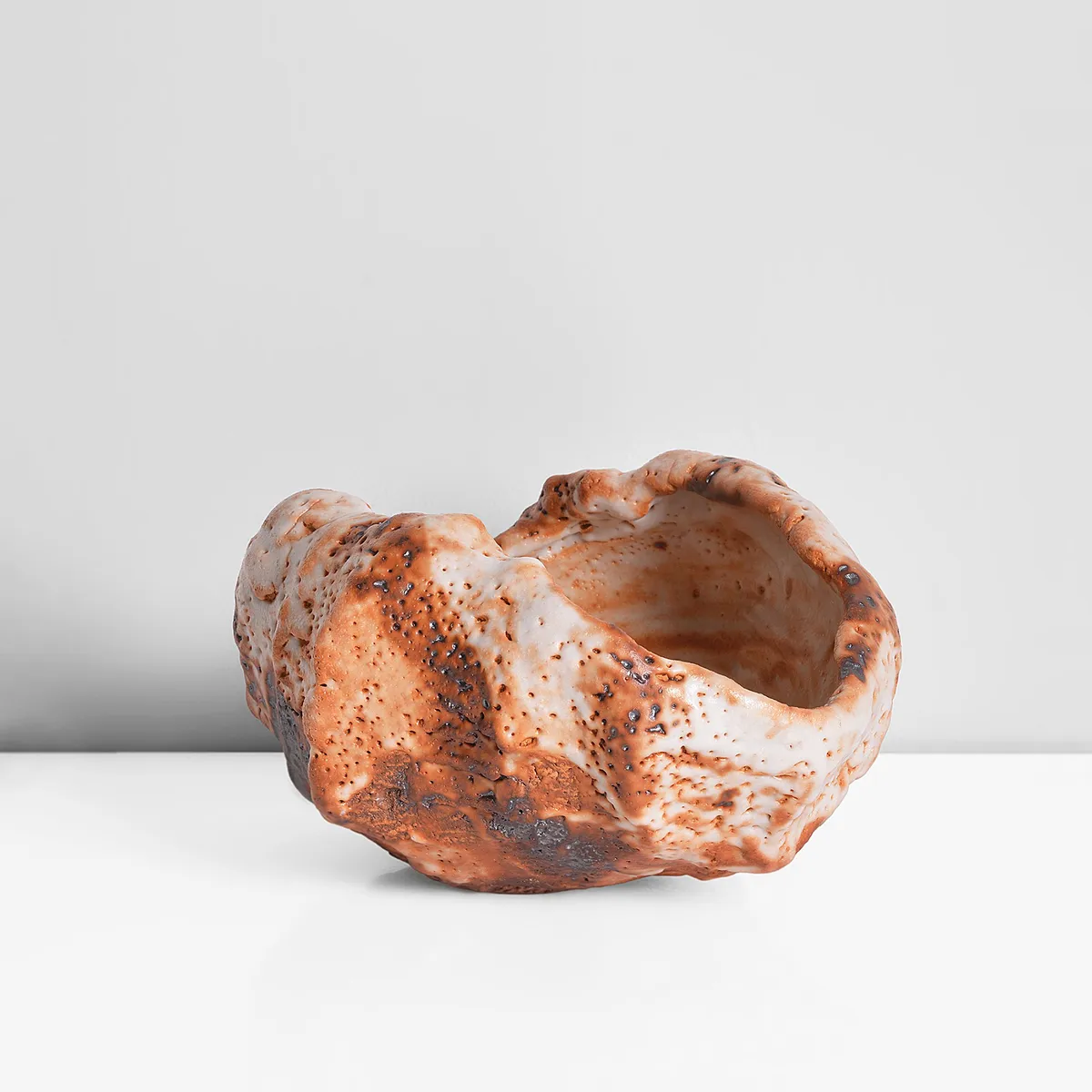
Sake has its own corner. Kakurezaki Ryuichi’s pair of tokkuri (sake flasks) from 2019 stand on three feet each, estimated at £1,500 to £2,000. Smaller guinomi (sake cups) include Yoca Muta’s porcelain ‘Salamander’. Sayaka Shingu’s ‘Calyx’ cup and matching flask are offered as neighbouring lots.
Prices start low enough for a first purchase. 49 lots carry a low estimate of £500 or less, and Maak’s guide to buying at auction walks new bidders through each stage.








Viewing Hours at 40 Earlham Street and How Online Bidding Works
- Online catalogue: from Friday 30 October 2026
- Saturday 14 November: 11am to 4pm (online bidding opens at 10am)
- Sunday 15 November: 11am to 4pm
- Monday 16 November: 10am to 8pm
- Tuesday 17 November: 10am to 6pm
- Wednesday 18 November: 10am to 6pm
- Thursday 19 November: 10am to midday
Bidding takes place online only, on Maak’s own platform. Create a free account, then bid live in the closing minutes or leave a maximum bid that the system raises for you, up to your limit. Maak’s bidding FAQs cover the details. Winning lots can be collected by appointment from the gallery or from Maak’s Berkshire office, and the team can arrange UK and international shipping.
Maak, 40 Earlham Street
Every lot, with condition notes and estimates, is in the Elemental catalogue on Maak’s site.