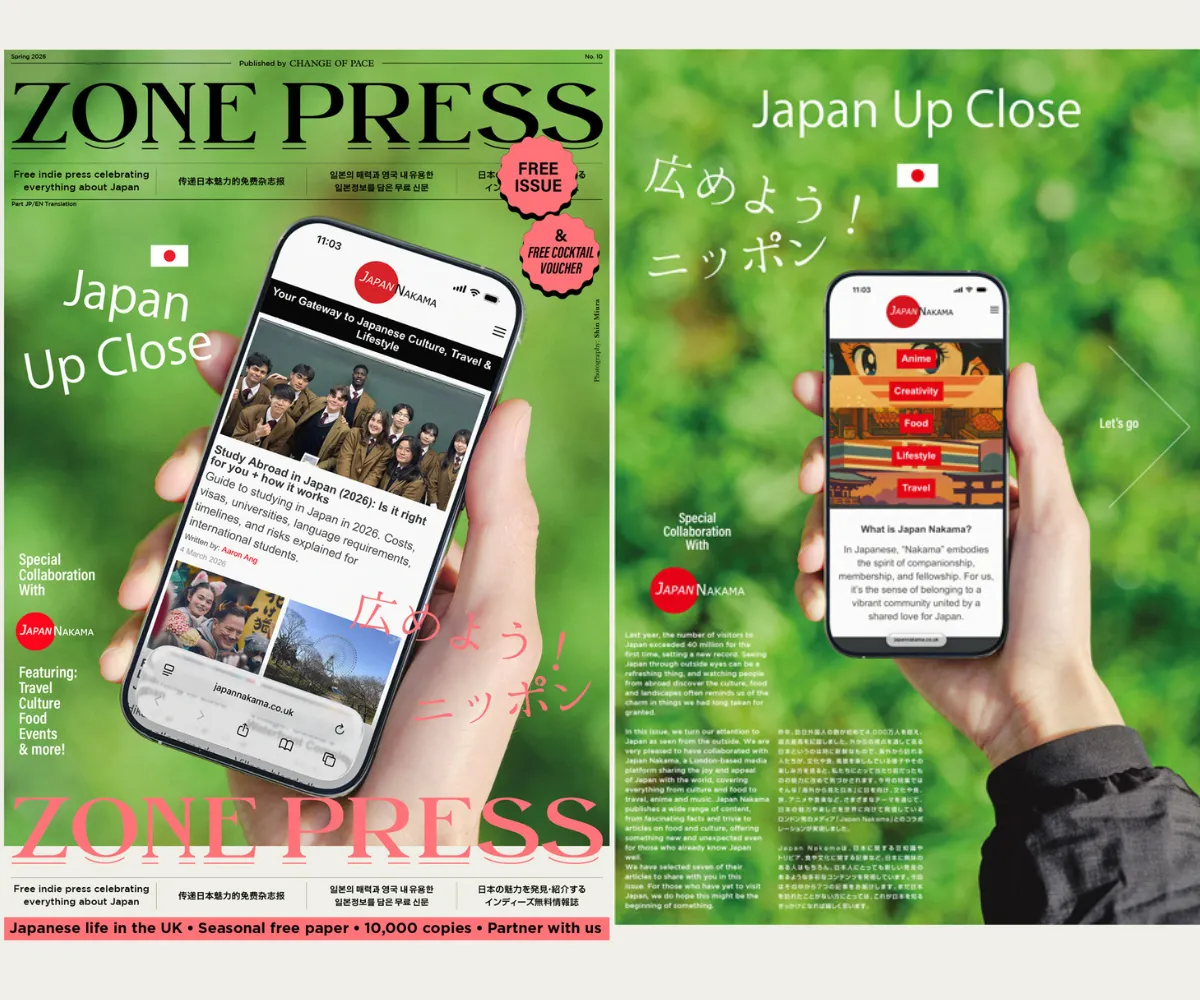
If you’re based in London and feel a connection to Japan, or simply have a curiosity about its culture, ZONE PRESS is worth discovering. Each issue explores the people, stories, and moments shaping Japanese life in the UK, from chefs and artists to designers and everyday community voices. In the latest issue, Japan Nakama is featured as part of this ongoing exploration of the culture and communities connecting both countries.
Through print, ZONE PRESS brings to life a sense of community, the exchange between cultures, and the individuals who exist between both worlds.
Stories shaping Japanese culture beyond Japan.
What is ZONE PRESS?
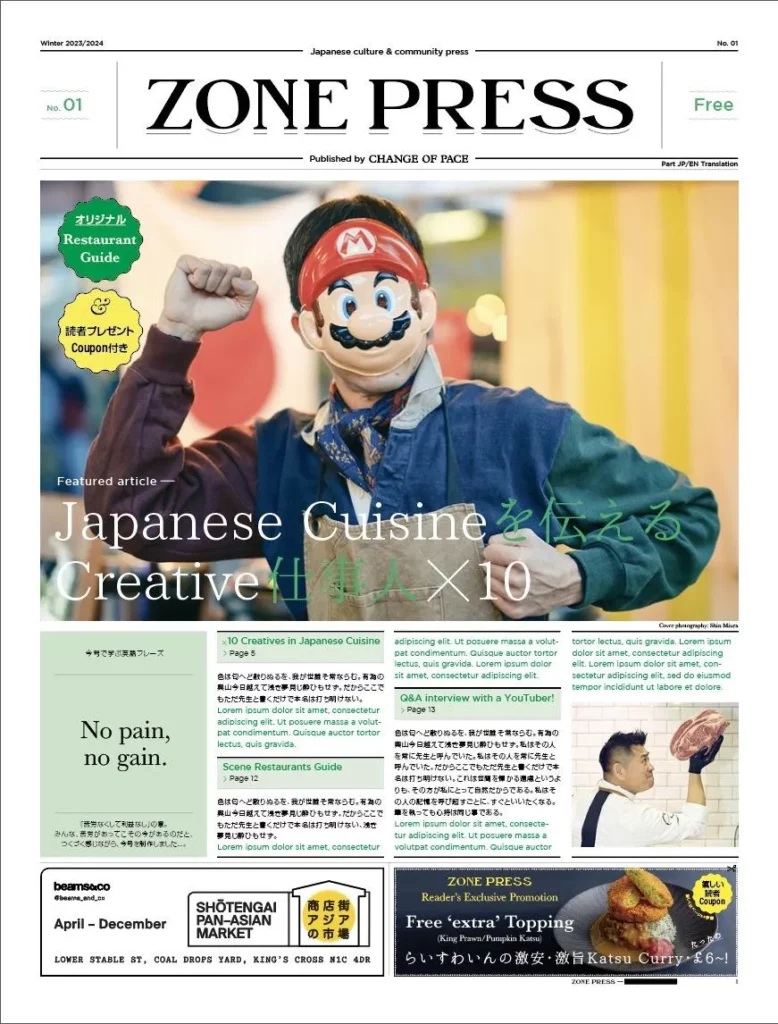
ZONE PRESS is a lifestyle paper dedicated to celebrating Japanese culture and extending it to the UK. It launched in 2023 and is published quarterly in print in both Japanese and English.
With a print run of 10,000 per issue, the paper-zine is committed to inspiring appreciation for Japan. As of writing, it has an expected reach of 30,000 readers and can be picked up from 300 Japanese restaurants.
The publication aims to empower communities, own its style, and expand its reach.
Japanese Culture, Lived in the UK
Much of the English-language coverage of Japan focuses on familiar themes like food, travel, and aesthetics. ZONE PRESS broadens that lens by highlighting real Japanese lives in the UK, those building careers, communities, and creative identities across borders.

Yoshi Takagi: From MONOCLE to ZONE PRESS

ZONE PRESS’s founder, Yoshi Takagi, was part of the original launch team behind MONOCLE in 2007, staying through to Issue 150 as Design Director. MONOCLE treated design as a means to determine how a reader goes through a story: what they see first, where they pause, and how long they stay. This manner of seeing design carried over.
Photography also plays a big role in storytelling. The lead photographer comes from the same editorial background, creating a shared language between image and text. While it’s an indie publication, ZONE PRESS uses a format that has already been tested, now dedicated to telling human stories rooted in Japanese culture.
This design philosophy remains at the heart of ZONE PRESS, ensuring every layout, image, and headline guides the reader thoughtfully through each story.
Stories from recent issues
Aiste Miseviciute: A Curated Taste of Japan in London

In the 9th issue, ZONE PRESS features a guide to five authentic Japanese restaurants in London, selected by Aiste Miseviciute. The focus is on places run by Japanese chefs or those trained in traditional techniques, giving readers a more reliable way to find genuinely authentic food in the city.
The guide includes restaurants such as Yashin Ocean House, where sushi is prepared using classic methods, alongside other spots influenced by Edo-mae style cooking. Each listing is supported by photos of the chefs, interiors, and dishes, so readers can quickly understand the setting and what kind of experience to expect.
Mandeep Singh Kundi: Sumo in the UK

In this issue, ZONE PRESS features Mandeep Singh Kundi, a sumo wrestler based in the UK, offering insight into how the sport is being practiced and adapted outside Japan.
His feature focused on his training, background, and approach to sumo, showing how traditional techniques are maintained while being applied in a completely different environment. Kundi also highlights the physical demands of the sport, with images of training sessions that give readers a clear sense of the discipline involved.
What’s particularly fascinating is what sumo represents beyond competition, including its cultural significance and structure. It gives readers a clear understanding of the purpose, and traditions behind the sport.
Japanese Rice: A Practical Guide to What to Buy in the UK

One of the more notable past ZONE PRESS issues featured a guide to ten must-try Japanese rice varieties available in the UK, helping readers understand what to look for when buying rice beyond standard supermarket options.
The issue highlighted specific types, such as Koshihikari rice from Nagano, with clear visuals of packaging and grains so readers can easily know what to buy in-store or online.
Where to Pick Up a Copy of ZONE PRESS

ZONE PRESS is designed to be discovered in the places where Japanese culture is actively lived and shared across the UK. With a circulation of 10,000 copies and an expected reach of 30,000 readers, each issue is distributed across a carefully selected network of venues, from restaurants and cultural spaces to retail and community hubs.
You can pick up a copy at over 300 locations nationwide, including well-known Japanese restaurants such as Koya (Udon), Yashin, Oita, Mayha, Tanakatsu, and Chisou. Beyond dining, copies are also available in curated retail spaces like Clutch Cafe, Drake’s, and Nepenthes London, as well as specialist Japanese stores including Japan Centre, Natural Natural, and Rice Wine Shop.
Cultural venues and community spaces also form a key part of distribution, with copies available at locations such as Japan House London (official stockist), Wagumi, and selected wellness and creative studios across the city. ZONE PRESS is also distributed at events like the Shōtengai Market in King’s Cross, as well as larger cultural events including Japan Matsuri and Hyper Japan, further embedding it within London’s Japanese cultural scene.
In addition to physical pickup points, around 4,000 copies are delivered directly to households, and selected online orders from partners such as Yutaka, Natural Natural, and The Wasabi Company may also include a copy while stocks last.
With venues rotating each issue, discovering ZONE PRESS often becomes part of the experience itself, encouraging readers to engage with the spaces, people, and culture it represents.




Bridging cultures and building community
Publishing each issue in both Japanese and English reflects how people actually live — blending languages, communities, and interests. Both Japanese and non-Japanese readers can see the same stories, presented with equal care and authenticity.
Rather than picking one, the free paper boldly lets both languages sit side by side.
In addition, ZONE PRESS prioritises community. It fosters connection by telling stories of individuals sharing similar experiences and interests. They form a working picture of Japanese life in the UK. From British farmers running wasabi farms to bespoke Japanese shoemakers, the stories are real and visceral to the reader.
ZONE PRESS also guides those who might want to discover the culture within the UK: where to eat, who’s doing interesting work, and what conversations are shaping the community. Aiste’s feature is an example of this.
In all these cases, ZONE PRESS connects. It links people who might not otherwise meet through their shared experience with the stories told.
How ZONE PRESS captures and maintains its audience
ZONE PRESS embraces print not as nostalgia but as a design choice. In an age of digital scrolls, it believes stories deserve space, layouts that unfold across pages, photography kept full-size, and type designed for reflection rather than refresh. Most free papers fill space with ads; ZONE PRESS fills it with substance and striking design for curious, creative minds.