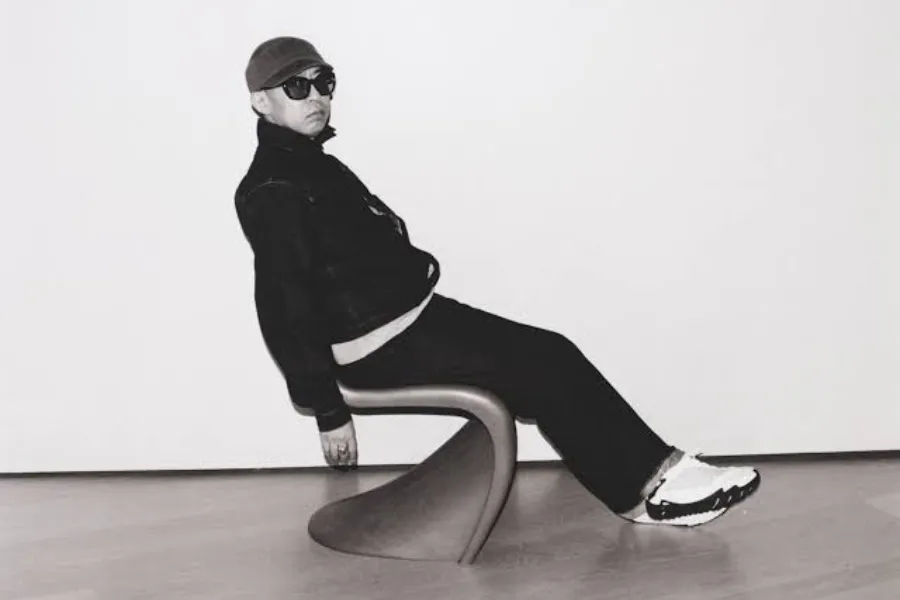
From Harajuku’s backstreets to London’s Design Museum, NIGO: From Japan with Love explores the career of the Japanese creative director who helped turn streetwear into a global luxury language. Running until 4 October 2026, this is the first major museum retrospective outside Japan dedicated to NIGO, akin to a visual biography of modern hype culture.
NIGO: From Japan with Love
A private archive he began collecting at 15, shown at the Design Museum- Address
- Design Museum, 224–238 Kensington High Street, London W8 6AG
- Admission
- Adult from £15.29, Child from £7.65, Student/Concession from £11.47
- Starts
- May 1, 2026, 10:00 AM
- Ends
- October 4, 2026 6:00 PM
More about the event
- First of its kind:
- This is the first major NIGO retrospective staged anywhere outside Japan, bringing together more than 700 objects from his personal archive.
- A collection that started at 15:
- NIGO’s very first collectible was a 1950s Levi’s Type II jacket, bought in a Tokyo vintage shop in 1986 when he was still a teenager. It became the seed of a world-class Americana archive.
- Built just for the show
- Two installations were created specifically for this exhibition: a life-size glass tea house displaying 25 of NIGO’s own handmade ceramic bowls, and a full recreation of his teenage bedroom.
NIGO: From Japan with Love, what to expect


What the exhibition is about
NIGO: From Japan with Love brings together more than 700 objects from NIGO’s personal archive, charting his evolution from a teenager obsessed with Americana to one of the most influential figures in contemporary fashion and design. The exhibition is structured as a journey through his life and creative world, touching on fashion, music, collecting, and traditional Japanese craft.
Visitors move through spaces that echo NIGO’s interests and influences: early streetwear and vintage clothing, rare design pieces, music memorabilia, magazines, toys, and ceramics he has made himself. The museum frames the show as a look at how NIGO helped bridge streetwear and luxury fashion, and how his aesthetic has shaped collaborations with brands and creatives across music, fashion, and pop culture.
Highlights you won’t want to miss
The exhibition is built around memorable, immersive set pieces. Among the standouts are a recreation of NIGO’s teenage bedroom, which sets the scene for his early influences and collecting habits, and a life-size glass tea house created specifically for this show. These installations help visitors understand how personal taste, nostalgia, and ritual inform his work.
Levi’s Type II Jacket
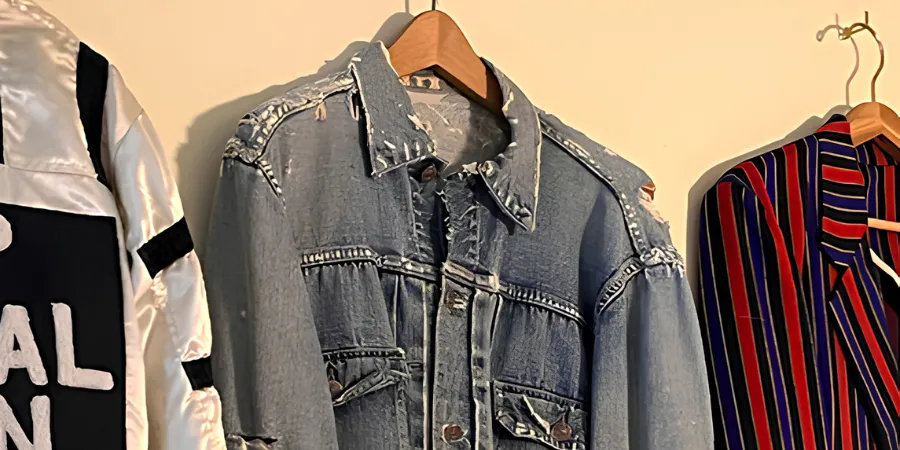
NIGO’s first-ever collectible, this 1950s Levi’s Type II denim jacket was bought in a Tokyo vintage shop in 1986 when he was 15. It marks the start of his world-class archive of early 20th-century American workwear and denim.
Sukajan Jackets
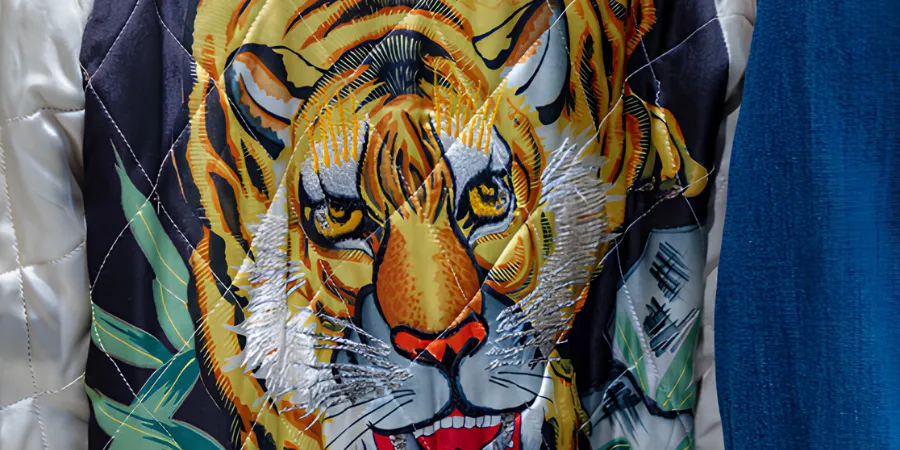
These “souvenir jackets” originated with American GIs in post-war Japan commissioning embroidered flight jackets from local craftspeople. NIGO’s display includes rare early examples featuring nishijin-ori silk, a Mount Fuji map, and Alaska statehood motifs with huskies and sleighs.
A-Bomb T-shirt
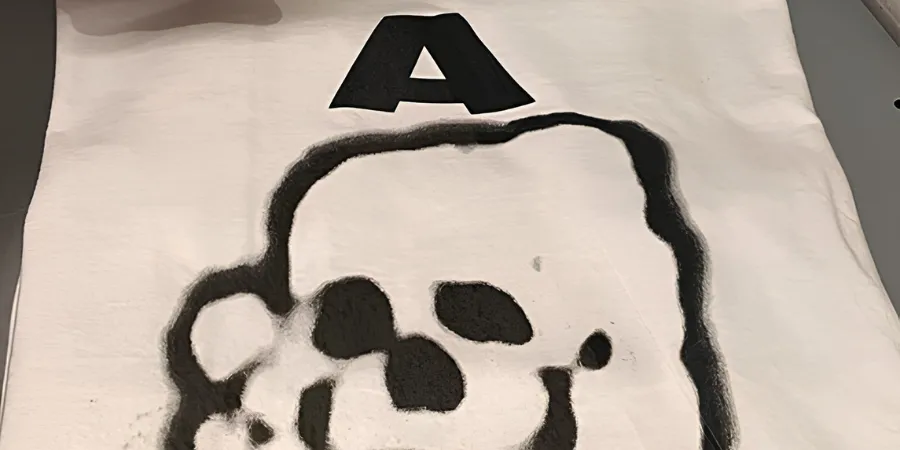
Created by graphic designer Sk8thing, this is the fourth T-shirt design ever released by BAPE and one of the rarest. Its tag features a grey 1980s boombox photo, a detail found only on the earliest BAPE pieces.
Union Jack Neon Sign
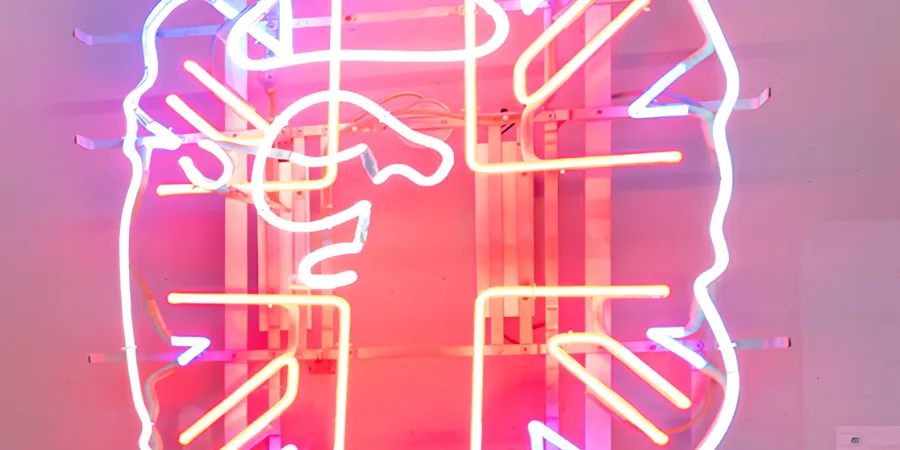
This neon sign hung in BAPE’s 2002 London boutique, designed by architectural practice Wonderwall, who shaped NIGO’s shop interiors from the late 1990s. Its futuristic aesthetic helped elevate streetwear retail into the luxury sphere.
Wrestling Masks
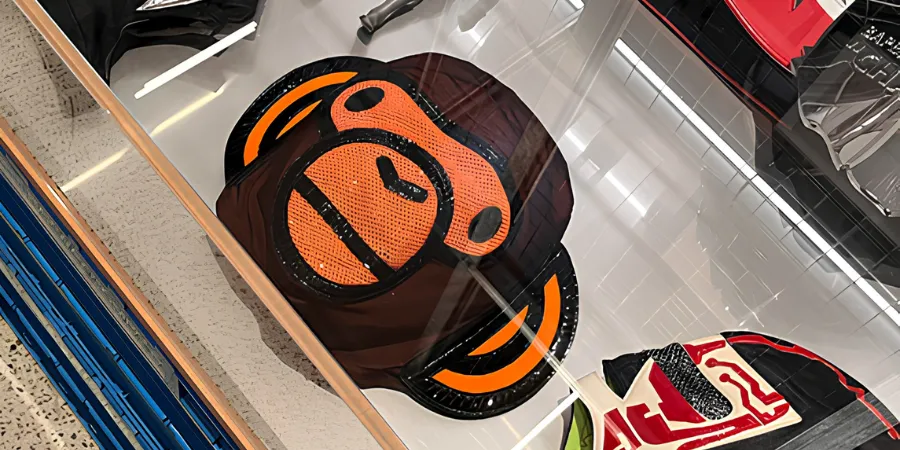
These masks were worn by BAPE-themed wrestlers Ape Man and Super Milo during the BAPE Pro-Wrestling Tour, an unexpected brand venture in the 2000s. NIGO himself commentated at these live events, which featured a BAPE camo wrestling ring.
Human Made Memorial Jacket
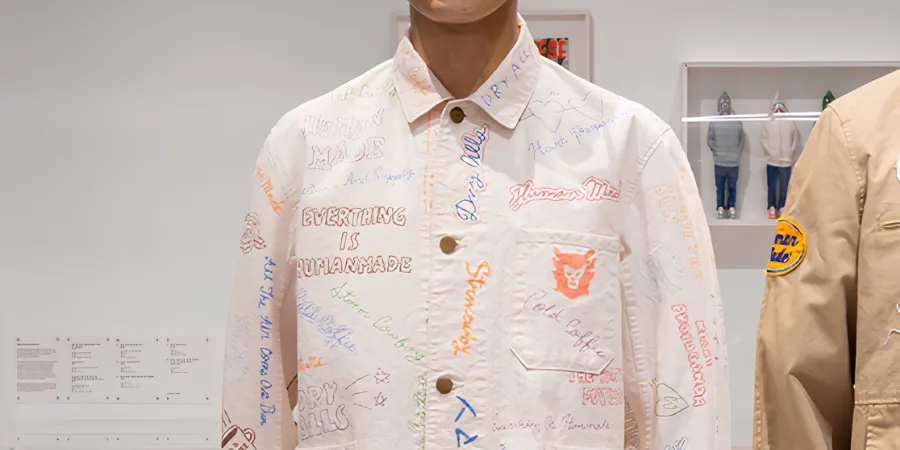
Launched in 2010, HUMAN MADE reinterprets classic American denim and workwear with bold graphics and animal mascots. This 2018 memorial jacket pays homage to a 1930s signed workman’s jacket from NIGO’s vintage collection, recreated with printed hand-drawn messages and brand motifs.
Kenzo Autumn to Winter 2025, Look 17
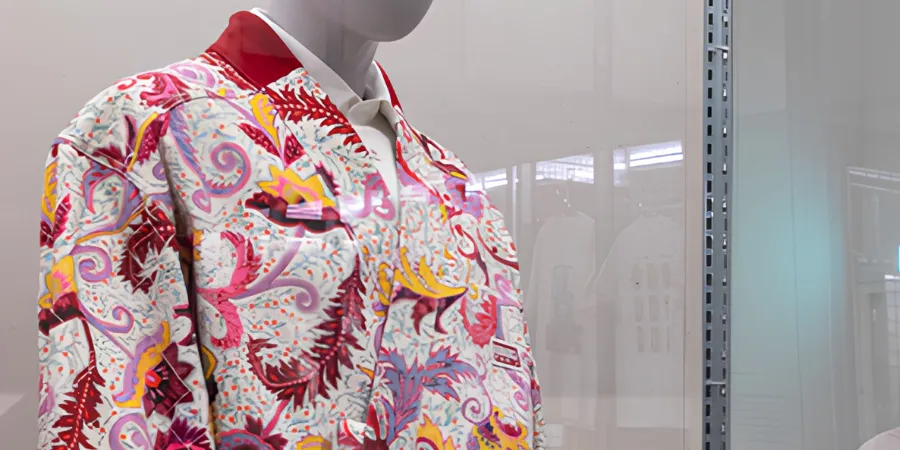
This denim outfit fuses a traditional kimono silhouette with indigo hickory-striped denim, nodding to both American workwear and Japanese denim craftsmanship. The spraypaint-inspired motif was created with street artist Futura, updating the classic KENZO flower with an atomic insignia.
Kid Cudi’s 2022 Met Gala Look
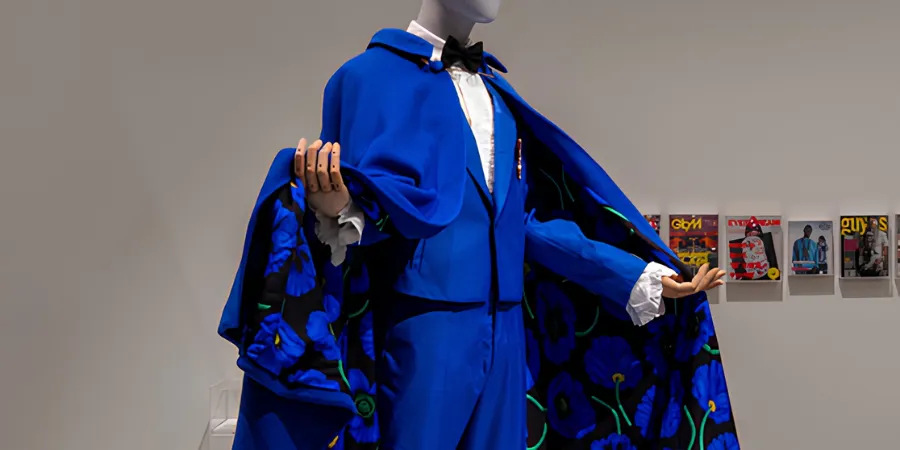
For NIGO’s first major red carpet moment as KENZO artistic director, Kid Cudi wore an electric blue version of a 1984 black tuxedo with cape from the brand’s archive. Cudi suggested lining the cape with the iconic KENZO flower motif.
Louis Vuitton ‘Lobster’ Wearable Wallet

This piece comes from the ‘Remember The Future’ collection, co-designed by NIGO and Pharrell Williams to celebrate 25 years of friendship. It references their shared love of fishing and a particular trip where they caught a lobster.
Ceramic Tea Bowls
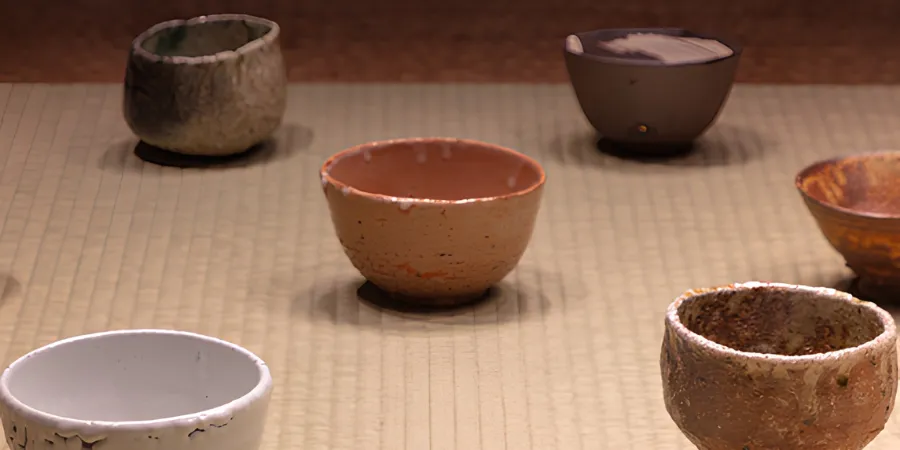
NIGO has recently focused on traditional Japanese crafts, training in tea ceremony and practicing ceramics in his Tokyo studio. Twenty-five of his handmade bowls are displayed inside a glass teahouse created especially for the exhibition by NOT A HOTEL.
The Japanese crafts behind the objects
Two of the traditions the exhibition leans on have long histories of their own, and knowing them changes how the objects read.
The sukajan was born on Dobuita Street in Yokosuka, the shopping arcade that grew up beside the US naval base after the war. Local tailors took orders from American sailors wanting something to take home, and worked them using yokofuri, an embroidery technique carried over from kimono making, stitched on machines fitted with foot levers so the operator could vary speed and stitch width by hand. The motifs mixed tigers, dragons and Mount Fuji with eagles and flags. By the 1960s Japanese youth had taken the jackets up themselves and what began as a souvenir became domestic fashion, which is the journey NIGO would later run in reverse, sending Japanese streetwear back out to the world.
The tea bowls make a quieter claim. In chanoyu a bowl is equipment rather than decoration, judged by how it sits in the hand, how it holds heat, and how its irregularities look once the tea is gone. Bowls carrying the visible marks of their making have been prized in that tradition for centuries. For a designer whose reputation was built on graphics, logos and collaboration, making 25 of them by hand and setting them inside a glass tea house is a deliberate move towards the slowest end of Japanese craft.








NIGO’s real legacy
NIGO is often described as one of the “founding fathers” of the streetwear–luxury crossover, and this exhibition is a chance to see how that story unfolded over more than three decades. Even visitors who are not already fans of Bape or hype culture will leave with a stronger sense of NIGO’s influence on how fashion, music, and branding intersect today.
For anyone interested in Japanese pop culture, Heisei-era street style, or the mechanics of modern fashion hype, the event offers a concentrated look at the people, objects, and subcultures that NIGO has drawn on throughout his career. It is also one of the most substantial Japan-linked design exhibitions in London this season.
Visit details
The exhibition is on view at the Design Museum in Kensington, London. The museum is located on Kensington High Street next to Holland Park. Standard opening hours are 10:00–17:00 Monday to Thursday and 10:00–18:00 Friday to Sunday.
Ticket prices listed on the museum page are Adult from £15.29, Child from £7.65, and Student/Concession from £11.47. The museum also notes that the shop is carrying exhibition-related merchandise and limited-edition items, including collaborations with Nike.
Design Museum, Kensington, London
For visitors who need additional support, the official exhibition page links to a Large Text Guide and a Gallery Sensory Map. The museum also runs a Relaxed Opening for visitors who may find standard museum visits overwhelming.
ICOM cardholders who need help with tickets are asked to contact bookings@designmuseum.org for booking information.