Japan House’s underground exhibition space is always packed with interesting things to see. For previous exhibitions, pieces have been displayed in a well-lit, open-plan room that gives you the freedom to wander. For their first photography exhibition, Kyotographie: Kawada Kikuji x Iwane Ai, Japan House has completely transformed their lower floor. The space now guides you along a set path, snaking through the careers of two of Japan’s most revered living photographers. Dark, tight spaces house works ranging in scale from pock-marked walls to monumental pieces that capture the kinetic energy of dance.
Kyotographie at Japan House London
Japan House’s first photography exhibition, free with booking until 18 October- Address
- Japan House London: 101-111 Kensington High St, London W8 5SA
- Admission
- Free
- Starts
- June 3, 2026
- Ends
- October 18, 2026
More about the event
- Japan House’s first ever photography exhibition
- Rare editions of Kawada Kikuji’s iconic Chizu (The Map) are on display
- Iwane Ai’s first London exhibition
- Free admission until 18 October 2026 (booking required)
For photography buffs, Kawada Kikuji’s work is legendary. Now in his nineties, Kawada continues to create compelling pieces and plays with modern technology, most recently through sharing his photos to his devoted Instagram following. His seminal photobook Chizu (‘Map’), published in 1965, launched his career, and it is with this that the exhibition begins.
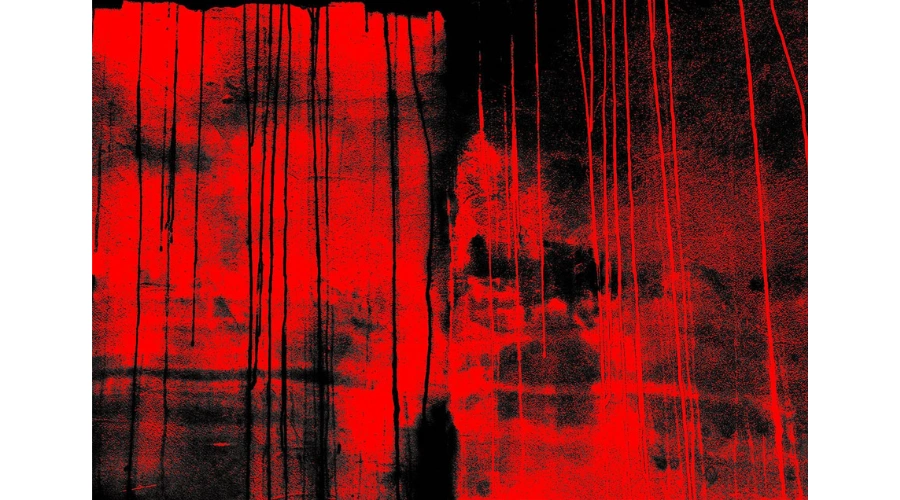
Close-up shots of Coca Cola bottles poking out of the dirt immediately suggest a long-over extinction event that has left mere vestiges of life. The walls and floor of Hiroshima’s Genbaku Dome look like futuristic landscapes; dense patches of wires seem to grow like roots over one another, and the warping of the dome’s roof is evocative of an alien landscape, a barren planet. By shooting the devastation wrought by the atomic bomb so closely, Kawada simultaneously magnifies and distances the event. We know through context that these marks may be the ashes of people desperate for shelter, but the photographs are abstracted enough to show us little of the event itself, as if they are conscious of their inability to speak for the dead.

Opposite from these opening images is a circular room, the centre of which houses various editions of the incredibly rare – and incredibly valuable – Chizu. Along the walls are photographs of one of Kawada’s prime obsessions: the sky. Taken from his Last Cosmology, shots of the sun in eclipse, clouds exploding in the sky and lightning sending veins of electricity across the page speak to Japan’s post-Bubble anxieties and the apocalyptic visions that came with the end of the twentieth century.
Another room features a work titled Vortex: three giant screens cycling through Kawada’s recent digital work. The result is cacophonous, the subject matter so vast and quickly shifting that it’s impossible to keep up. But perhaps that’s the point: in our post-information age, it is impossible to point to a unifying image to define a country, a people, a moment. Instead of parsing meaning from the noise, the noise is the point.

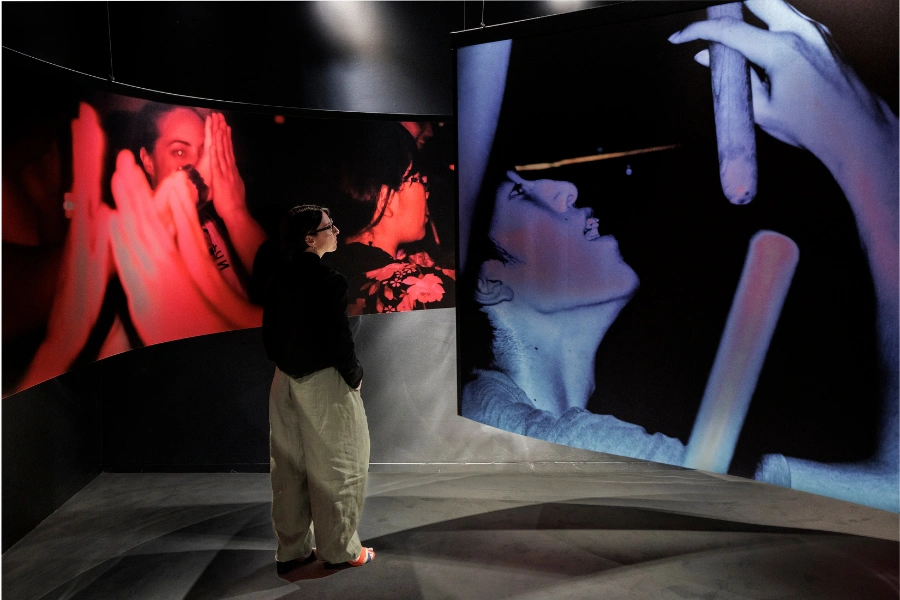
Iwane Ai’s section of the exhibition – her first exhibition in London – complements this perfectly. Like Kawada, her pieces are concerned with loss and memory, destruction and reconstruction. Her 2015 work, Kipuka, portrays the bon dance central to Hawaii’s Japanese population that originated in Fukushima. Long, panoramic photographs bathed in red and blue swirl around one another, connecting dancers of the past in Fukushima and its present practitioners in Hawaii in one continuous work. Shrines and cultural symbols are visible amidst the throngs of outstretched arms and smiling faces, and walking between the two strips of 360-degree photographs truly immerses you into a festival atmosphere. The shadow of the 2011 Fukushima disaster and the threat of encroaching lava looms over the work, but its message of the persistence of humanity and ritual strikes a positive note.

For Iwane, disaster is opportunity. Alongside Kipuka is her more recent work, A New River, which explores the Tohoku region and its cherry blossoms during the COVID-19 pandemic, where once bustling tourist spots stood eerily empty. Iwane’s take on cherry blossoms, an emblem of Japan’s natural beauty, imbues them with meaning at a time where there were no people to appreciate them. Ethereal and haunting cherry blossom trees in full bloom, surrounded by a surreal misty light, loom over figures dressed as oni who appear to be guarding their trees. These solitary trees protected by otherworldly spirits take on a deeply sad poignancy in the final section of Iwane’s exhibition, which features photographs and videos of Iwane’s sister, who took her own life under a cherry tree.
Japan House, London
In their own ways, both artists capture intensely human moments, yet remain aloof from them. Kawada’s photograph of a boy in a swimming pool, pierced by light and suspended underwater, seems to depict less a human activity than a ritual, and Iwane’s bon dance feels less like a human movement than a force unto itself. Both artists, featured as part of Kyotographie’s programme, remain two of Japan’s most celebrated working photographers, and Japan House’s exhibition offers a unique chance to see both at once in a mesmerising setting.
The exhibition runs from 3 June–18 October 2026, and entrance is free.