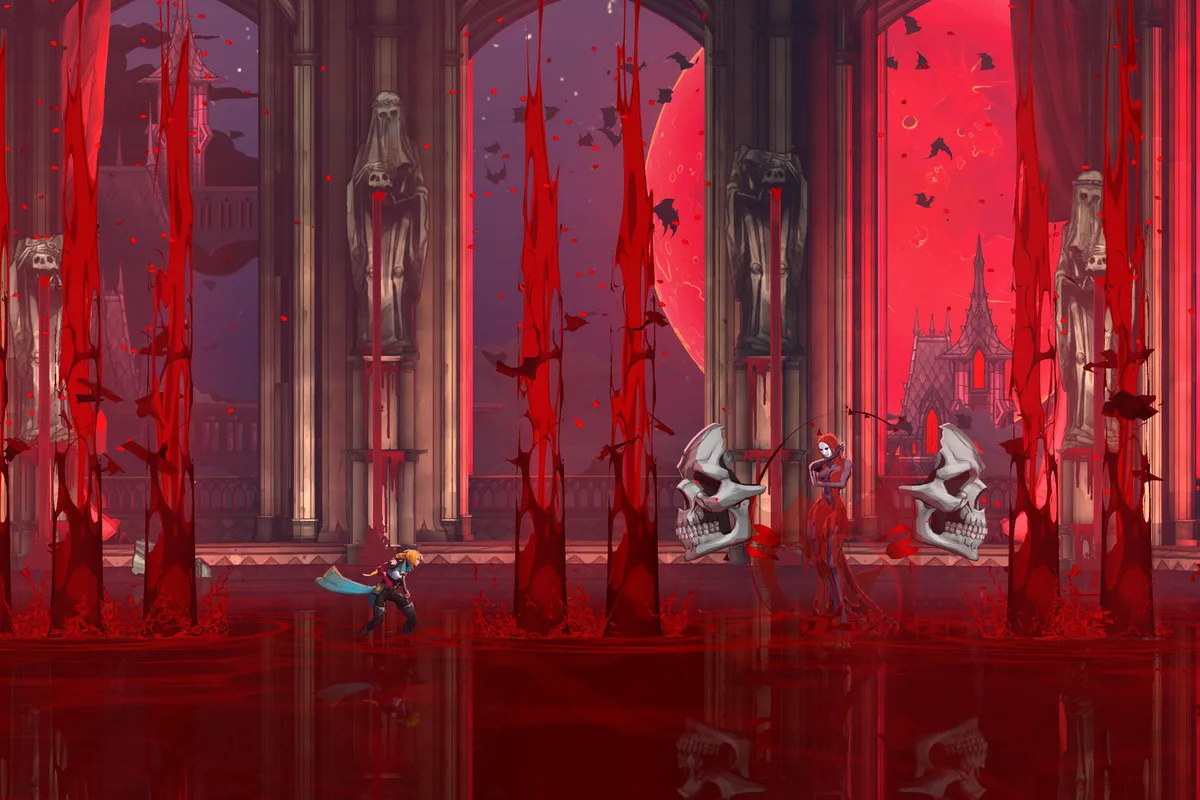
Castlevania’s music began in 1986 on the Famicom Disk System, a floppy disk add-on for Nintendo’s console in Japan, and nearly every game since has brought some of it back. On Sunday 14 March 2027 a 25 piece power rock orchestra plays it at the Eventim Apollo in London for the series’ 40th anniversary.
This guide follows the themes on that concert programme back to the games and the composers who wrote them, ending with the new score for Castlevania: Belmont’s Curse.
Who Wrote Castlevania's Most Famous Themes
Vampire Killer and the 1986 Score by Kinuyo Yamashita and Satoe Terashima
Konami released Akumajō Dracula, the game the rest of the world knows as Castlevania, on 26 September 1986. Its music was written by Kinuyo Yamashita and Satoe Terashima. It was Yamashita’s first score.
Neither name appeared on the NES version. Its credits list the music under James Banana, a pun on James Bernard, who composed the score for Hammer’s 1958 film Dracula.
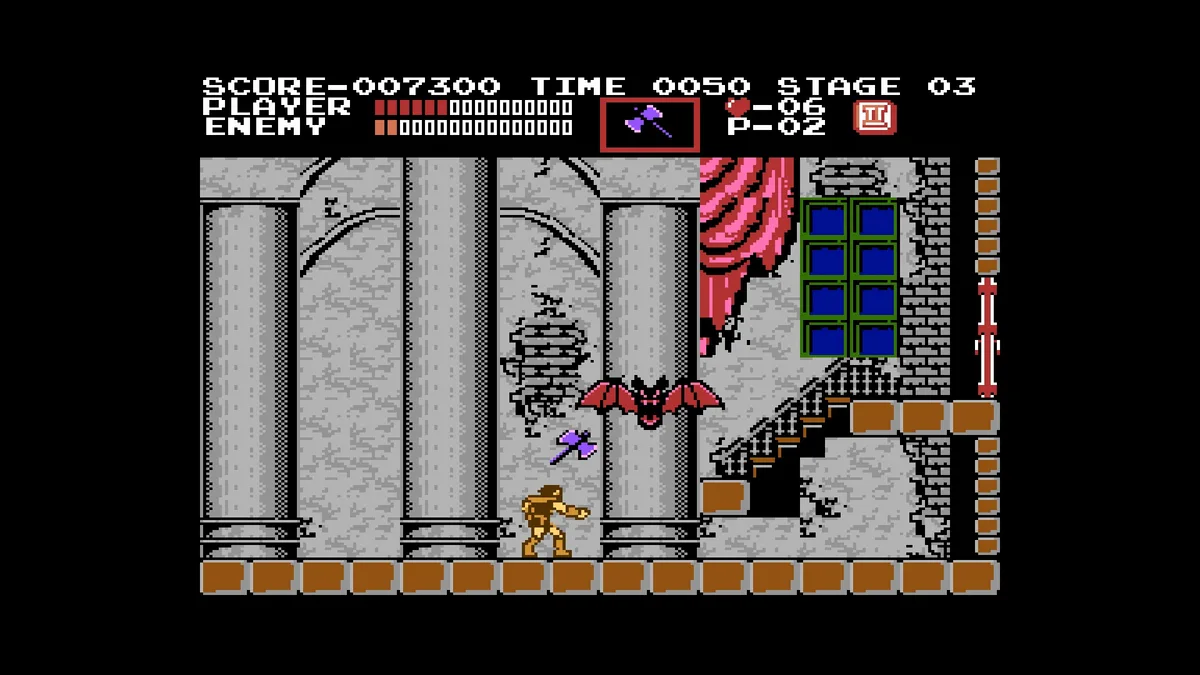
Vampire Killer is the music of the first stage, as Simon Belmont walks into the castle. It shares its name with the whip he carries and with Konami’s MSX2 version of the game, which came out a month after the Famicom one.
Who wrote which track has taken decades to settle. In September 2026 Yamashita answered questions from the YouTuber Dongled about which pieces were hers and which were Terashima’s, as Time Extension reported. She also told him that Hidenori Maezawa, often listed as a third composer, “was not involved”.
Credits for Vampire Killer itself still differ from one release to the next, so we credit the 1986 score to both composers.

Bloody Tears, Kenichi Matsubara’s Theme for Simon’s Quest
The sequel, Dracula II: Noroi no Fūin, came out on the Famicom Disk System on 28 August 1987 and reached the West as Castlevania II: Simon’s Quest. Kenichi Matsubara wrote its music, with Satoe Terashima also credited.
Bloody Tears is the music that plays as Simon walks through the towns by day. It went on to return in game after game, and Konami chose a new arrangement of it to announce the composer of Belmont’s Curse in 2026.
Beginning and the Extra Sound Chip in Castlevania III
Castlevania III arrived in Japan as Akumajō Densetsu on 22 December 1989. The Japanese cartridge carried Konami’s own VRC6 chip, which added two extra pulse wave channels and a sawtooth wave to the Famicom’s sound.
The NES could not use the chip, so the Western release of 1990 came with the music cut back to the console’s standard channels. The score was written by Hidenori Maezawa, Jun Funahashi, Yukie Morimoto and Yoshinori Sasaki.
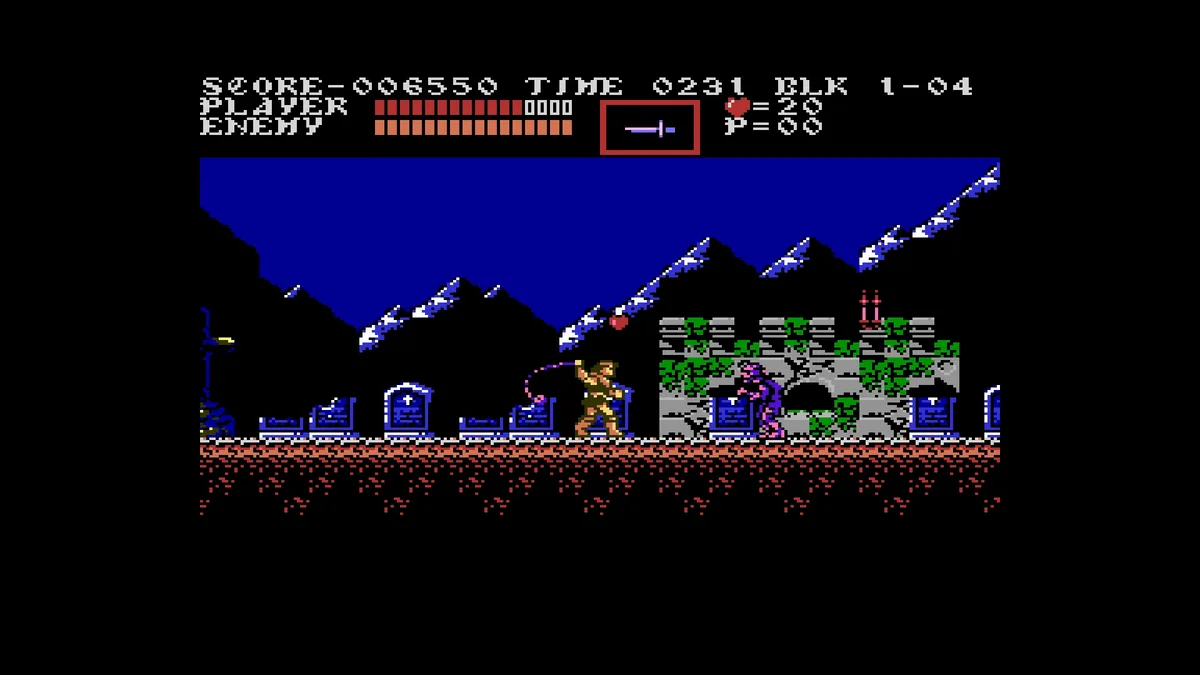
Beginning, credited to Jun Funahashi, plays on the opening stage as Trevor Belmont sets out through the church and the town. Castlevania III is also the game Netflix adapted for its animated Castlevania series in 2017.
Divine Bloodlines and the CD Soundtrack of Rondo of Blood
Konami’s next big step came on CD. Akumajō Dracula X: Chi no Rondo came out on the PC Engine Super CD-ROM² on 29 October 1993, and the disc format let the music play as recorded audio in place of the console’s sound chip.
The score came from Konami’s in-house sound team, known as the Konami Kukeiha Club, with Akira Souji, Keizo Nakamura, Tomoko Sano and Mikio Saito among its composers. Divine Bloodlines is the first stage music, and its Japanese title translates as blood relations of heaven and earth.
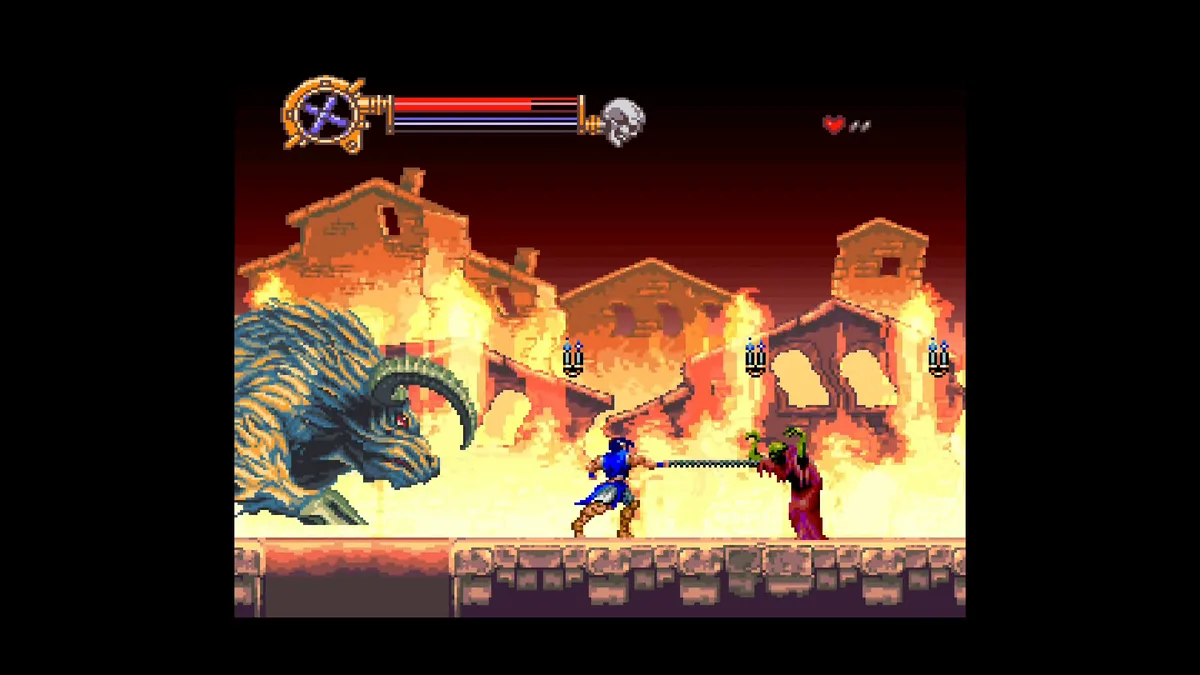
The game, known in English as Rondo of Blood, starred Richter Belmont and stayed in Japan until Konami remade it for the PSP as Castlevania: The Dracula X Chronicles in 2007.

Michiru Yamane’s Score for Symphony of the Night
Symphony of the Night came out on the PlayStation in Japan on 20 March 1997, and its music made Michiru Yamane the composer most fans connect with the series. She had first scored Castlevania for Bloodlines in 1994, and her writing draws on baroque, classical and rock music, with Bach and Yellow Magic Orchestra among her influences.
Dracula’s Castle plays as Alucard enters the castle at the start of the game. On the soundtrack album, its arrangement is credited to Akira Yamaoka, who went on to compose for Silent Hill.
The game closes on I Am the Wind, a song written by Rika Muranaka and sung by Cynthia Harrell, who later sang the theme for Metal Gear Solid 3: Snake Eater.
Aria of Sorrow to Order of Ecclesia, the Handheld Scores
Yamane led the music for most of the Game Boy Advance and Nintendo DS games that followed, usually with a second composer.
| Game | Released in Japan | Composers |
|---|---|---|
| Aria of Sorrow (Game Boy Advance) | 8 May 2003 | Michiru Yamane, Takashi Yoshida, Soshiro Hokkai |
| Dawn of Sorrow (Nintendo DS) | 25 August 2005 | Michiru Yamane, Masahiko Kimura |
| Portrait of Ruin (Nintendo DS) | 16 November 2006 | Michiru Yamane, Yuzo Koshiro |
| Order of Ecclesia (Nintendo DS) | 23 October 2008 | Michiru Yamane, Yasuhiro Ichihashi |
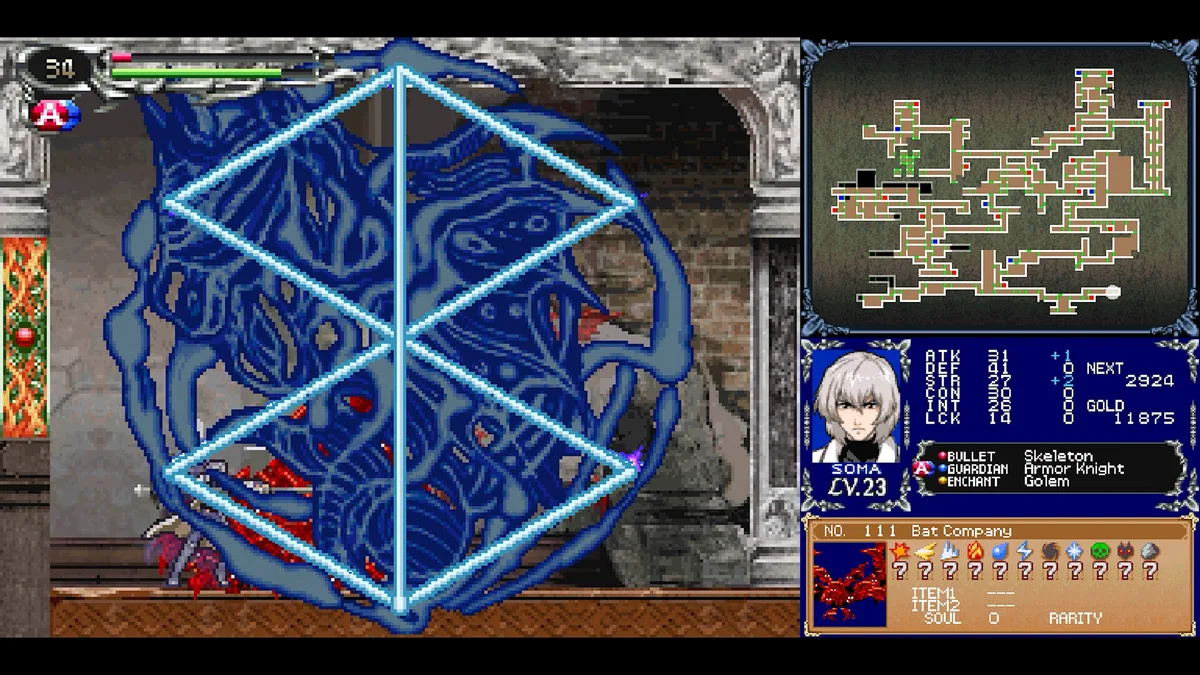
Order of Ecclesia was her last Castlevania score. In May 2026 she told Time Extension that she is not working on Belmont’s Curse.
Konami has since collected these games on modern consoles. Our guide to the Castlevania games in order shows which collection each one is in.
ASADI’s Score for Castlevania: Belmont’s Curse
Konami named ASADI, the composer Danny Asadi, as the composer of Castlevania: Belmont’s Curse, and introduced him with his new arrangement of Bloody Tears. The game came out on 15 October 2026, and Konami is releasing the soundtrack on CD in Japan on 20 January 2027.
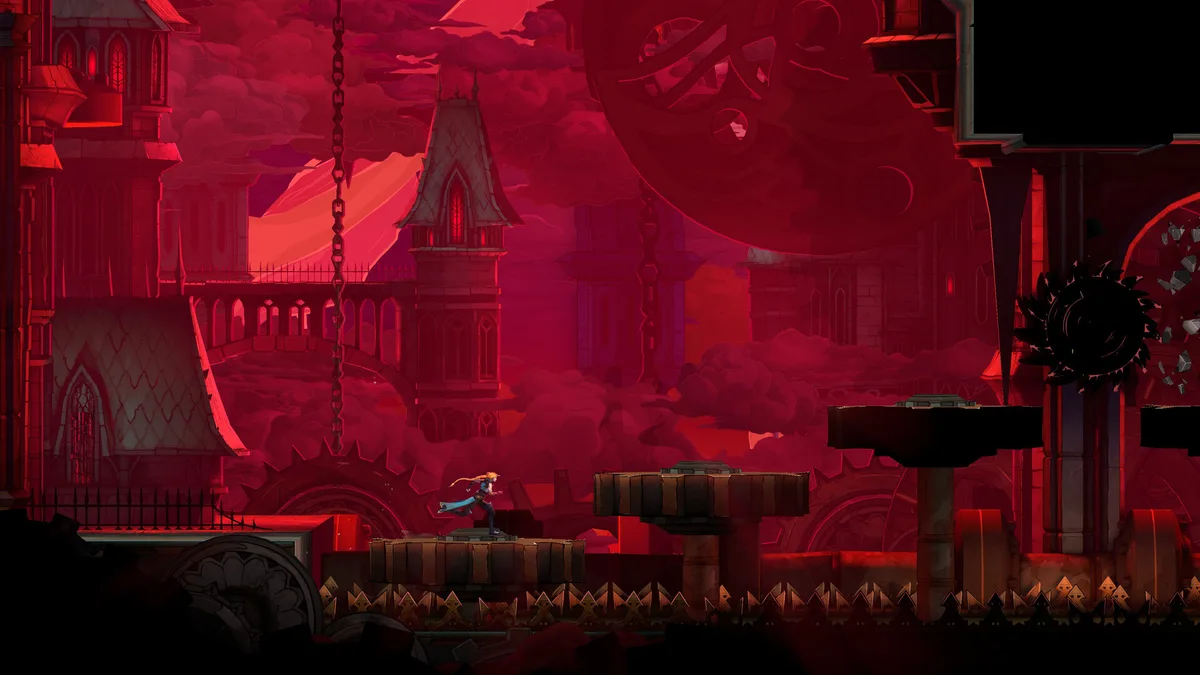
Belmont’s Curse is set in Paris in 1499 and follows Trevor Belmont’s daughter, Rose. The anniversary tour gives the first live performances of its music.
Adam Hoskins’s Arrangements at the Eventim Apollo on 14 March
For the Castlevania 40th Anniversary concert at the Eventim Apollo, Adam Hoskins has written all new arrangements and orchestrations for a 25 piece power rock orchestra, with creative direction by Thomas Redgrave and visuals by Symfoni Digital.
The programme named so far takes in Vampire Killer, Bloody Tears, Beginning, Divine Bloodlines and Dracula’s Castle, plus music from the handheld games and from Belmont’s Curse. Tickets are on sale through the Eventim Apollo.
Castlevania Music Questions and Answers
Kinuyo Yamashita and Satoe Terashima wrote the music for the 1986 game, which the NES version credited to the pseudonym James Banana.
Kenichi Matsubara wrote the music for Castlevania II: Simon’s Quest, where Bloody Tears first appeared in 1987, with Satoe Terashima also credited.
Michiru Yamane, who went on to lead the music for most Castlevania games until Order of Ecclesia in 2008.
Konami named ASADI as the game’s composer.