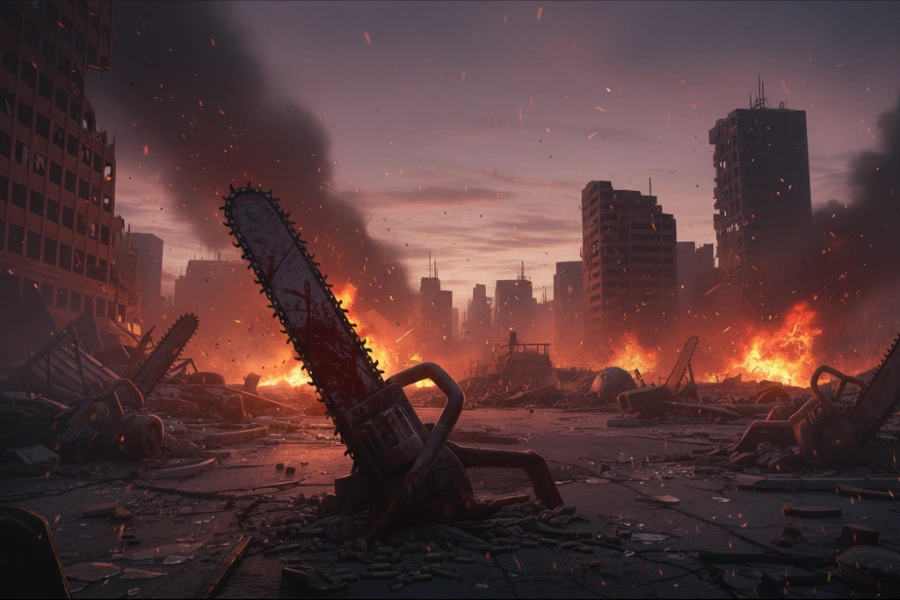
Manga for beginners can feel like a maze. Pages run right to left, shelves are sorted by labels like shonen and josei, and there are thousands of series to choose from. This guide covers what manga means, how to read a page, which reader group each label is aimed at, and a handful of first series worth picking up, from Naruto’s ninja battles to a chubby cat finding a home in A Man and His Cat.
What is Manga?
The word manga (漫画) is usually translated as “comics”, but it literally means whimsical or impromptu pictures. It was already in use by the late 1790s and was made famous by Katsushika Hokusai‘s sketchbook series ‘Hokusai Manga’ (北斎漫画), published across 15 volumes between 1814 and 1878.
Today’s Japanese comics are packed full of spectacular illustrations and are loved for their gripping storylines centred around dynamic characters, instantly recognisable for their large expressive eyes, small noses and dramatically styled hair (which often appears vibrantly coloured in anime adaptations).
Manga is the comic itself and anime is animation, although many anime series are adapted from manga. Manga runs in magazines and is then collected into book volumes, and most of it is now read digitally.
How popular is manga in Japan?
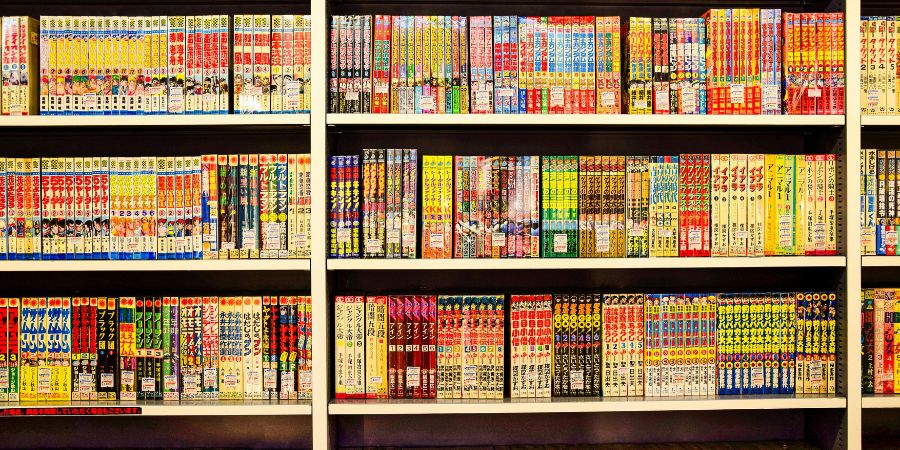
Although the origins of Japanese manga reportedly date back as far as 12th-century scrolls, since the late 19th century manga has been printed and widely read in Japan. In fact, many are obsessed with manga, with the term manga otaku referring to those ultra-fans who just can’t get enough. The Japanese manga market passed ¥700 billion for the first time in 2024, at ¥704.3 billion. It dipped slightly in 2025 to ¥692.5 billion, and around three quarters of that was digital.
This popularity is not limited to Japan: manga circulates strongly worldwide and continues to pump significant capital into the Japanese economy, meaning that mangaka (manga artists) don’t do too badly for themselves either.
Okay: we get it. Japanese comics are awesome. But where should you start?


Manga Is Sorted by Reader Age Before Genre
To think Japanese manga is exclusively fantasy stories made for teens is plain false.
Talking about genres or types of manga is a little complicated, though. Japanese manga is not categorised into genres but rather according to different audience demographics based on gender and age.

However, the manga spectrum is incredibly broad, with plots branching into multiple sub-genres including horror, food, sport, music, philosophical and existential stories, adventure, romance, ‘ecchi’ (sexual content), drama, action, science fiction, comedy and even cats. Yes: even cat manga is a thing.
Shonen, Shojo, Seinen and Josei: What the Words Mean
Each label is a plain Japanese word for the reader a magazine is aimed at. Shonen (少年) means boys, shojo or shoujo (少女) means girls, seinen (青年) means young men, and josei (女性) simply means women. The label tells you where a series was first serialised, not what happens in it, so a shojo title can be a horror story and a seinen one a gentle comedy.
Kodomomuke
Literally meaning ‘intended for children’, Kodomomuke manga is exactly that: for readers aged 10 and under. These stories are typically about adventure and discovery. Ryō Maekawa’s Animal Yokocho is a particular favourite. It’s about a girl who finds a secret door in her bedroom leading to an unknown world.
Shonen
This immensely popular manga type is for a mainly teenage boy audience. The dominant themes here are high action, adventure, sports, martial arts and science fiction, with a plot normally led by a male protagonist and some funny moments along the way. Must-reads include the late Akira Toriyama’s Dragon Ball series and Tite Kubo’s Bleach series, which together account for around 390 million copies. Shonen fans can read recent chapters free on Shueisha’s MANGA Plus app, or subscribe to VIZ’s Shonen Jump app for the English catalogue.
Shoujo
Similarly, shoujo manga is for teenage girls. This type of manga explores human relationships and the complex emotions that come with them. Featuring a heroine, the stories are normally filled with drama or romance, but sometimes mystery, horror, science fiction and fantasy. Miyoshi Tomori’s coming-of-age romance series, A Devil and Her Love Song (13 volumes), is a particular hit about the difficulty of fitting in and making friends in a new school.
Seinen
Seinen manga is aimed at adult men. Packed full of real-life struggles, unanswered questions, authentic ‘slice of life’ moments and plenty of action, seinen often has a darker tone in the art compared to other manga, complete with swearing, sexual moments and potentially graphic violence. Check out Naoki Urasawa’s 20th Century Boys, and One-Punch Man (created by mangaka ‘ONE’), which tells the story of a superhero who so easily defeats his enemies that he’s struck by existential angst.
Josei
Aimed at adult women, josei manga continues to be immensely popular, with more mature storytelling about work, relationships and adult life. Akiko Higashimura’s Princess Jellyfish is a romantic comedy certainly worth checking out, as is Tomoko Ninomiya’s 25-volume Nodame Cantabile, which examines the complex romantic relationship between two promising musicians during and after university.
Boys’ Love (BL) and Yuri
Boys’ Love, once known as yaoi, tells romantic stories between men, and yuri tells romantic stories between women. BL often explores the complicated and conflicted side of relationships, while yuri is read by both male and female audiences and is often set in a high school. No Touching At All by Kou Yoneda (BL) and Sweet Blue Flowers by Takako Shimura (yuri) are particularly gripping.
How to Read Manga: Right to Left, Top to Bottom
This one’s a little tricky for Western readers: Japanese manga is read from right to left and top to bottom. A book opens from what looks like the back cover, and each page starts at the top right panel. Don’t worry, it takes less time than you think to get used to!



Best Manga for Beginners: Naruto, Monster, Attack on Titan and A Man and His Cat
In addition to the age and gender-based suggestions above, here are a few must-reads that simply couldn’t go without a mention:
A guide to manga wouldn’t be complete without Naruto. This action-packed series follows the story of an orphaned boy whose life goal is to become the top ninja (‘Hokage’) in the village. This beloved series ran from 1999 to 2014 in Weekly Shonen Jump and is a great manga introduction for beginners. Naruto is a tale about perseverance filled to the brim with awesome fighting scenes.
Monster by Naoki Urasawa is a gripping psychological thriller about a talented Japanese brain surgeon who, when presented with the choice between two lives to save, decides to save the life of a boy who goes on to become a serial killer.
The Attack on Titan series sees humanity sheltering within gigantic walls to protect themselves from ravenous man-eating Titans. It is a dark, post-apocalyptic story that explores the idea of freedom against safety, and the manga ran to its conclusion in April 2021, so the whole story is there to read.
On a lighter note, in A Man and His Cat by Umi Sakurai, a large, chubby cat called Fukumaru keeps being passed over at a pet shop in favour of younger, cuter kittens. When Fuyuki Kanda, a widowed pianist and music teacher, adopts him, a special kind of relationship forms. This slice-of-life comedy is wonderfully wholesome and a fine representation of Japanese manga.