Japanese honorifics are short titles added to a person’s name, such as san, kun, chan and sama, that show how the speaker sees that person: a stranger, a junior, a child, a customer or a teacher. Leaving the honorific off, called yobisute, sends a message too, usually that two people are very close or that one of them is being rude.
This guide explains the nine honorifics anime fans hear most, plus yobisute, each with its nearest English equivalent and a named anime episode or series where the honorific carries part of the story.
Japanese honorifics in 60 seconds
An honorific goes after the name: Tanaka-san, Hinata-kun. You never add one to your own name, and when you talk about a colleague to someone outside your company, you leave it off. If in doubt, use san. In April 1952 Japan’s National Language Council named san the standard form in its recommendations Korekara no Keigo, and that advice still holds. Honorifics are one part of keigo, the wider system of polite Japanese, which our piece on politeness in Japanese conversation explains.
Japanese Honorifics From San to Yobisute
San, Kun, Chan and Seven More Japanese Honorifics Compared
All ten side by side, with the anime that shows each one best.
| Honorific | Used for | Nearest English equivalent | Anime example |
|---|---|---|---|
| San (さん) | Almost anyone you are polite to: strangers, colleagues, classmates, shopkeepers | Mr, Mrs or Ms | Teasing Master Takagi-san |
| Kun (君) | Boys and young men, and juniors at school or work | No exact match; close to a teacher calling a boy by his surname | Toilet-Bound Hanako-kun |
| Chan (ちゃん) | Small children, close friends and girls | A pet-name ending, as in Katie or Jimmy | Crayon Shin-chan; Ran-neechan in Detective Conan |
| Sama (様) | Customers, gods, people far above you, and letters | Lady or Lord; Dear Sir or Madam in a letter | Kaguya-sama: Love Is War |
| Senpai (先輩) | Anyone who joined your school, club or workplace before you | Senior, or someone in the year above | Haikyu!! season 1, episode 8; Don’t Toy with Me, Miss Nagatoro |
| Sensei (先生) | Teachers, doctors, politicians and masters of an art | Doctor or Professor; Sir or Miss in a British classroom | Assassination Classroom (Koro-sensei) |
| Dono (殿) | Samurai-era courtesy; today official letters and certificates | Esquire on an old envelope | Rurouni Kenshin (Kaoru-dono) |
| Tan (たん) | Baby talk for chan, used by couples and fans | No equivalent; the cutest pet name | Fans’ Sakura-tan for Cardcaptor Sakura |
| Bōzu (坊主) | Monks and shaved heads, and a familiar word for little boys | Sonny, or little rascal | Boh (坊) in Spirited Away |
| Yobisute (呼び捨て) | Dropping the honorific: close friends, family, or a deliberate snub | Plain first name | Rent-a-Girlfriend episode 32 |

San, the Safe Default, in Teasing Master Takagi-san
San is the honorific to use when you are unsure. The 1952 recommendations named it the standard form, and the Nihon Kokugo Daijiten dictionary describes san as a more casual version of sama. It works for men and women of any age, and Japanese speakers add it to job titles and even companies: a bookseller is honya-san, and a firm can be addressed with san in an email.
English readers met it early. In Romances of Old Japan (1919), the translator Yei Theodora Ozaki explained in a footnote that San or Sama was “the equivalent of Mr. Mrs. or Miss”.
Teasing Master Takagi-san shows how everyday it is. The Japanese title, Karakai Jōzu no Takagi-san, translates as “Good at Teasing, Miss Takagi”, and the series follows Takagi and her middle school seatmate Nishikata, whom she teases because she has a crush on him. In Japanese schools san is the usual honorific for girls and kun for boys, so the title names her in the ordinary way. Shin-Ei Animation’s anime of Sōichirō Yamamoto’s manga began in January 2018.
Kun for Boys and Juniors, and the Twist in Toilet-Bound Hanako-kun
Kun goes after the names of equals and juniors to show friendliness with a touch of respect, and the Digital Daijisen dictionary notes that men use it more than women. The 1952 recommendations called it the word of male students and asked working adults to use san with each other. In formal and business settings it can be used for a junior of either gender, so a manager may call a young female colleague by her surname plus kun.
Toilet-Bound Hanako-kun builds its whole premise on that one syllable. In AidaIro’s manga, Hanako-san is one of the Seven Mysteries of Kamome Academy, a spirit said to live in the third stall of the third floor girls’ bathroom of the old school building and to grant wishes to anyone who summons her. When the high school student Nene Yashiro summons her in the first volume, the ghost turns out to be a boy, and the Japanese title, Jibaku Shōnen Hanako-kun, swaps the girl’s san for a boy’s kun. Lerche’s anime of the manga followed in 2020.
Chan in Crayon Shin-chan and Ran-neechan in Detective Conan
Chan is the affectionate form, for small children, close friends and girls. Nobody has recorded where it came from, but the usual explanation, given by the Japanese learning site Tofugu, is that it began as a baby-talk version of san, because young children find the sa sound hard to say.
Crayon Shin-chan wears it in the title. Its hero is the five-year-old Shinnosuke Nohara, whose name shortens to Shin, and Shin-chan is that short name with the affectionate ending added. Yoshito Usui’s manga began in 1990 and the anime in 1992.
Detective Conan turns chan into part of a disguise. Conan is really the teenage detective Shinichi Kudo in a child’s body, and he refers to Ran as Ran-neechan, nee-chan meaning big sister, the way a small boy would. The fan reference site Detective Conan World notes that he has to act like a child to stop Ran suspecting who he is, and the childish form of her name is part of that act.


Sama, From the Shōgun’s Title to Lady Kaguya
Sama is the formal big sister of san. The Digital Daijisen dictionary defines it as a mark of respect added to names, job titles and the names of organisations, and it is the honorific Japanese shops use for their customers, okyakusama. It is also in kamisama, the everyday word for a god. The 1952 recommendations kept it mainly for formal occasions and the addresses on letters.
At the top of society it marked real power. The British diplomat Ernest Satow, in A Diplomat in Japan (1921), records that ordinary people spoke of the shōgun as Kubō sama. After Tokugawa Yoshinobu resigned as shōgun in November 1867, his officials styled him simply Uyésama (ue-sama, ue meaning above), which Satow explains was “the title borne by the head of the Tokugawa family before his formal recognition as Shôgun”.
Kaguya-sama: Love Is War puts the honorific in its title. The Japanese name, Kaguya-sama wa Kokurasetai, translates as “Lady Kaguya Wants to Make Him Confess”, and the sama fits a heroine with a household of servants. Her personal assistant, Ai Hayasaka, comes from a family that has served the Shinomiyas for generations, and their master and servant relationship was settled when both girls were seven. A-1 Pictures’ 2019 anime is on our list of the best romance anime.
Senpai and Kōhai, From Haikyu!! to Nagatoro’s Nameless Senpai
Senpai means anyone above you in age, position or experience, and in particular anyone who joined your school or workplace before you. The Digital Daijisen dictionary glosses it as “one born earlier” and gives kōhai, the junior, as its opposite. Senpai can also stand in for the name entirely, so a first-year can call out “Senpai!” and nothing more.
Haikyu!! has the best-known scene. In season 1, episode 8, He Who Is Called Ace, first broadcast in May 2014, Hinata meets the team’s libero, Yū Nishinoya, asks him for help with receiving and calls him senpai. Episode reviews, including Lost in Anime’s, and the Haikyu!! fan wiki describe Nishinoya as won over on the spot, and he goes on to coach Hinata.
Don’t Toy with Me, Miss Nagatoro goes further. Nagatoro calls the boy she teases Senpai and nothing else, and the manga keeps his name back for a long time: his first name, Naoto, appears in a side story in volume 5, and his surname, Hachiōji, only in chapter 83. The Japanese title, Ijiranaide, Nagatoro-san (Don’t tease me, Nagatoro-san), is his plea to her, so the junior gets a polite san while the senior is known only by his rank. The anime aired in 2021, with a second season in 2023.
Office senpai work the same way. My Senpai Is Annoying, whose Japanese title Senpai ga Uzai Kōhai no Hanashi means “Story of a Kōhai Annoyed by Her Senpai”, follows the office worker Futaba Igarashi and her tall, loud colleague Harumi Takeda. Doga Kobo’s 2021 anime is one of our picks of slice of life rom-com anime. In English, the word spread through the catchphrase “notice me senpai”, which Know Your Meme traces to a Tumblr site, Has Senpai Noticed Me Yet?, set up on 8 August 2012.
Sensei for Teachers and Doctors, and Assassination Classroom’s Koro-sensei
Sensei is written with the characters for before and born. The Digital Daijisen dictionary lists it as the respectful title for teachers, masters of an art, doctors and members of parliament, used on its own (“Sensei, how are you?”) or after a name, as in Suzuki-sensei. Japanese pupils use it where British pupils say Miss or Sir.
Assassination Classroom makes the title its hero’s name. The tentacled creature who destroys 70 per cent of the Moon and then becomes homeroom teacher of Class 3-E at Kunugigaoka Junior High is called Koro-sensei, a pun on korosenai (unkillable) and sensei, and the student Kaede Kayano is the one who comes up with it. His class has until the end of the school year to assassinate him, and he teaches them while they try, so the joke name sums up the series. Lerche’s anime of Yūsei Matsui’s manga aired from 2015 to 2016.
Dono, the Samurai Courtesy Behind Kenshin’s Kaoru-dono
Dono is the honorific of samurai drama. The Digital Daijisen dictionary notes that it was once used for very high-ranking people, as in Kanpaku-dono for the imperial regent, and that today it appears mostly in official documents and letters. The 1952 recommendations hoped government paperwork would switch from dono to sama. In Asataro Miyamori’s Tales of the Samurai (1920), the tea priest Ryōkwan hides behind a screen, thrusts his sheathed sword in the path of the young warrior Kimura Shigenari and shouts: “Kimura Dono, you go too fast!”
Rurouni Kenshin made dono familiar to anime fans. Himura Kenshin, the former assassin who now carries a reverse-blade sword and has vowed never to kill again, speaks in an old-fashioned samurai style. He calls himself sessha and ends his sentences with de gozaru, as in his line in the first volume, “Sessha wa rurōni, ate no nai tabi no kenkaku de gozaru yo” (I am a wanderer, a travelling swordsman with nowhere to go). He adds dono to the names of women and of people he respects, so Kamiya Kaoru, whose dojo takes him in, is Kaoru-dono. The boy Yahiko gets his plain name, and his comrades from the Restoration years get san, as in Katsura-san; with them, according to the pixiv Encyclopedia’s character guide, he drops the old-fashioned speech altogether. Nobuhiro Watsuki’s manga ran from 1994 to 1999, and Liden Films’ new anime began in 2023.
Tan and Bōzu: Baby Talk, Little Boys and Boh in Spirited Away
Tan, the cutest honorific
Tan is baby talk for chan, and Tofugu places it at the very cute end of the scale. Couples use it in private, and it spread among otaku and on the 2channel message board. Fans attach it to favourite characters, and Tofugu’s example is Sakura-tan for the heroine of Cardcaptor Sakura. We found no official episode in which a character is addressed this way, so treat it as fan culture.
Bōzu, from Buddhist monks to cheeky boys
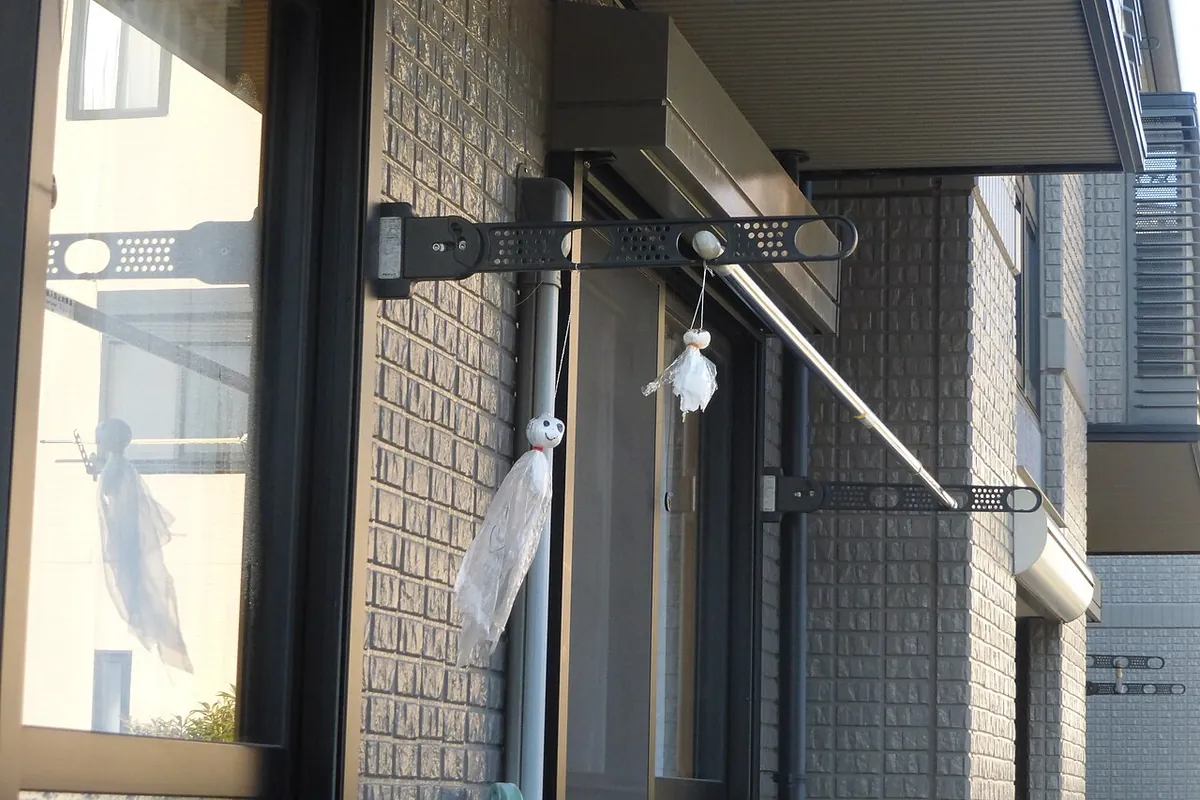
Bōzu first meant a Buddhist monk, and then a shaved head. Because boys once had their heads shaved, it became a word for a little boy, said with affection or teasing; the Digital Daijisen dictionary’s example is “Bōzu, yoku yatta na” (well done, lad). It also makes compounds such as itazura-bōzu, a little rascal, and mikka-bōzu, someone who gives up after three days. Frank Brinkley’s A History of the Japanese People (1915) describes the biwa-bozu, blind reciters of war stories who took the name because they shaved their heads like monks, and the teru teru bōzu doll, hung from the eaves to ask for fine weather, carries the same word.
The short form bō is an affectionate word for a small boy, and a little boy can use it about himself. It is also the name of Yubaba’s enormous baby in Studio Ghibli’s Spirited Away (2001): he is Boh, written 坊, so in Japanese his name simply means little boy. The same character follows monks’ names, as in Musashibō Benkei, the warrior monk of legend.
Yobisute, Dropping the Honorific, in Rent-a-Girlfriend Episode 32
Yobisute (呼び捨て) means calling someone by their bare name. Because the default in Japanese is to use an honorific, leaving it off always means something: either two people are close enough not to bother, or one of them is being rude. Some parents call their own children by their plain names, and Japanese speakers drop honorifics for people in their own company when talking to outsiders.
Anime makes a moment of it. In episode 32 of Rent-a-Girlfriend (Kanojo, Okarishimasu), part of the third season broadcast in summer 2023, Ruka Sarashina suddenly calls Kazuya Kinoshita by his given name with no honorific. ABEMA Times ran a story about the scene on 4 September 2023, quoting fans who wrote “Kazuya-yobi saikō desu” (calling him Kazuya is the best). Reiji Miyajima’s manga is animated by TMS Entertainment.
Dropping an honorific can be a political act as well. Satow notes that in the 1860s the shōgun’s council was known in eastern Japan by the respectful Gorōjū, which he translates as “noble old men”, while the shogunate’s opponents, and Satow’s own circle, used plain Kaku-rō, “old ones”, because the opposition refused the government any mark of respect.
How English Subtitles and Dubs Handle Honorifics
English releases often keep the honorific, as Kaguya-sama: Love Is War and Toilet-Bound Hanako-kun do in their titles. Others write around it: when Media Blasters dubbed the 1996 Rurouni Kenshin anime, it replaced de gozaru with phrases such as “that I did” and “that I am”. Listening for the honorific each character chooses is an easy way to follow who is close to whom. Our guide to learning Japanese with anime has a level by level list of shows and a five step routine for studying them.
Japanese Honorifics: Questions and Answers
The ones you will hear most are san (polite, for almost anyone), kun (boys and juniors), chan (small children, close friends and girls), sama (customers, gods and people far above you), senpai (someone who joined your school or workplace before you) and sensei (teachers and doctors). Dono, tan and bōzu are rarer, and yobisute means using no honorific at all. In 1952 Japan’s National Language Council named san the standard form.
Senpai (先輩) means someone above you in age, position or experience, and especially someone who joined your school, club or workplace before you. The Digital Daijisen dictionary glosses it as one born earlier, and its opposite is kōhai, the junior. It can follow a name or replace it, as when Nagatoro calls the boy she teases nothing but Senpai in Don’t Toy with Me, Miss Nagatoro.
Sensei (先生) is the respectful title for teachers, masters of an art, doctors and members of parliament, written with the characters for before and born. It can be used on its own, as a pupil says Miss or Sir in Britain, or after a surname, as in Suzuki-sensei. Assassination Classroom’s teacher Koro-sensei gets his name from a pun on korosenai, meaning unkillable, plus sensei.
Yes, in some settings. Kun is mainly used for boys and young men, and in Japanese schools girls are usually called with san. In formal and business settings, though, a senior can use kun for a junior of either gender. The 1952 Korekara no Keigo recommendations described kun as the word of male students and advised working adults to use san with each other.
It can be. Dropping the honorific, called yobisute, is normal between close friends and partners, and some parents call their own children by their bare names. With a stranger, a customer or someone senior, it sounds rude. That is why it lands so hard in anime: in Rent-a-Girlfriend episode 32, Ruka suddenly calling Kazuya by his bare name was big enough news for ABEMA Times to report it.
For everyday use, sama is the most respectful. Shops call their customers okyakusama, the word for a god is kamisama, and letters are addressed with sama. Sensei carries similar respect for teachers and doctors. Dono was once used for the highest ranks, as in Kanpaku-dono for the imperial regent, but today it mostly appears on official documents and certificates.
No. You never add san or sama to your own name, and when you speak to someone outside your company you drop the honorific for your own colleagues and boss too. The one exception is a nickname: if friends already call you by a name ending in chan, using it about yourself is fine. A small boy may also call himself bō, the affectionate word for a little boy.