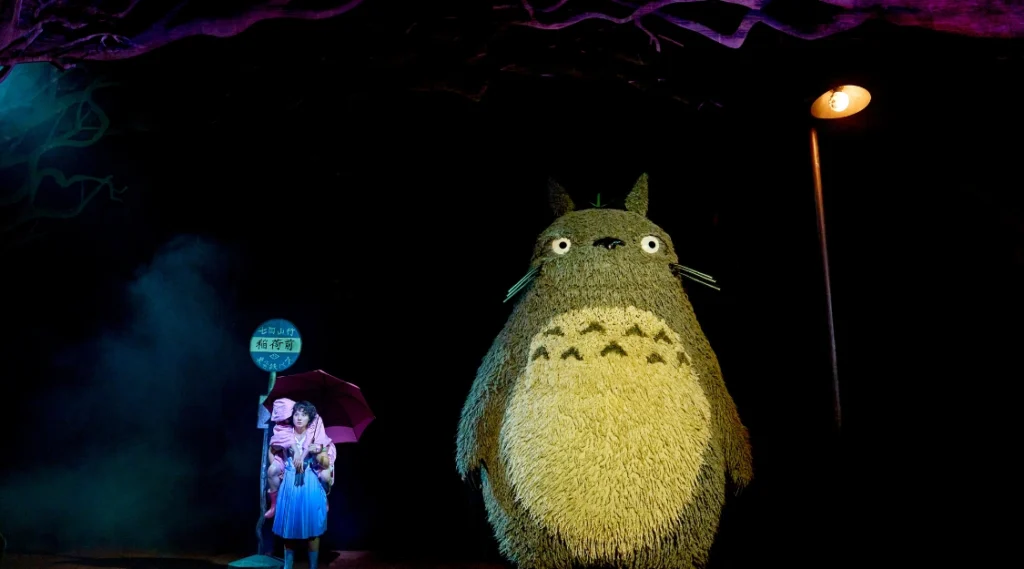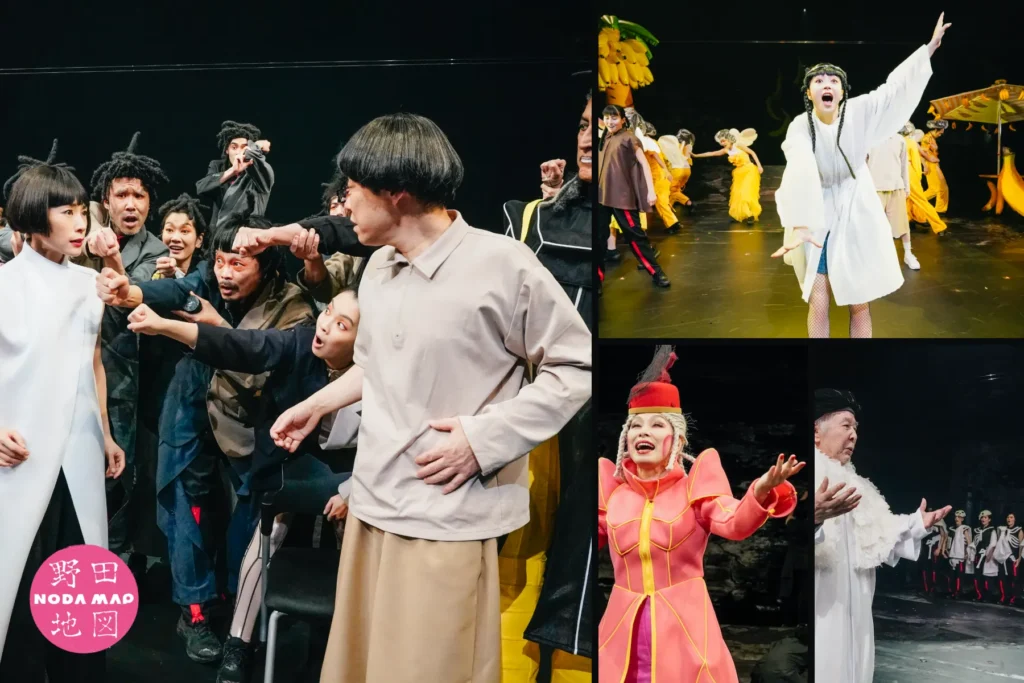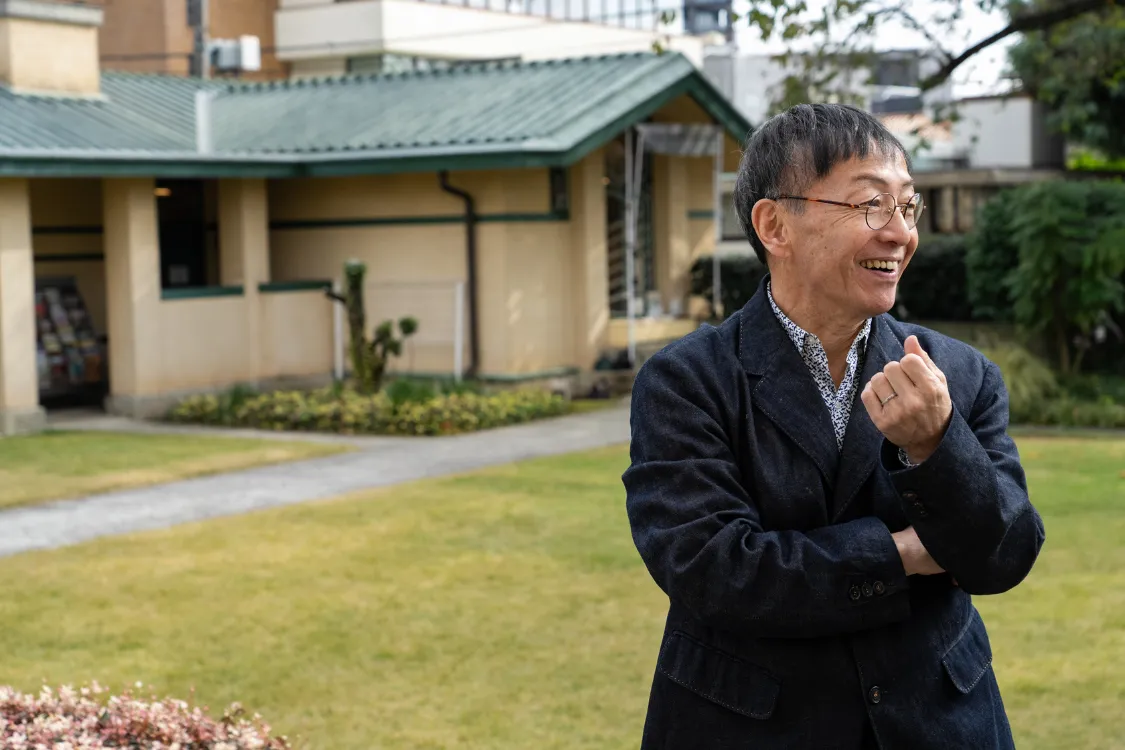
Underneath the speed of Hideki Noda’s new play −320°F sits a heavy question: what happens when science outruns our ability to control it. In an interview with Japan Nakama ahead of the UK premiere, the playwright and director set out why nuclear weapons, artificial intelligence and biotechnology now belong on the same stage.
“A nuclear weapon, artificial intelligence and new biotechnology: these three sciences are all very difficult to control.”
−320°F runs at Sadler’s Wells from 2 to 11 July 2026, a UK premiere from NODA MAP, the company Noda founded in 1993, staged by an ensemble of twenty-five and performed in Japanese with English subtitles. For more on the London event, our −320°F preview covers the full synopsis, cast and tickets.
Hideki Noda Interview
Who is Hideki Noda?
Hideki Noda OBE, born in Nagasaki in 1955, is one of the defining figures of postwar Japanese theatre, a playwright, director and actor who moves between contemporary drama, Kabuki and opera. He founded his first company while a student at Tokyo University, studied in the UK, and set up NODA MAP in 1993.
From 2008 until March 2026 he was the first artistic director of the Tokyo Metropolitan Theatre. London has seen him before: Red Demon at the Young Vic in 2003, The Diver and The Bee at Soho Theatre, then A Night At The Kabuki in 2022, which reset Romeo and Juliet to Queen songs, and Love in Action in 2024, part of a long tradition of Japanese theatre reimagining Western classics.
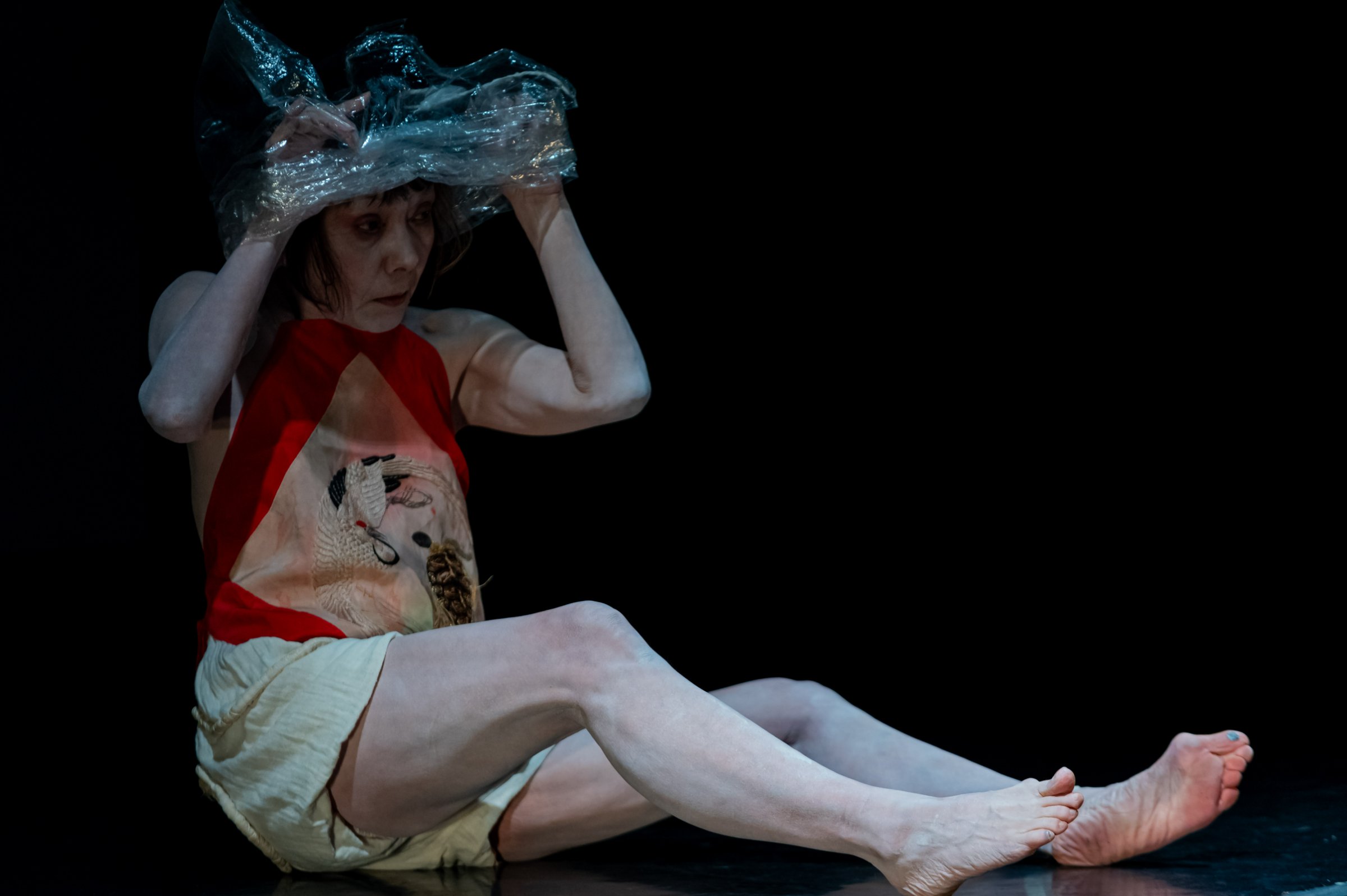

In conversation with Hideki Noda
Speaking to Japan Nakama before the London run, Noda discussed the science that drives the play, his cast, and what he hopes a London audience takes from a form he says belongs to neither musical nor dance.
Why nuclear weapons, AI and biotechnology belong in the same play

Q: Love in Action dealt with the atomic bomb. −320°F moves to biotechnology. What connects the two, and what is the fear you want an audience to feel?
“The atomic bomb was science advancing until we reached a new technology, a nuclear weapon. This time we are talking about life, about new biotechnology. In history we believed science was fantastic, that it could be everything for the world, but we know now that new technology has a limit. The connection between these sciences is that we can no longer control them.”
What Hideki Noda means by “wrong science”
You coined the term “science faketion”. How do you define wrong science, and where does it tip into something dangerous?
“It is difficult to define which is right science and which is wrong science, because right science involves wrong science, and the reverse is also true. Enhancement uses the technology, but right science uses the same technology. Of course we want to advance for human beings, but sometimes this technology leads to a kind of eugenics. After the Second World War we believed we had overcome eugenics. We believed that, but recently new technology has become quite connected to eugenics again.”
Working with Suzu Hirose a second time

−320°F is Suzu Hirose’s second time with the company after A Night At The Kabuki. What made you want to bring her back?
“She is an amazing actress, with two talents in particular. One is her physicality, including her voice. When I talk to her about physicality while we are creating, she picks it up very quickly. The other is that she is not a me, me, me kind of actor. She is always looking everywhere, at the other actors and at the space around her.”
How a veteran actor changes the rhythm of the show

Isao Hashizume comes from an older generation and tradition. What does having him in the room do to the rest of the cast?
“Isao Hashizume is 84 years old and I have worked with him for around forty years. When he was middle-aged he could speak quickly and move quickly. Now he knows his own methods. He speaks slowly on purpose and he holds a long pause. In my production the actors are usually speaking fast and moving quickly, but Hashizume is completely different, and that is good for the play, because across a whole production you sometimes need a pause, a slow movement.”
What seventeen years running Tokyo Metropolitan Theatre taught him
You were the first artistic director of the Tokyo Metropolitan Theatre, for seventeen years. What did that time teach you?
“The lesson is that theatre is people. I was the first artistic director of the Tokyo Metropolitan Theatre, and before that a theatre in Japan would simply be rented out, so it did not need to make its own programme. It was publicly funded, so people used to think it did not need to earn money or gather an audience. I think that is wrong. We gather in a theatre because we want to communicate, so we need an audience and we need programmes. It took seventeen years.”
The puns that survive translation, and the ones that do not

Your writing is full of puns and wordplay. With English surtitles, what survives translation and what has to be let go?
“I have a fantastic English translator. I write in Japanese, full of wordplay and puns, and some of it can work in English and some cannot, so sometimes I have to give up. But sometimes she finds another version in English. With a subcultural reference she might change a Japanese musician’s name to a British singer’s name, so the audience can relate to what that person represents.”
What a London audience should expect from −320°F

For a London audience who may not have seen anything like this, how would you describe the production?
“I call my work a play of physicality, but here in London physicality usually means musical or contemporary dance. My work belongs to neither, so a London audience may feel the physicality is a little strange. In this production we are making a tunnel of bones. We worked out how to use our bodies for that. It is not dancing. You may not have seen this type of production before. Come, see it, and afterwards I want you to start thinking about life. Not life in general, but your life, your friend’s life, your family’s life. This play does not give the answer.”
−320°F at Sadler’s Wells: the essentials
−320°F plays Sadler’s Wells Theatre, Rosebery Avenue, London EC1R 4TN, from 2 to 11 July 2026, nearest station Angel. Evening performances are at 7:30pm with weekend matinees at 2:30pm, the running time is two hours twenty minutes with no interval, and tickets start at £15. The play is performed in Japanese with English subtitles and is suitable for ages 6 and over. Full dates, the complete cast and booking are in our −320°F preview.